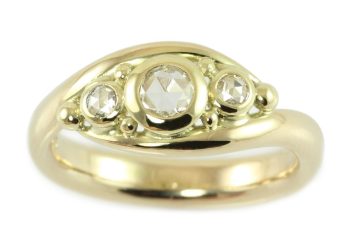



The difference between Yellow, Rose and White Gold
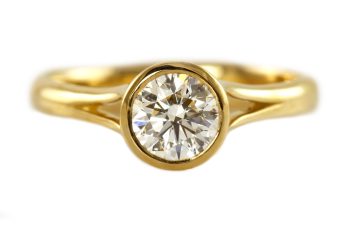
Gold is actually... yellow!
So when you want jewellery in rose gold or white gold, you have to tweak nature a little bit.
If you mix mostly copper into the gold, it gets a warm reddish tone – this is where rose gold arises.
If you instead add silver and palladium, the colour becomes lighter, and we get what we call white gold.
It's actually not the gold itself that comes in different colours – but the metals you mix in that give the final shade.
You can think of it a bit like mixing paint: the base colour is the same, but a bit of extra silver or copper can completely transform the look.
Why White Gold is Not Quite So White
“My white gold has become yellowish – what is wrong with it?”
There is nothing wrong, because there is a completely natural explanation!
White gold is, after all, not hero white in itself. The starting point is, after all, yellow gold, which is mixed (this is called alloying) with light metals such as silver or palladium. The result is a light, warm, steel-grey tone.
To get that completely cool, silver-white sheen that many love, the piece of jewellery is given a surface treatment with rhodium – a very bright and hard metal.
This is known as rhodium plating and, just as with gold plating, this thin layer will eventually wear off – particularly on rings – and the more natural colour of white gold will then become visible.
This doesn't mean something is wrong – it's just your jewellery showing its true colours.
If you want the bright shine back, the piece of jewellery can be rhodium-plated again – a bit like putting on fresh nail polish, just in the precious metal version.
Red Gold & Rose Gold
Red gold, rose gold… or did you mean yellow gold? 🤔
It is enough to make your head spin, because “ordinary” gold – that is, naturally yellow gold – is actually referred to in Denmark as “red gold”!
We had a strong hunch and contacted the Danish Language Council just to be on the safe side to have the theory confirmed. The explanation goes a long way back in time: Back then, people only had one word for the warm colours, namely red. Only later did the word ghoul to the language, but by then “red gold” was already an established expression.
So when one consciously began to create gold that actually was red In the tone, one had to come up with a new name – and that is how rose gold came about.
Today, very few people think about it, and therefore we always ask when someone requests a ring in “red gold”: “Do you mean yellow gold or rose gold?” – just to be on the safe side...
What does “24 karat” mean?
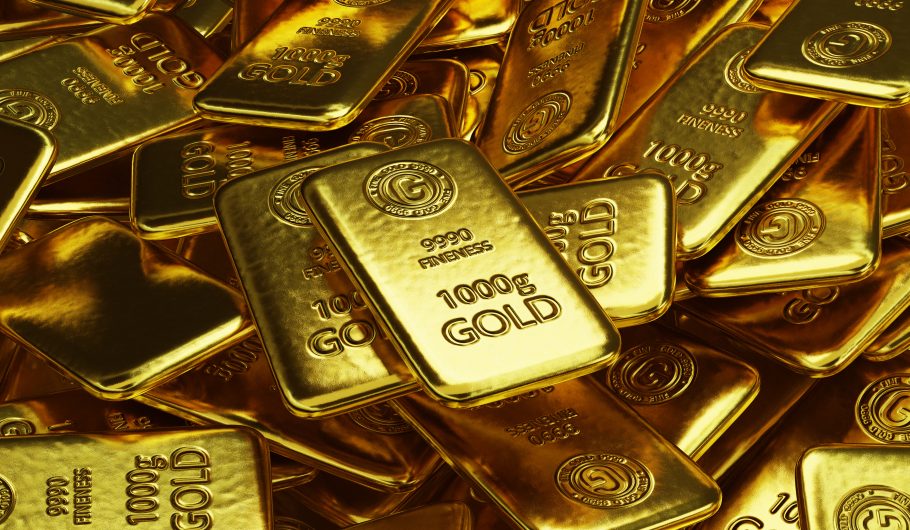
When you ask a jeweller, you immediately get something with permillage (i.e. measured in parts per thousand rather than parts per hundred as we do with percent): 24k = 999‰, 18k = 750‰, 14k = 585‰ and 8k = 333‰. But what on earth do the two numbers have to do with each other? At first glance… nothing – apart from creating total confusion, of course.
It would certainly have been much easier if they had just named the alloys after how much gold they actually contain. But no – medieval history has always had a penchant for complicating things.
The word carat (note: with a C!) actually originates from carob- the bean, which in the old days was used to weigh gemstones – those beans actually had a fairly uniform weight. Today we still state the weight of gemstones in carats (ct). And now comes the connection: In medieval Germany, they had a gold coin called a Mark, and it always had to weigh 24 of these beans. That way you could ensure that nobody had shaved a bit off the coin!
That is why the coin became known as the 24 carat – And then you would think that the gold coin from Germany was made of pure gold, wouldn't you? But to create total confusion, of course it wasn't, but rather a mixture of gold and alloy metals. Later, in the USA, they wrote “Karat” instead of “Carat” to distinguish between gold purity and gemstone weight, and that is how 24k became the symbol of “pure” and fine gold that we still use today.
Blog categories