Tel +45 32 20 04 44
design@castens.com
Holbergsgade 19a
1057 Copenhagen K, Denmark

During the artistic design process, we work closely with you and strive to merge your vision with refined craftsmanship to create a new piece of jewellery with a unique character.
We take on a wide range of handmade jewellery projects, so whether you need rings for parties or everyday, engagement rings, bridal sets, wedding rings, necklaces, bracelets, earrings or other adventurous jewellery, we are ready to wield the tools and create jewellery for the most important moments in your life.
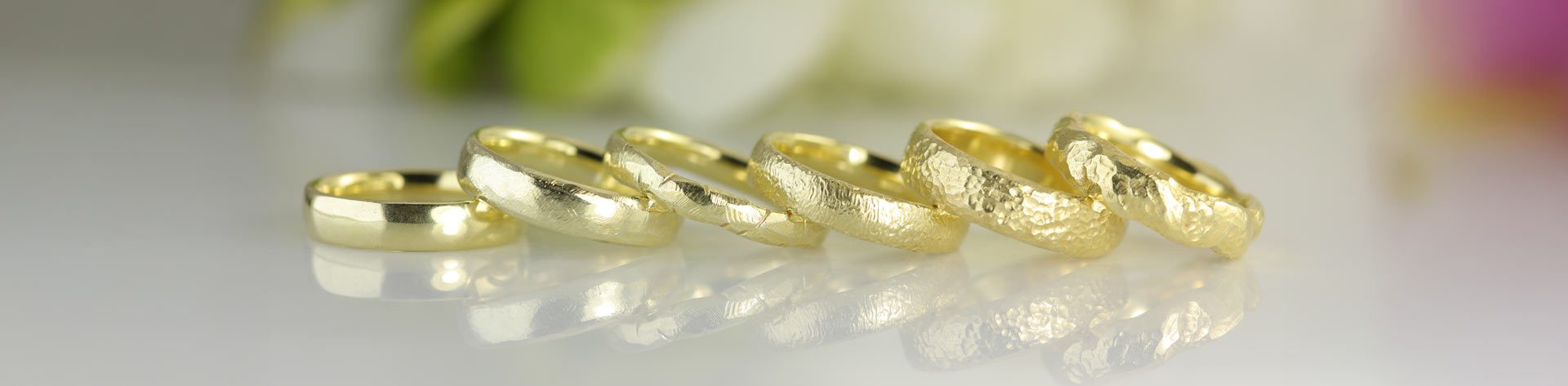
When we talk about a piece of jewellery's surface, we are talking about how the metal has been worked externally – in other words, what you see and feel.
Most people are familiar with the classic polished surface: completely glossy and reflective. But a surface can be much more than that. It can be raw, matt, vibrant, or almost landscape-like.
In fact, the surface has enormous importance for the expression. Even a completely simple and sleek ring can completely change character, depending on how the surface is worked.
The polished surface is still the best known – but today we work in a far more varied way.
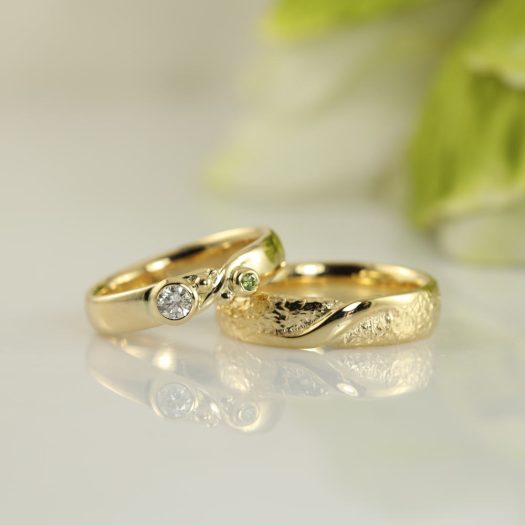
Here, we often combine several surfaces in one piece of jewellery. For example, a raw ring band with polished details, so the eye has something to rest on.
At the same time, we're seeing a general shift in the jewellery world: jewellery is increasingly meant to be less “perfect” and more alive. Matte, milled, hammered, and organic surfaces have become far more popular – because they feel more personal and less factory-made.

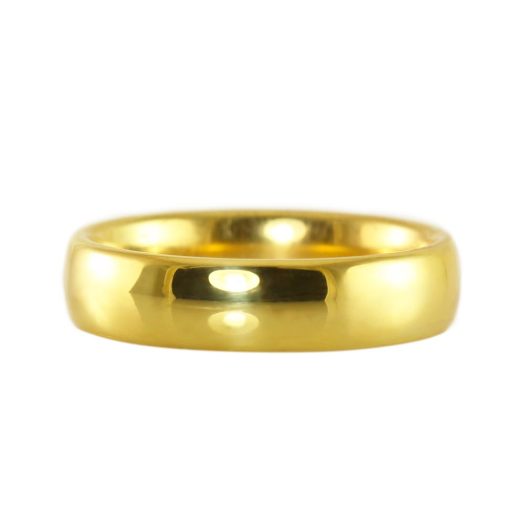
The polished surface is completely glossy and reflects light like a mirror. This gives a very clean and clear expression, which is often associated with classic and symmetrical designs.
Here, we rarely use a fully polished surface on its own – instead, we use it very deliberately in the details. This could be a flourish, a small butterfly, or the setting around a stone. Here, the polished finish provides a sharpness and precision that highlights the form.
Some of the most interesting things happen when the polished is placed against a rougher surface. The contrast makes the eye automatically seek out the shiny area. In this way, you can create small highlights in the jewellery and control what you notice first.
The matte surface has become very popular in Denmark, but it can of course look in many different ways.
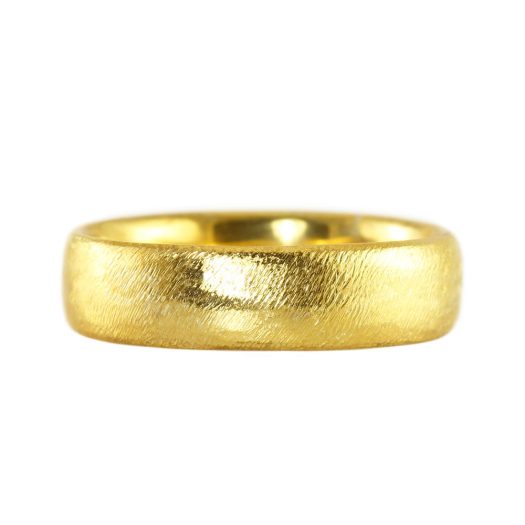
The most classic matte surface we offer is the matted finish. Here, the file leaves small, parallel lines in the metal, which provides a calm and uniform structure.
But “mat” can arise in other ways:
Mother brushes come in different coarseness levels, meaning the surface can range from very fine and delicate to something much coarser, where you can almost make out small “craters” in the metal.
The commonality of matte surfaces is that they do not reflect light in the same way as polished surfaces. They therefore appear more serene, soft and subdued in their expression.
The raw is clearly our favourite – and the type of surface we return to again and again.
The technique we most often use, we call "milling". Here we work with a small ball burr, which creates thousands of tiny valleys and craters in the metal. It is a process where the surface is slowly built up point by point.
The exciting thing is that the expression can be varied enormously:
It's largely about the depth of the “craters” and how pronounced the “valleys” become.
You can also create a surface SOLELY with "scratches" where you use the same drill bit to make small round holes one at a time across the entire surface. With this technique, you create something that can resemble scales, which is why we use precisely this technique on our dragon jewellery.
In addition to the milled surface, there are other rough surfaces:
What the raw surfaces have in common is that they give the jewellery life. They break the light unevenly and often feel more organic and less controlled.

At one point, you move beyond what can really be called a surface.
When the machining goes deep enough into the jewellery, it becomes part of the form itself. We call them formed surfaces.
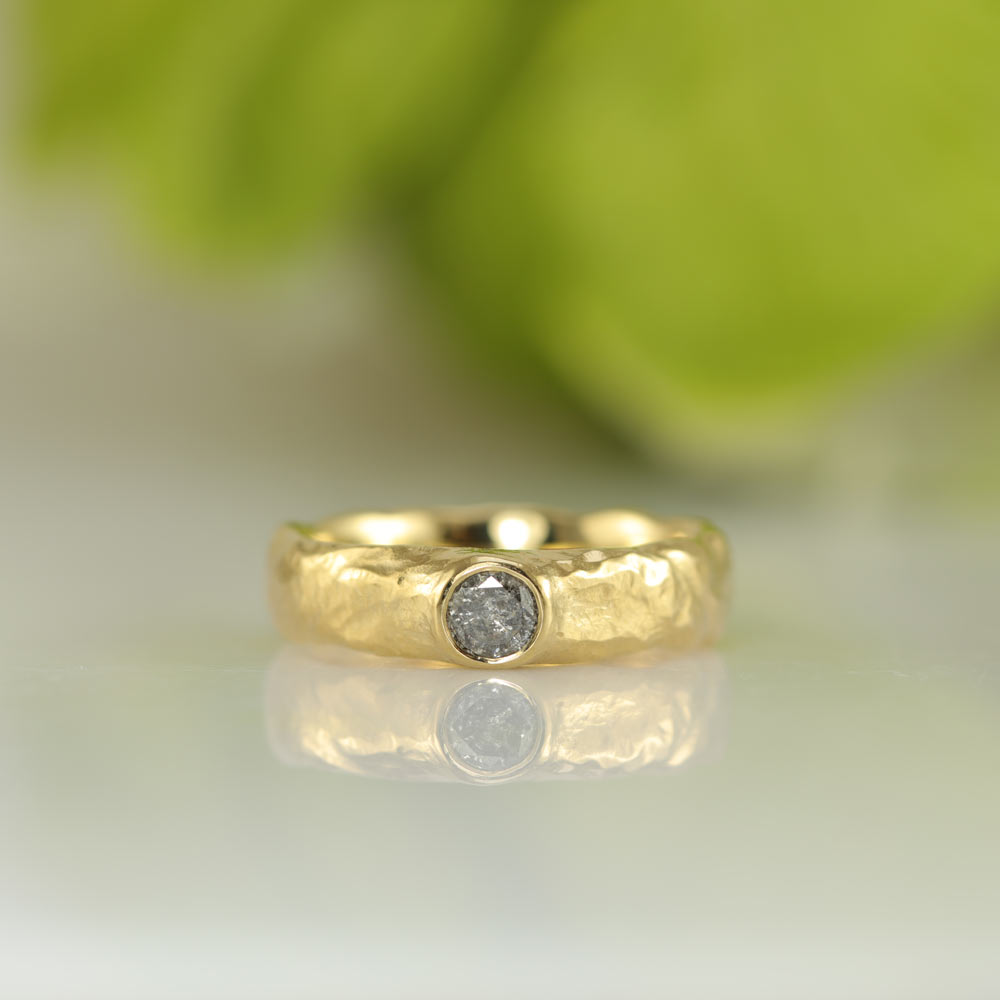
An example is our rough men's rings (no. 1), where the texture is almost reminiscent of pieces of rock with clear mountains and valleys in the ring band. Here, it's no longer something that sits on top – it's an integrated part of the jewellery. This type of surface requires rougher tools and more time to create, and we often leave it matte to emphasise the raw expression.
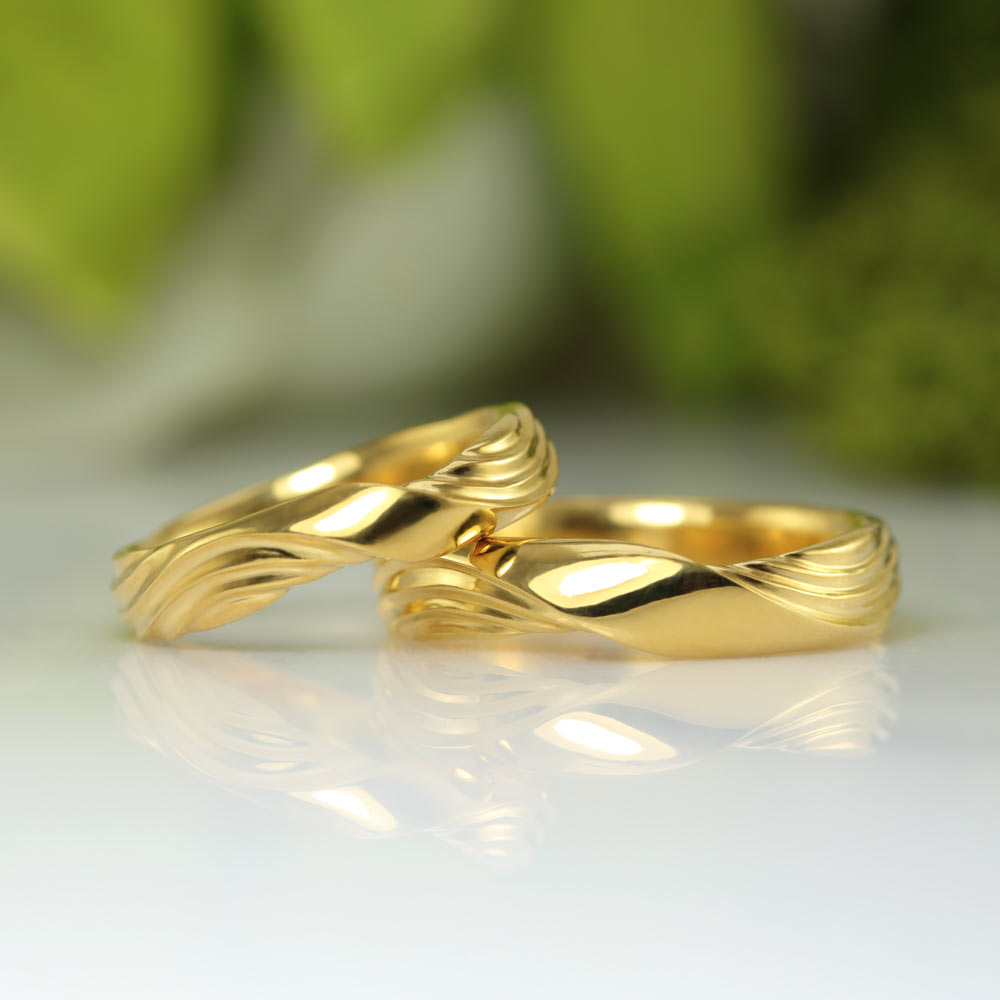
Shaped surfaces don't have to be rough or matte. In Moebius Nautica (no. 2) we have, for example, created deep, undulating lines that cut into the ring - but still remain perfectly polished on the surface.
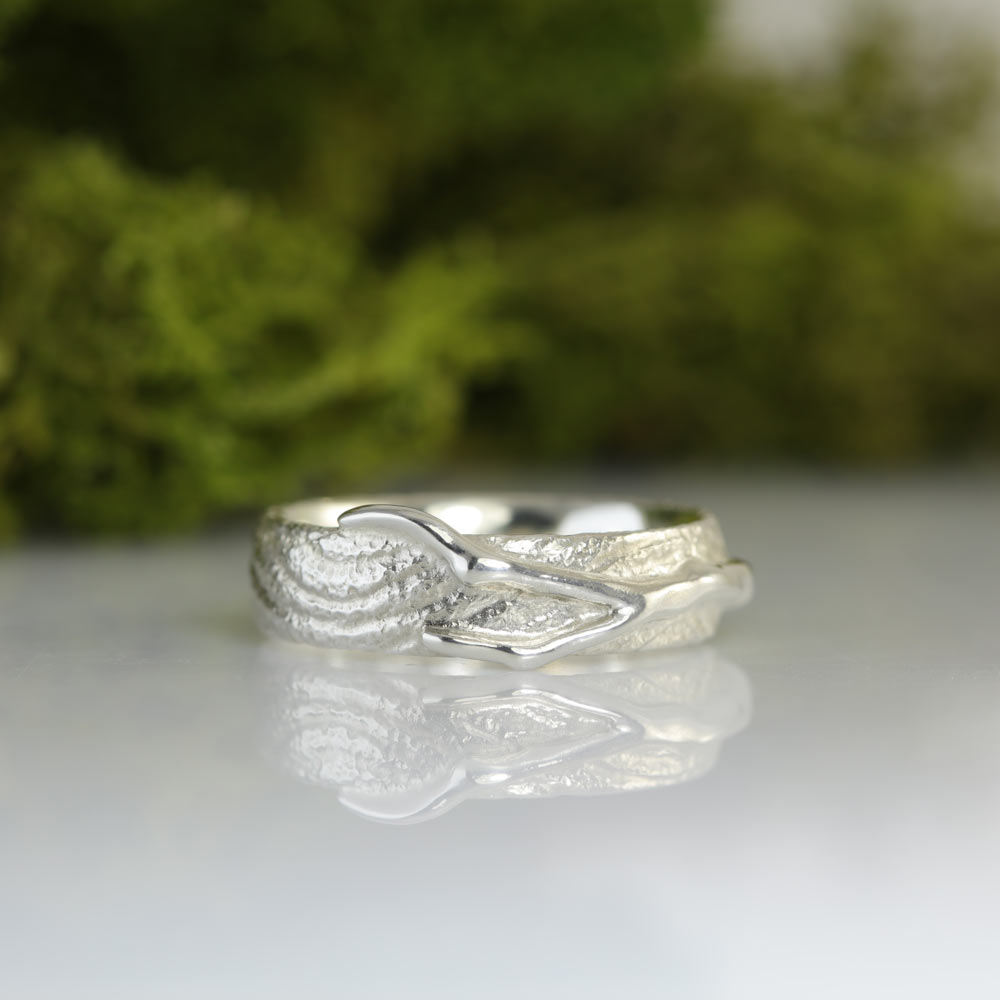
The same lines could just as well have had a raw or milled finish on top, which we have done in Embrace Arboretum earrings (no. 3) among other things.
The point is that when something is shaped, it has become part of the jewellery's basic structure – and not just a finish.
Whatever surface one chooses, it will change over time – especially on rings.
Necklaces and earrings are rarely subjected to the same wear and tear, but rings lead a more active life. They hit table edges, tools, pockets, and all sorts of other things throughout the day.
The polished surface is the first one you'll notice changing. It quickly picks up fine scratches, and over time, its reflection will appear less sharp – still shiny, but softer.
The matte surfaces are next. The small traces from the file, brush, or diamond tool will gradually be worn down, and the surface will slowly become smoother. Eventually, it will approach something resembling a worn polish.
The raw surfaces last longer. Because we work so deeply within the metal, it takes time to wear down the structure. But just as a landscape becomes rounder and softer over many years, the peaks on the raw surface will also wear down flatter over time.
The shaped surfaces are the most enduring. Here, we work so deeply into the jewellery that the structure practically never disappears entirely. It can, of course, also wear down – but it will always be visible and be a part of the jewellery's basic form.
– only the one that suits you and the look you are attracted to.
Some prefer it completely clean and glossy. Others soft and matte. And many end up somewhere in between, where multiple surfaces work together.
It is often precisely in the contrasts that a piece of jewellery begins to feel alive.
Didn't find what you were looking for?
Get your own custom made jewellery
Have a piece of jewellery created just the way you want it. At Castens, we create handmade jewellery in our workshop for those who appreciate unique designs that have a special meaning to you.