



Recently, I participated in a conversation that was about “the Indiana Jones of gemology” – Vicent Pardieu. The topic was sustainable mining of coloured gemstones, such as sapphires, emeralds, and rubies. This is actually quite a complicated matter as things stand. We all want our gemstones to be beautiful – indeed, breathtaking, and eye-catching gemstones are exactly that. However, gemstone mining is a dirty business – in more ways than one.

Vincent has recently returned from the Bemaninty mine in Madagascar, which is apparently one of the best and richest mines in decades. It's a place where you can literally get rich in a split second, and the ”gold rush” is therefore very present/tangible. However, this mine is located in a valley in the middle of Madagascar's largest national park, which protects the last large forest area on the tropical island. Therefore, mining here is strictly illegal. However, this has not stopped approximately 30,000 souls from flocking to the area in search of their fortunes – especially since finding large enough and good enough gemstones to get rich from is just 1 in 100, which is far better odds than anywhere else in the world.
This also contributes to [good spirits] and generally a much lower security risk than with other mines, says Vincent Pardieu. It's simply not worth the effort to kill each other when the same amount of effort can secure you your very own gemstone. Here is a video from Vincent's latest trip to the mine.
However, the fact that everything is illegal makes it a bit difficult to control – who is doing what, where and how, which can further damage the flora and fauna in the national park. As it is now, the damage is bearable, but the fact that it is illegal doesn’t encourage the miners to fill in the holes after excavations, and even less to plant new trees because they are naturally in a hurry to escape. Nature will probably recover by itself (prevail) to a certain extent, but we all know that there ARE species that disappear forever every single day, and we should therefore not just let it be. So, what can we do about it? Send the police after them? They’ll just put down their guns and mine for gemstones themselves. What about the military? Same story.
However, organisations such as WWF and Conservation International do a good and important job by making the world aware that in this and other ways, we are damaging our planet – in some cases, even irrevocably.
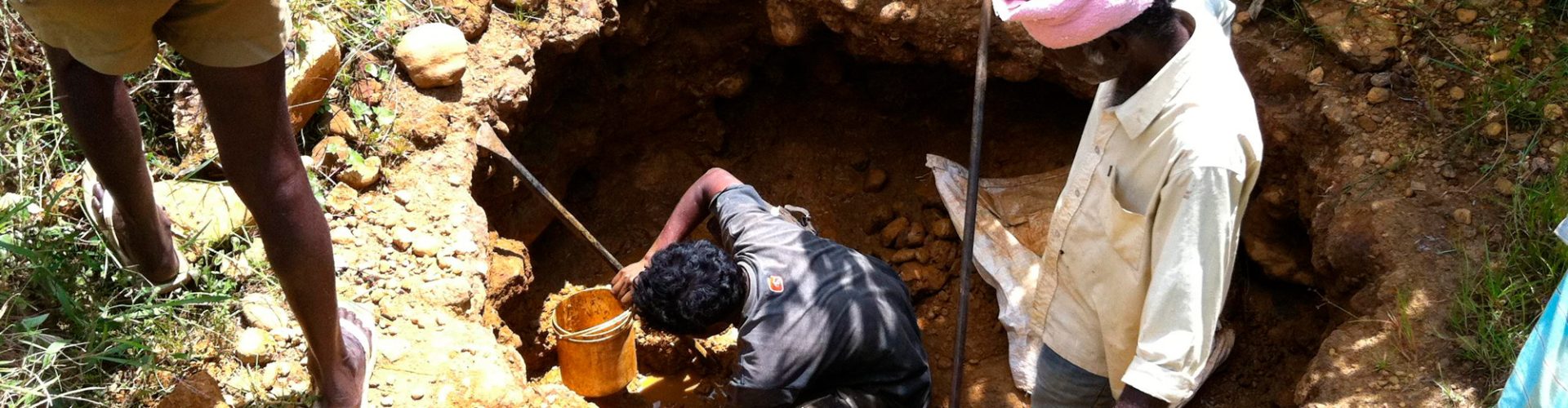
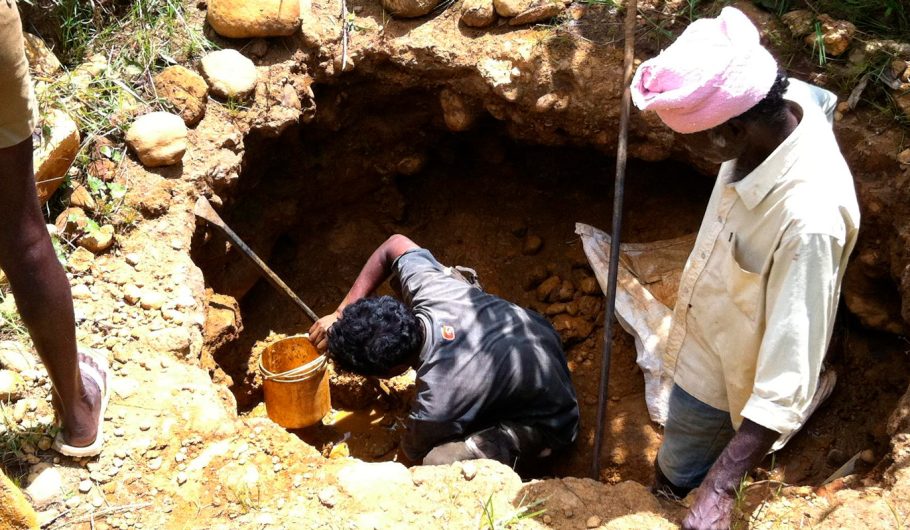
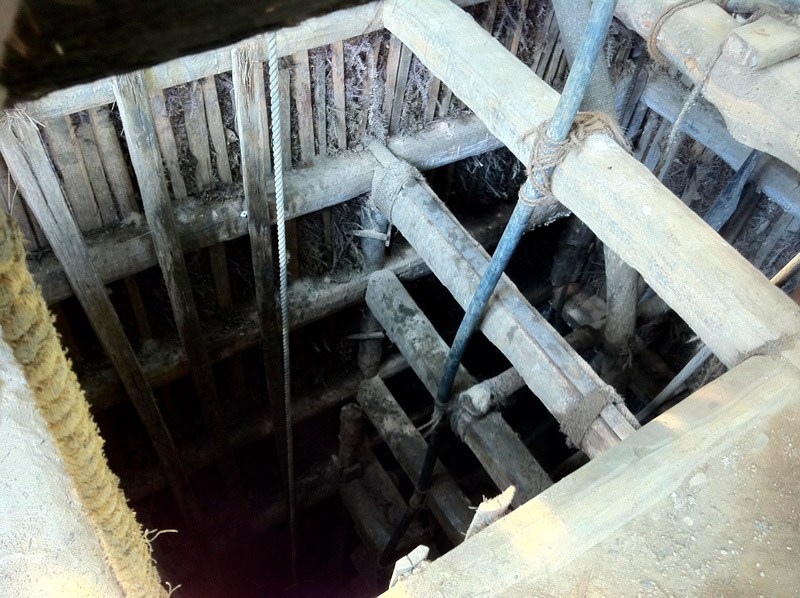
They naturally oppose these forms of mining, but – because there is a 'but' – there is a rather significant conflict of interest between the parties. Coloured gemstones are mined all over the world, usually in the old-fashioned way, where you dig a hole in the ground, often by hand or with larger machinery if you have a lot of money, after which you sort through the soil and gravel. It is extremely gruelling work, but for the individual miner it makes a difference to whether they can survive, perhaps even achieve prosperity, as opposed to starvation or death. With these realities in mind, it's hardly surprising that the miners don't care much about animal and plant life, and who do we actually think we are, asking them for this simply because we, as wealthy Westerners, prefer to let a tree live rather than have a black man and his family do so? This is the height of ignorance, in my opinion.
So, what do we do? We could, in principle, just do as we did with the fur industry: boycott all jewellery made with coloured gemstones. Apart from being an obvious aesthetic loss, it would harm significantly more people and lives than is currently the case – both in the developing world, where many of the stones are mined, and in the western world, where we create breathtakingly beautiful jewellery from coloured stones. But Vincent Pardieu actually predicts such a boycott movement within the next 2-3 years and, naturally, this leaves me, as a jewellery designer, somewhat thoughtful.
So, if we want both people and nature to survive and thrive, we need to aim for sustainable gemstone mining – ‘fair-trade gemstones’, as it were. However, this leaves us with a couple of challenges: Firstly, unlike coffee and bananas, gemstones are not a renewable resource – once they have been dug out of the ground, they are gone and cannot be replanted. This fact is, however, also positive, as it allows the land to be restored to its natural state and ensures that, in future, it will not be used or disturbed for gemstone mining again. Gemstones are also quite durable, which means that most gemstones available on the market today are of a certain age – roughly speaking, around 98% have not, in fact, been mined recently. In other words, it is not really possible to label the vast majority of gemstones currently on the market as sustainable, as they were dug out of the ground decades before the problem was even recognised.
Read more about the challenges of trade and extraction, as well as the attempt at responsible excavation, in Vincent's article in National Geographic
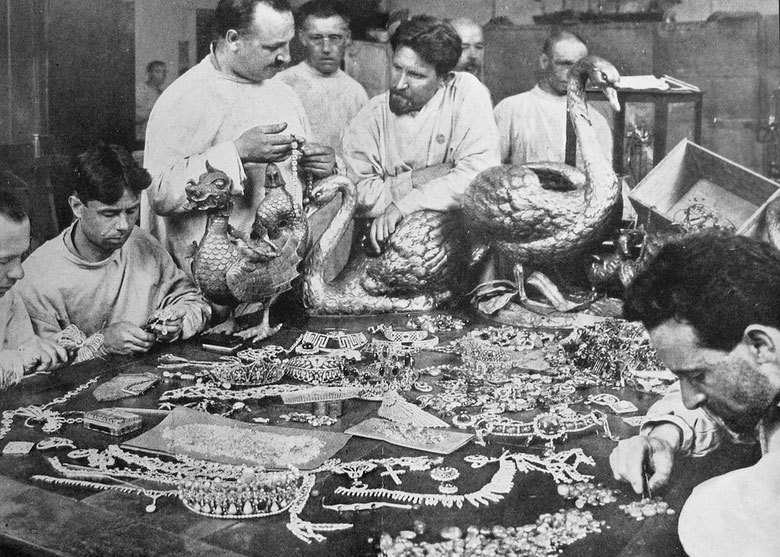
These opulent jewels, seized by the Bolsheviks from the Yusupov palaces after their flight from the Russian Revolution, are here valued and then dismantled to be sold and recycled. One can only speculate as to who might own a gemstone or two from this collection today?
The solution and perhaps a ”the silver lining”
At all times, people will always do their utmost to survive and subsequently live the best possible life. They will never worry about whether they are destroying the environment for future generations if it means they will starve now. The logical solution to this challenge is, of course, to make the extraction of precious stones – anywhere in the world – legal. This way, all processes can be controlled, and at the same time, a land rehabilitation plan can be initiated, which can be prepared and financed in advance. However, there will most likely be a number of officials who will do their best to oppose such a solution because they currently have significant financial gain when they are bribed to ”turn a blind eye”. However, this does not alter the fact that legalisation is, by all accounts, the best way to help nature recover.
Can we, as small individual jewellers and customers, do something to support sustainable gemstone extraction? First and foremost, we can strive to buy gemstones that are extracted from the few mines that are actually working in a sustainable way.
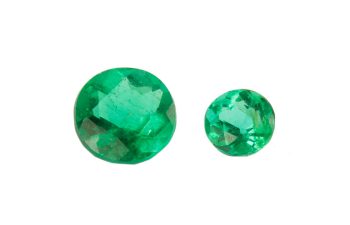
I also work regularly with another supplier who has made it part of their business model not only to travel to markets in the East and buy the cut stones, but also to buy the rough stones directly from small local mine owners. In this way, they can ensure that the gemstones have genuinely been sourced in a manner that is responsible for all parties involved. They then have the stones cut by carefully selected cutters who do not use child labour or other unscrupulous methods to shape the gemstones to the high standard that characterises this supplier. When working so closely with one’s suppliers, it is, of course, far easier to monitor and therefore trust that the gemstones have been sourced responsibly than is the case with conventionally mined stones, which often pass through many (sometimes dubious) hands before we incorporate them into our jewellery. But these beautiful, untreated gemstones (of high quality) also cost more! At least 30% more than other gemstones produced using traditional methods and which cannot be traced.
What about diamonds?
We've all heard of blood diamonds, not least after the film of the same name starring Leonardo di Caprio.
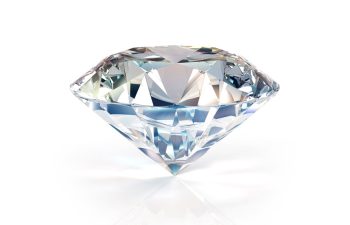
Diamonds are in themselves a complicated story – in fact, one could write books about the many nuances of the gemstone industry, but here's the short version: Via Kimberley Process Almost 100% of all the diamonds traded through official channels are now conflict-free. Our primary diamond supplier, Pure Diamonds, is the only Danish diamond company to be a member of the Beurs Voor Diamanthandel in Antwerp, which is one of the world’s oldest and most prestigious diamond exchanges. This guarantees integrity, professionalism, in-depth industry knowledge and adherence to the highest ethical standards. Members are committed to adhering to a code of conduct, which, amongst other things, requires them to ensure fair trade wherever possible (typically in mining) and to ensure that employees thrive in a positive and healthy working environment. Just like other gemstones, synthetic diamonds can also be produced, which, amongst other things, Diamond Foundry – incidentally, Leonardo DiCaprio is one of the main shareholders.
Besides striving to buy responsibly produced gemstones, we can support projects near the mines that produce these stones. WCS Madagascar for example, helps to preserve the national park that surrounds the newly discovered Bemainty sapphire mine.
Synthetic gemstones
We could also simply choose to use lab-created gemstones – gemstones that are both physically and chemically identical to natural ones, but which are man-made. The mineralogical equivalent of ”vegan leather shoes” – shoes made of plastic. It is admittedly not the same as natural gemstones, as these have a long history (they have after all been in the making for millions of years), and they also lack the small inclusions that give each individual gemstone its unique character/personality, but it is absolutely a worthy alternative to the glittering stones we extract from the earth. However, it is quite important that these gemstones are labelled as man-made in trade, in order not to confuse them with ”the real deal”. In fact, certain synthetic gemstones have been produced for nearly a century, so the argument ”but it belonged to my grandmother” is unfortunately not a sure indicator that the cornflower-blue sapphire in the old gold ring is the genuine article.

If we choose not to make use of any of the solutions mentioned above, there is nevertheless one positive thing to say about traditionally mined gemstones: As mentioned, 98% of these stones were mined a long time ago and have already passed through countless hands – both dealers and owners – as jewellery featuring valuable gemstones, which may go out of fashion or simply no longer be cherished, can always be recycled by removing the old gemstone and reusing both it and the gold. However, there are quite a few people who do not care for the idea of ”second-hand” gemstones (or anything second-hand, for that matter), whilst others appreciate the concept of recycling – or, in the case of this product, ”upgrading”. The only (and slightly sexier) exception to this rule is, of course, if a particular gemstone has been in royal possession or, for example, belonged to a celebrity such as Elizabeth Taylor.

However, recycling is the best we can do for the environment. Exactly as with valuable (precious) metals, the gemstones have after all been wrested from Mother Earth/Julia Roberts, and we therefore best appreciate the hard-working miners' efforts by recycling the gemstones that, most likely (and often literally), have cost blood, sweat, and tears. However, some of these older gemstones will show signs of having been used and worn for many years – their facets have become worn, and the stone therefore appears a little dull. This can, however, be rectified – they can be re-cut so they regain their glow and become shiny to look at once more. It is not free, but if you own a precious gemstone, it is worth the price and effort.

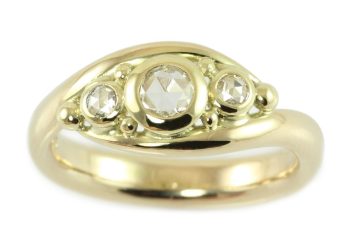
So, basically, if you have old jewellery with gemstones, appreciate them and perhaps choose to reuse them – they deserve it! If you would like me to design a piece of jewellery for you using a family heirloom, you can read more about the process itself here, and you are naturally more than welcome to contact me for a no-obligation design meeting.
About Vincent Pardieu
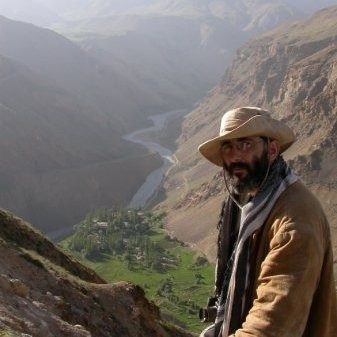
This colourful gentleman has travelled the world for GIA, collecting samples of coloured gemstone varieties to be used as comparative material to determine the origin of a particular gemstone. Vincent is a gemmologist with an immensely broad knowledge, not only when it comes to gemstones and the conditions under which they are created, but also with great knowledge and understanding of the sociological/social impact on different world cultures when choosing to excavate gemstones in a given area.
Blog categories