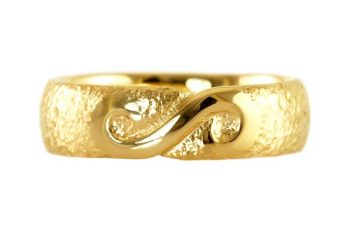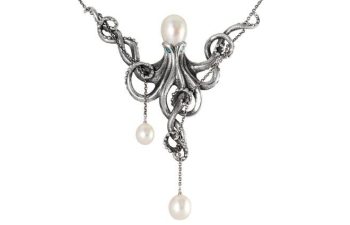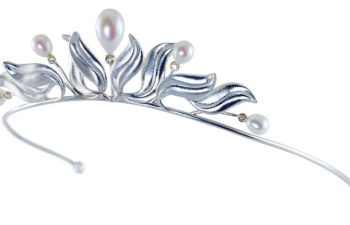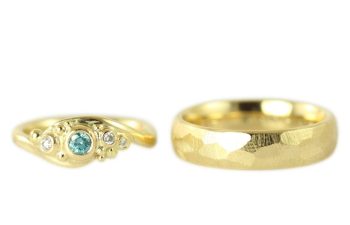




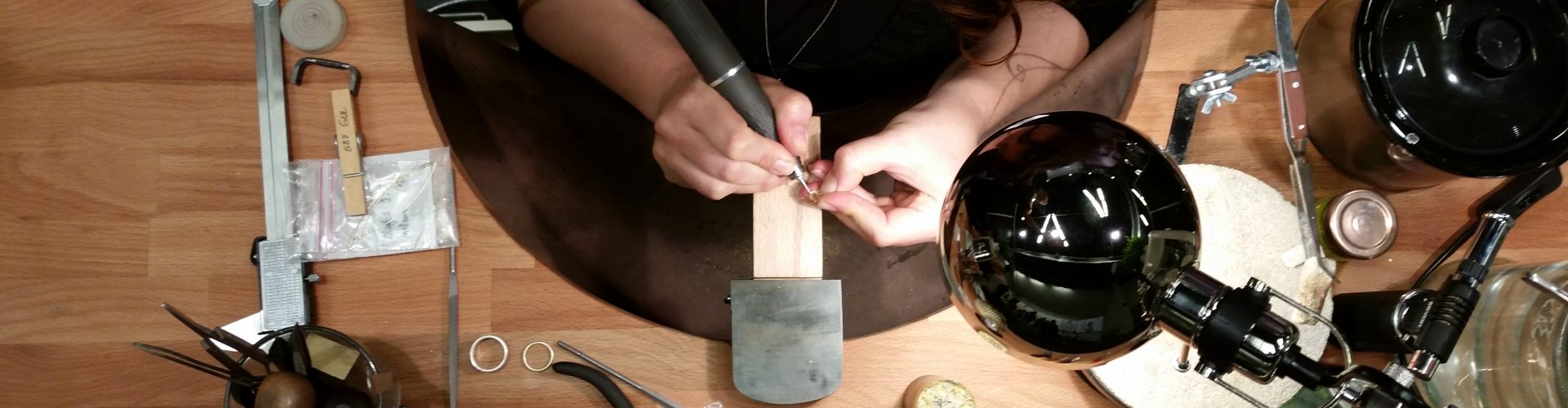
Here comes the explanation, and we'll start with Adam and Eve/how a piece of jewellery is made. A piece of jewellery can be constructed in several different ways:
-
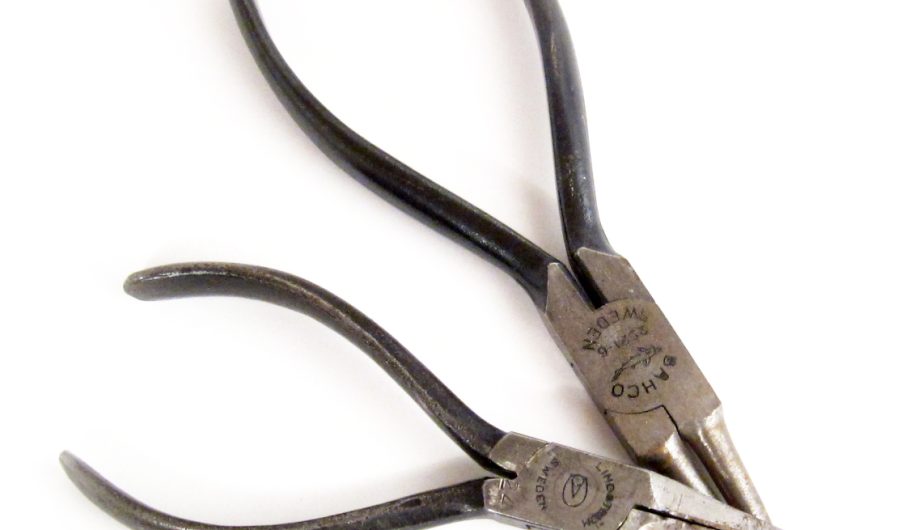
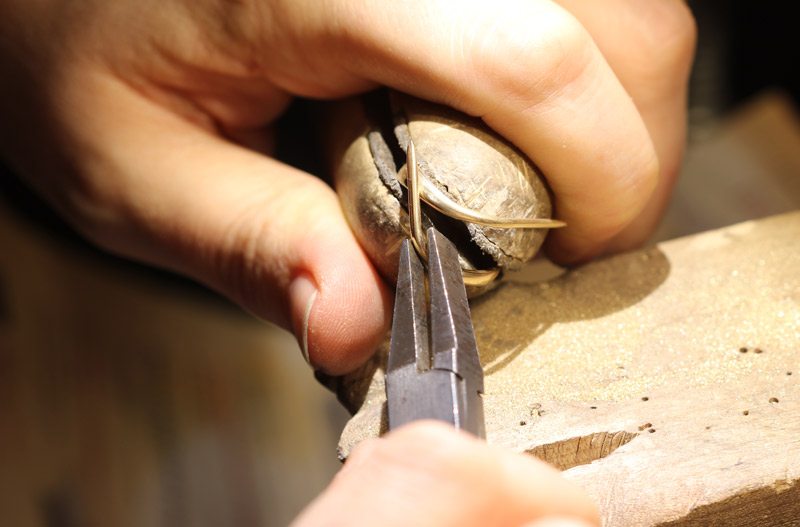
Of gold thread and plate, which is shaped, filed, soldered, and fitted into the final piece of jewellery. This is the classic method and in many cases a good strategy – especially if your old gold is to be recycled because it has sentimental value.
-
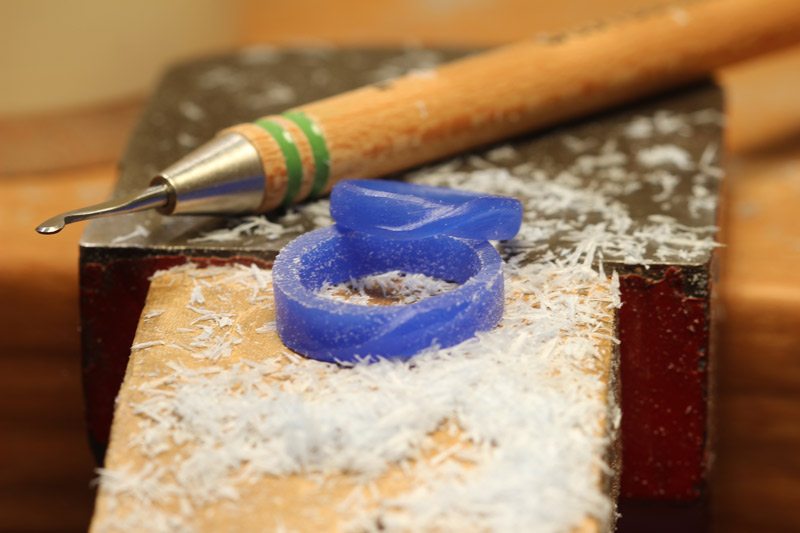
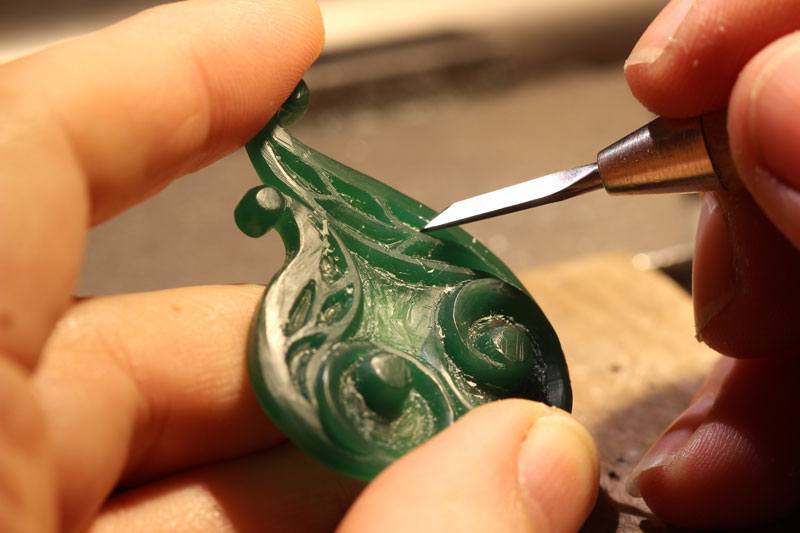
Carved in wax. Here, the finished wax model (after hours of work with small, specially shaped knives) is cast in plaster, melted out, and then the cavity in the plaster is filled with molten metal. When the plaster has dissolved, you have a 1:1 version of the wax model in gold, which still requires some post-processing to achieve the desired finish. This is the correct solution if the jewellery is very three-dimensional and therefore cannot be constructed from wire or sheet.
-
3D design. The obvious choice if the design contains many very small details and the piece of jewellery needs to be 100% symmetrical. We work with a skilled 3D designer who can turn my sketches into a beautiful design on the computer. As with wax, the process takes several hours. Once the design is finalised after numerous rounds of revisions and a couple of test prints, it is printed in wax and cast in the same way as the hand-carved wax model.
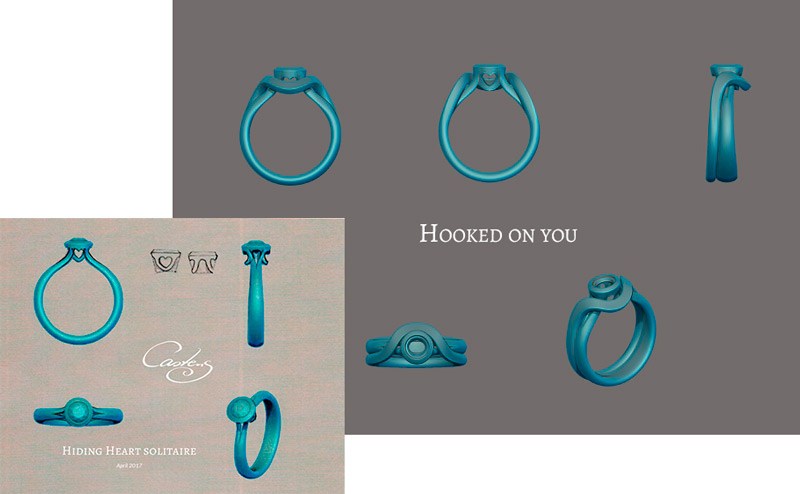
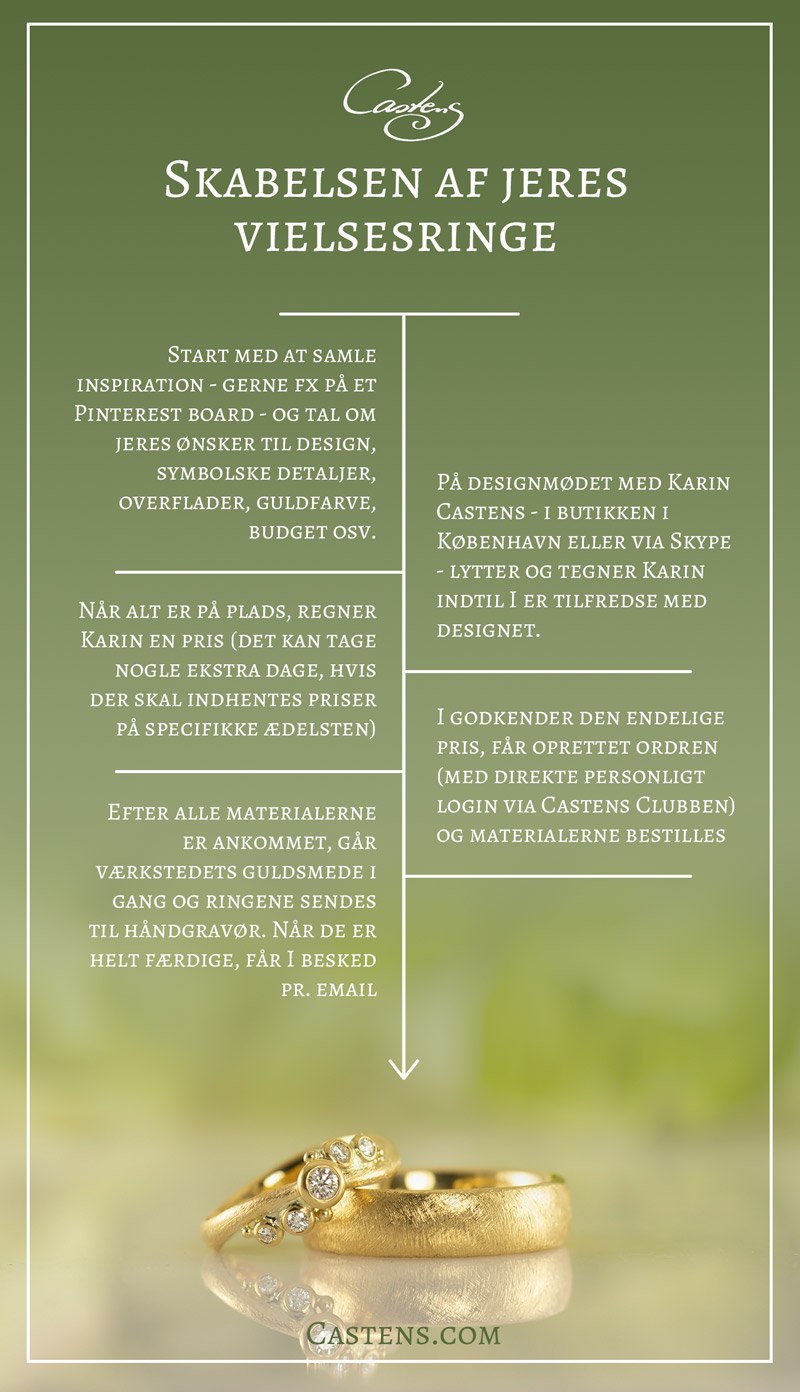
Once the jewellery itself is finished, we set any stones and give it the final polish, which naturally also takes some time. Handmade jewellery must therefore go through several stages before you end up with your very own, unique piece of jewellery:
How are mass-produced jewellery made?
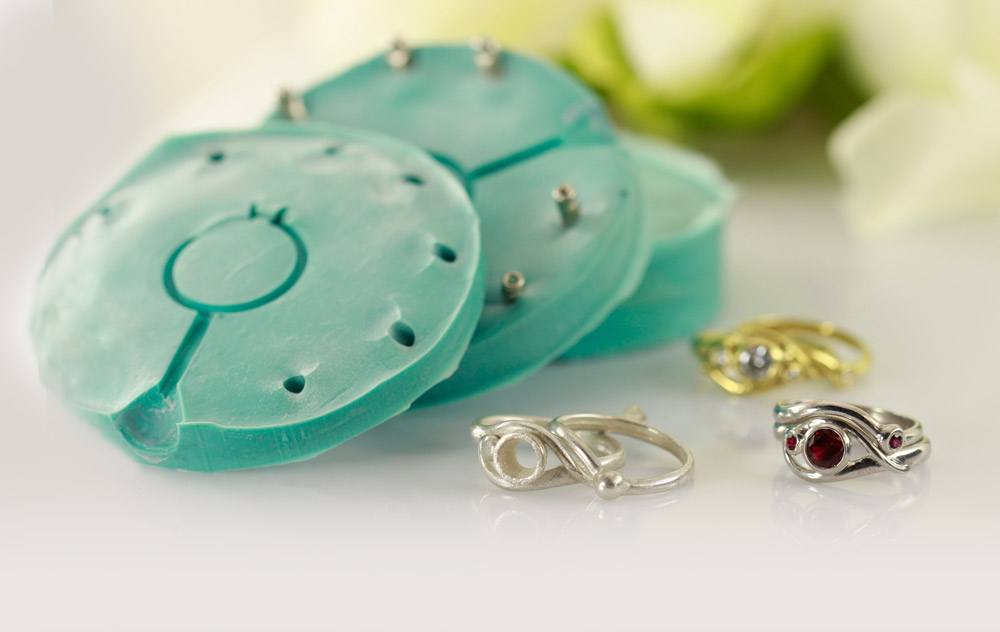
Unique jewellery is made in one of the three ways described above. If you want to make more than one piece of jewellery with the same shape, you make a rubber mould of the finished piece before any stones are set. This rubber mould can then be filled again and again with wax. These wax models are then cast in plaster and subsequently become gold versions, just like versions 2 and 3 described above. This way, many identical pieces of jewellery can be made.
It goes without saying that the most expensive process when creating mass-produced jewellery is the initial one – that is, building the first piece of jewellery, regardless of the technique used. There are simply hours of work involved in the process, which is therefore also often the most expensive part of a custom-designed piece of jewellery – at least here in this country. If you set a large, beautiful diamond in it, these proportions will naturally change, so it is unequivocally the stone that ”takes the prize” – literally.
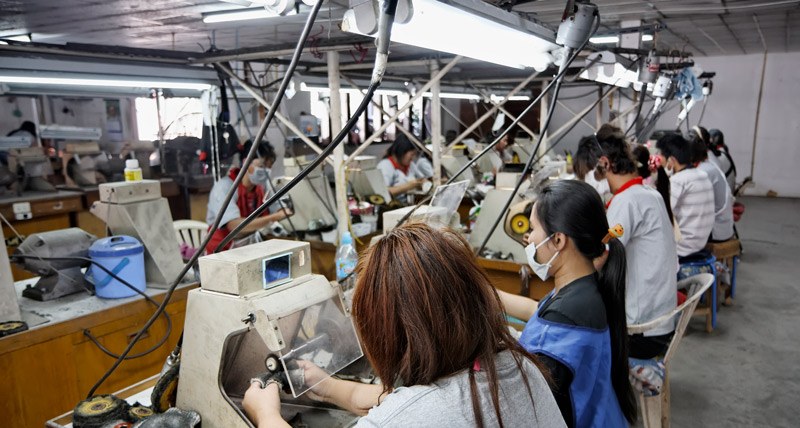
Once this initial model has been made – and its form established – it becomes somewhat cheaper, as then it is the actual production and materials that cost. In large factories where jewellery is mass-produced in the hundreds of thousands (they are often located in the Far East), the process has been made extremely efficient and therefore the jewellery can be sold at a significantly lower price than if you were to have something similar custom-made by your local jeweller.
The mass-produced process is, to an extent, the same for both cheap and expensive jewellery. The main difference lies in the branding and, consequently, the perceived value of a piece of jewellery. However, mass-produced luxury jewellery is, of course, generally of a higher quality than its cheaper counterparts: 18k gold is used instead of 8k, cubic zirconia has been replaced with high-quality diamonds, and the jewellery is typically a little heavier because more gold has been used. Furthermore, the finish will be better, and flaws are an exceedingly rare occurrence because quality control is (and should be) high.
At Castens, we also produce mass-produced jewellery, although that’s a rather grand term to use when, in reality, we produce relatively few items (compared to the large factories mentioned earlier). We therefore settle for calling it ”series production”. The fact that we can use techniques that recreate the same form gives us a certain freedom, which is the major advantage in a small workshop like ours: I may have decided, for example, that the Adorabella series is available in either silver or white gold with diamonds and Tahitian pearls. But what if you love the form, but would just like it in yellow gold, with rubies instead of diamonds and a white pearl? Well, then it’s possible, because it’s MY workshop and we can do as we please. Here, it’s not a question of whether a piece of jewellery made of specific materials exists in a catalogue or not.
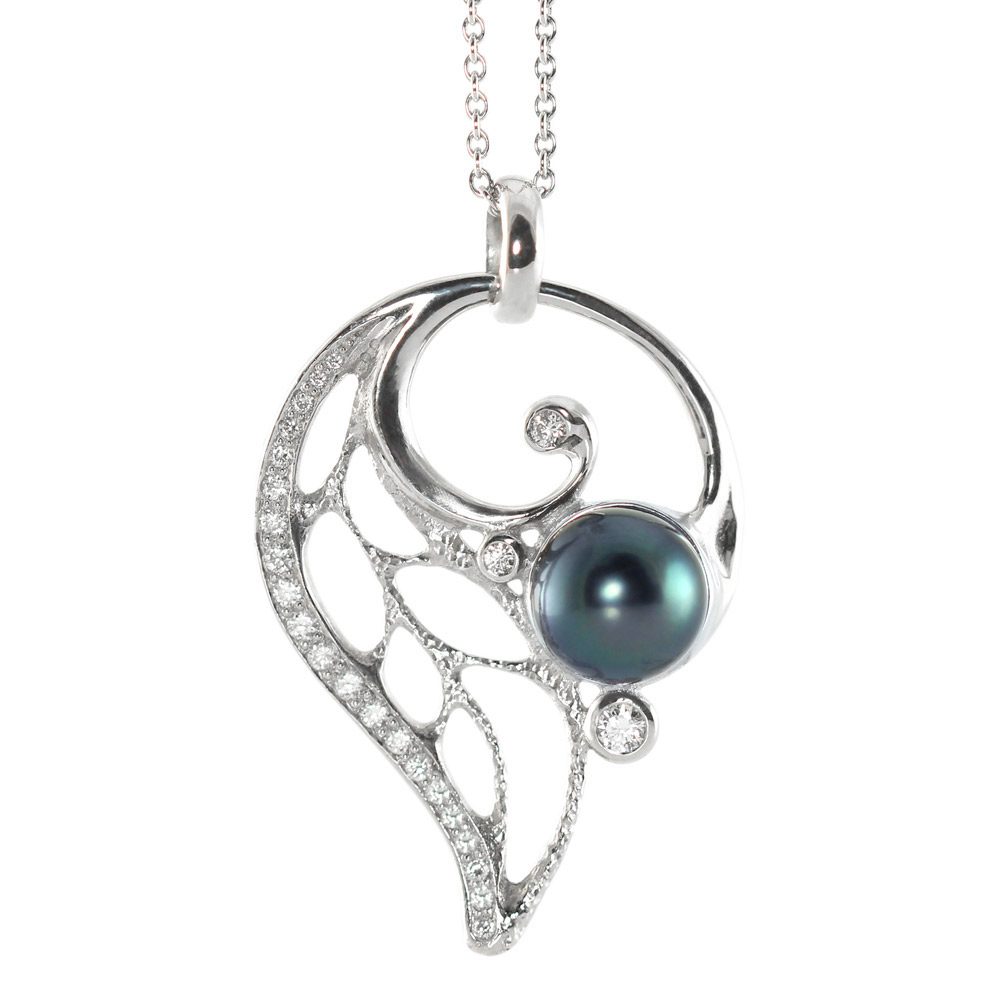
In fact, we will soon be systemising these possibilities through the concept we call ”Customized”. The concept is, in its simplest form, that if we have a rubber mould of a piece of jewellery that you like, we give you complete freedom to choose between different metals, finishes, stones and extra details that can be soldered on. In this way, you can help to specially design YOUR unique version of a given piece of jewellery.
You can, of course, continue to buy finished versions in the shop or have a piece of jewellery custom-made entirely from scratch for you.

We never copy
Incidentally, for purely principled reasons, we do not copy other people's jewellery. I am passionate about creating unique designs, and would therefore naturally be upset if I saw a copy at another jeweller's. So, if you come to us with a picture of a piece of jewellery that you want us to make an exact copy of, the answer will always be, ”We can make something similar with a Castens twist, but NOT a copy.”.
I understand the difference but still have a budget!
Having said all that, we can usually manage to create, for example, wedding rings within any budget – there are many factors we can adjust:
-
How complicated is the design? Can we cut down on the time and therefore the cost by simplifying it?
-
Can we go from e.g. 18k to 14k gold? Or maybe even to silver?
-
How about a slightly smaller diamond?
-
Or perhaps a slightly ”less fine” quality diamond, for example, going from TW/VVS to W/SI2?
Fundamentally, there is nothing wrong with cheap, mass-produced jewellery. All jewellery has its justification for existence, and it's perfectly honest to have a budget! However, for the reason described above, you cannot expect to get a handmade piece of jewellery, even if it's ”just meant to be like the one from brand X, but with a slight alteration”, at a price that matches the mass-produced original.
If you want an idea of what handmade jewellery from Castens’ workshop costs, take a look around this page. We have set prices for the specific designs to give you an opportunity to see what a similar design in similar materials could cost. As described above, we can also adjust a great deal both up and down.

At Castens, I pride myself on creating jewellery that suits the individual who will wear it. A design meeting is always about what will make THIS specific person happiest, best fits their lifestyle, and, to the greatest extent possible, reflects who they are. I sketch until you are satisfied, and then we build the jewellery in our workshop here in Copenhagen – which you can peek into when you visit us, by the way. This way, we ensure you have a good experience and a piece of jewellery that you will love for the rest of your life. Do you feel inspired?
Blog categories