

Art Nouveau, also (but not only) known as Jugendstil, Skønvirke or Stile Liberty was a very popular design style from around 1890 to 1900 - the end of the ”Victorian Era”. The style was originally inspired by Japanese woodblock prints (ukiyo-e), which had just been brought to Europe.

“Great Wave of Kanagava”
The two-dimensional flowing lines of these images captured the imagination of artists, architects and designers, but were interpreted quite differently across the Western world: in Germany, Austria, Finland and the UK, the style often presented itself as rather strict, often symmetrical, only just interrupted and accentuated by decorative elements consisting of human figures, flowers and patterns.
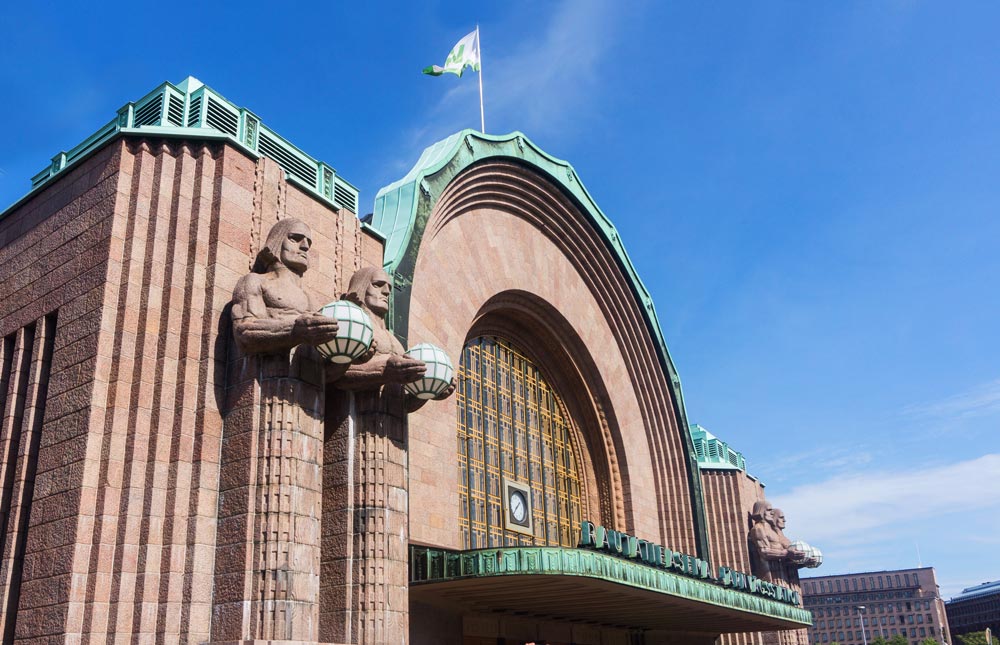
Helsinki Central Station by architect Eliel Saarinen
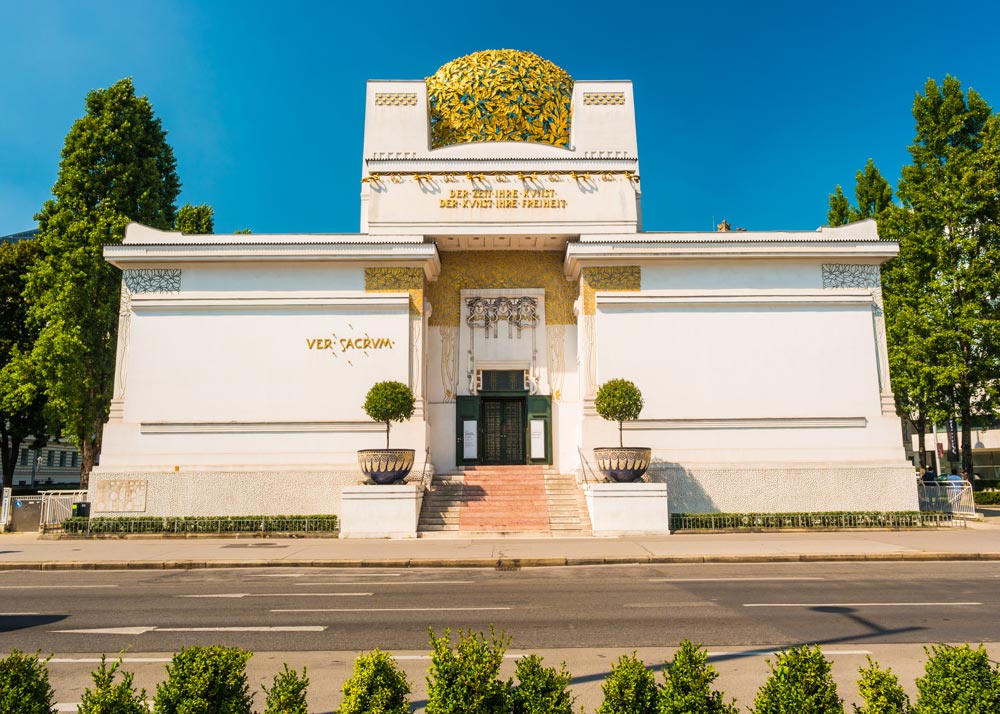
The exhibition building for the art collective Vienna Secession by Joseph Maria Olbrich
Latin and French-based language areas (plus many Eastern European countries) handled the inspiration with much less restraint. The buildings (including furniture) designed by Belgian Horta were elegant and delicate, as if grown in an enchanted forest:

Maison Horta in Brussels
While the Spanish architect Gaudi created powerful buildings that seemed equal parts childlike and alien - almost as if created by a crazy alien:
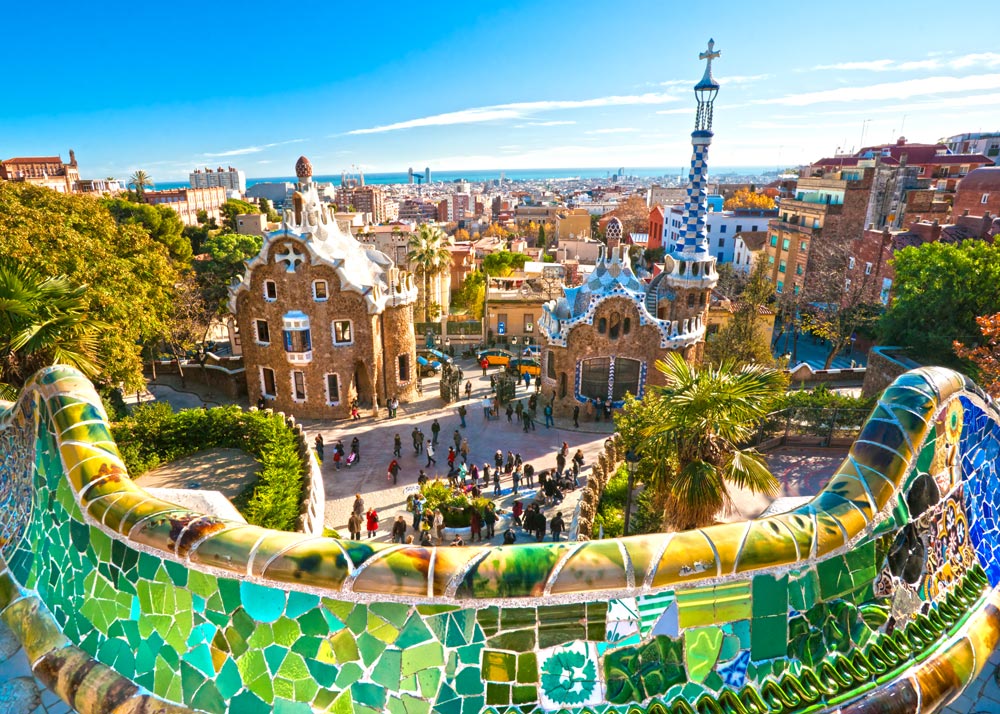
Park Güell in Barcelona
And only if your address since birth has been “Under a rock” will you never have come across Czech artist Mucha's prints:
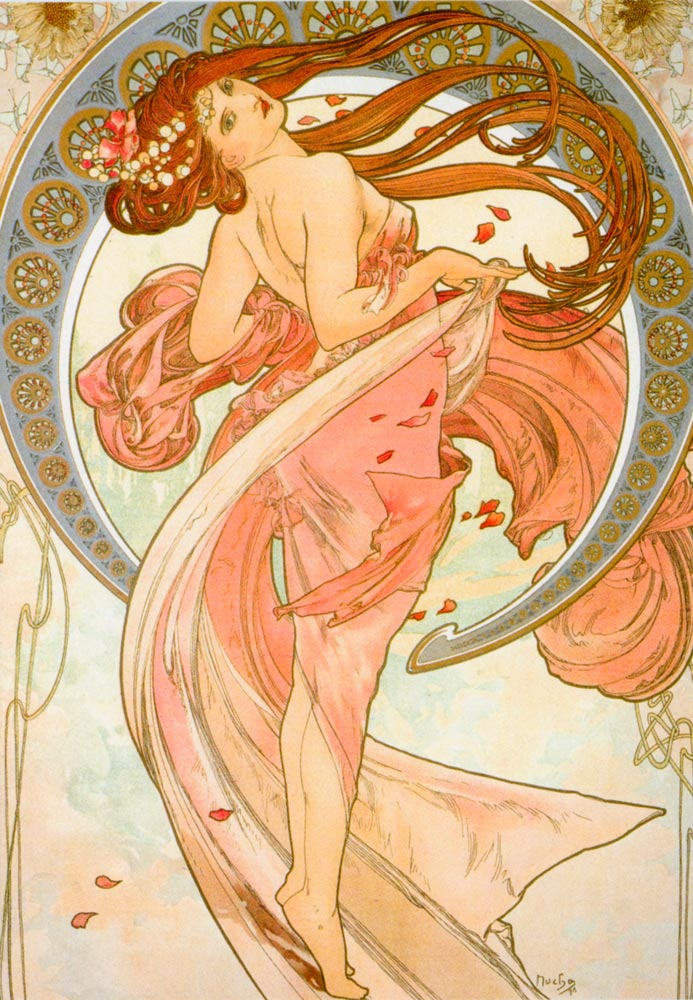
Alphonse Mucha - Dance
Art Nouveau Jewellery
Many amazing pieces of jewellery were created during this period, but Frenchman René Lalique is considered the undisputed master of costly jewellery (and later glassware). He was something of a rebel as an artist, daring to break convention by combining gold and diamonds with cheaper materials such as horn, bone and ”semi-precious” stones like turquoise, which was quickly copied by other jewellers. Something that is now common among modern jewellery artists, but was completely unheard of among contemporary goldsmiths.
The new style used old motifs in new ways but also introduced completely new motifs. Nature was the main source of inspiration, but unlike before, less charming elements suddenly became fashionable: Insects, stinging fish and bats for example. A good example of this is a hairpin by Lalique with wasps, which you can admire at The Design Museum Copenhagen. What a message to send to interested gentlemen who might be circling the carrier: “Don't get too close or you'll get stung!” In fact, the dangerously alluring woman - the femme fatale - had itself become a common motif in Art Nouveau. The female body had often been used as a decorative element throughout the previous centuries, but suddenly she was given a new identity as powerful as well as alluring - probably (also) inspired by the suffragette movement, which at this time was fighting hard to secure the right to vote for women that we enjoy the privilege of today.
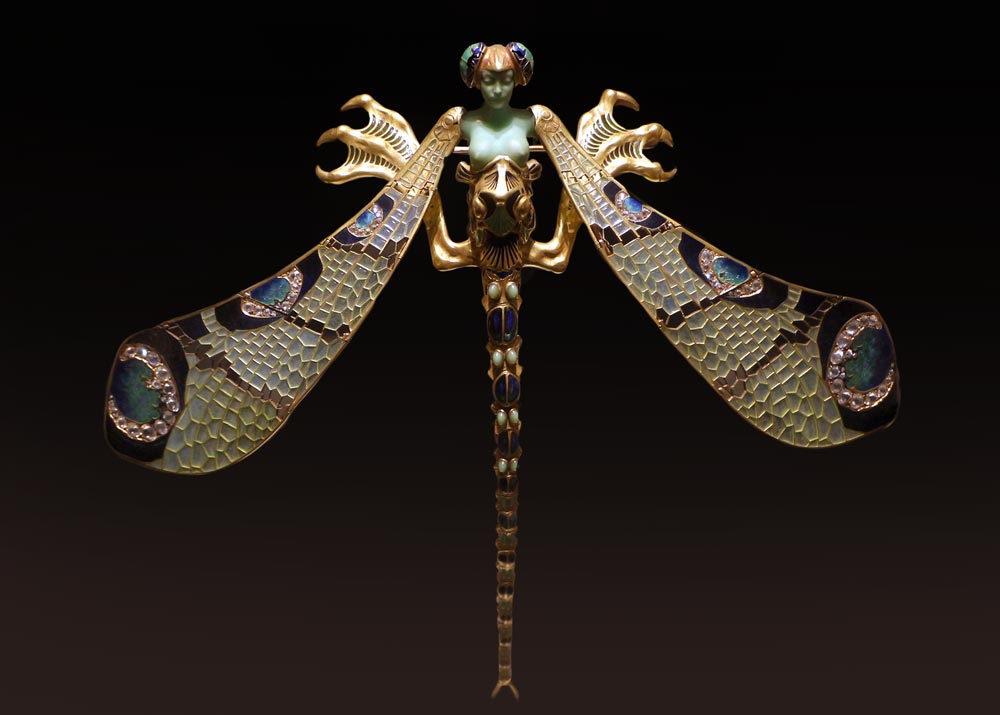
”The Goldsmith Woman” by Lalique (which can be admired at Calouste Gulbenkian Museum in Lisbon) combines several of these Art Nouveau motifs into one sumptuous piece of jewellery: a gently smiling female head and torso are combined with the body and wings of a glittering dragonfly - but with the powerful claws of a reptile or bird of prey partially hidden behind her back. This piece of jewellery is both fascinating as an object that combines beauty and symbolism, but also because it is worn in a very special way: it is a brooch - or rather a “corsage”, meaning a very large brooch intended to be worn centrally on the woman's chest. Placed like this, the dragonfly's hinged wings and tail will fall over the sides and between her breasts - an extremely sensual piece of jewellery in keeping with the clothes and jewellery worn by many of Mucha's female characters.
Years ago, I also experimented with figures and faces carved out of wood, horn, mother-of-pearl, etc - exactly (but not nearly as exquisitely and skilfully executed) as Lalique. Now I rarely find time for such literally marvellous experiments, but looking at these pictures, which are about 20 years old, I feel that I would love to work with wood and mother-of-pearl in this way again!
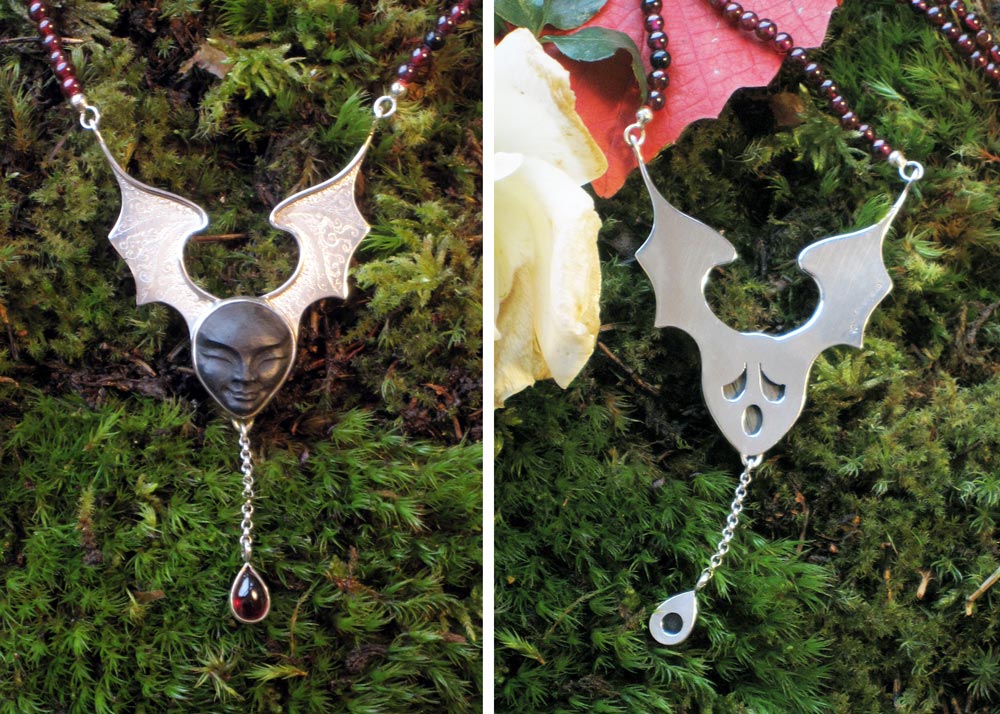
Necklace with a dangerous and alluring bat woman: A serene smiling face carved from ebony, set between silver wings and accented with a garnet drop and pearls. Note the back!
When Art Nouveau became extremely popular at the end of the 19th century - almost overnight - it meant that ”everyone and their grandmother” suddenly embraced this new and exciting way of designing and decorating things. The industrial revolution had just made it possible to mass produce objects, which could therefore be sold much cheaper than before. Therefore, modern goods with a specific design were suddenly available to most people - instead of only the wealthy elite. Inevitably, this led to an equally rapid decline in interest in Art Nouveau because the elite didn't like being copied by the masses, so they rushed on to the next new thing. Because a fashion often results in a counter-style, after only 10 years Art Nouveau was replaced by the much more architectural, symmetrical and (at least compared to the previous flavour) almost minimalist style of Art Deco.
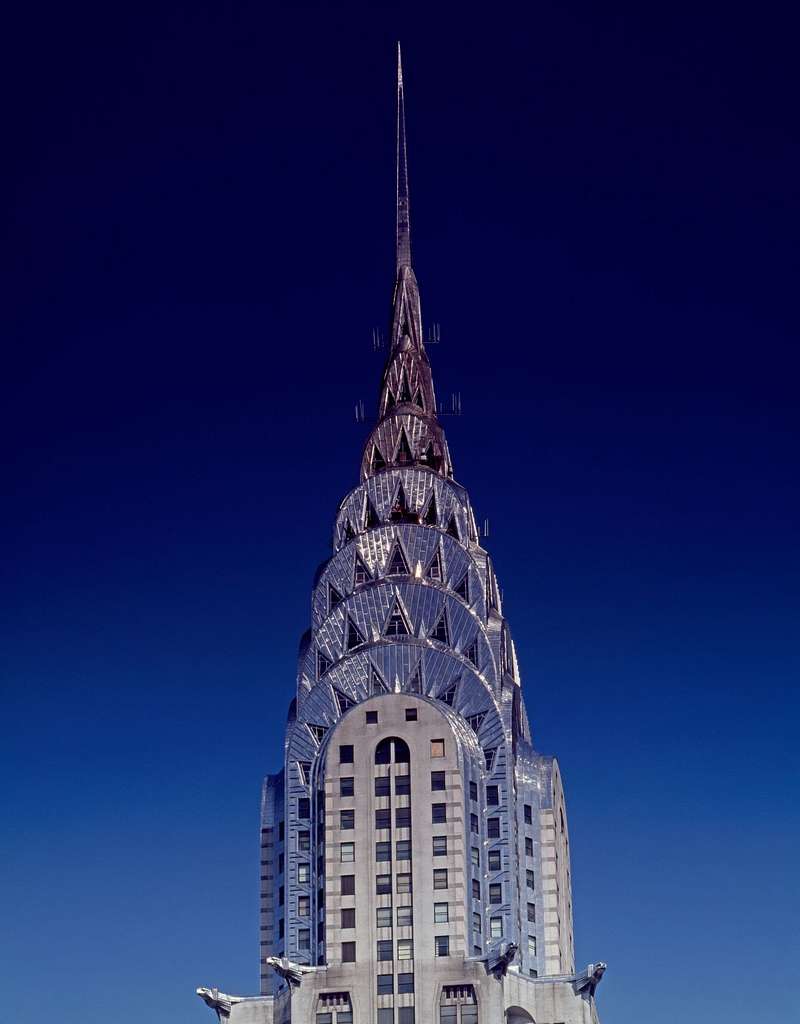
Chrysler Building by William Van Alen in New York
Photographs in the Carol M. Highsmith Archive, Library of Congress, Prints and Photographs Division
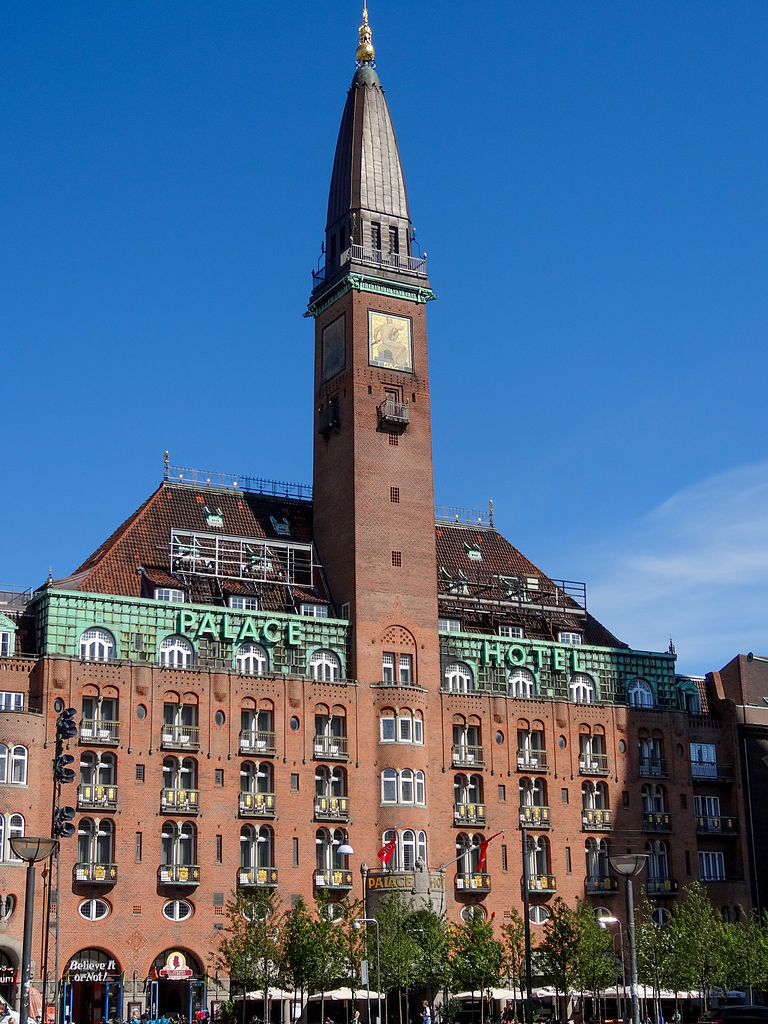
Because Art Nouveau is so distinctive, it has had both enthusiasts and fierce opponents ever since. Unfortunately, many of these opponents seem to have been located in city councils and boardrooms, where they decided to tear down many of the (to them) old-fashioned and overdecorated buildings, which is why only a few can still be seen on the streets of Europe and America. However, there are still a few architectural Art Nouveau gems to be found here and there. If you want to see more than a single beautiful building, take a trip to Prague, where entire neighbourhoods still consist of these highly decorative wonders. In Copenhagen, architect Anton Rosen designed several buildings, including the Palace Hotel at City Hall Square, which can still be admired.
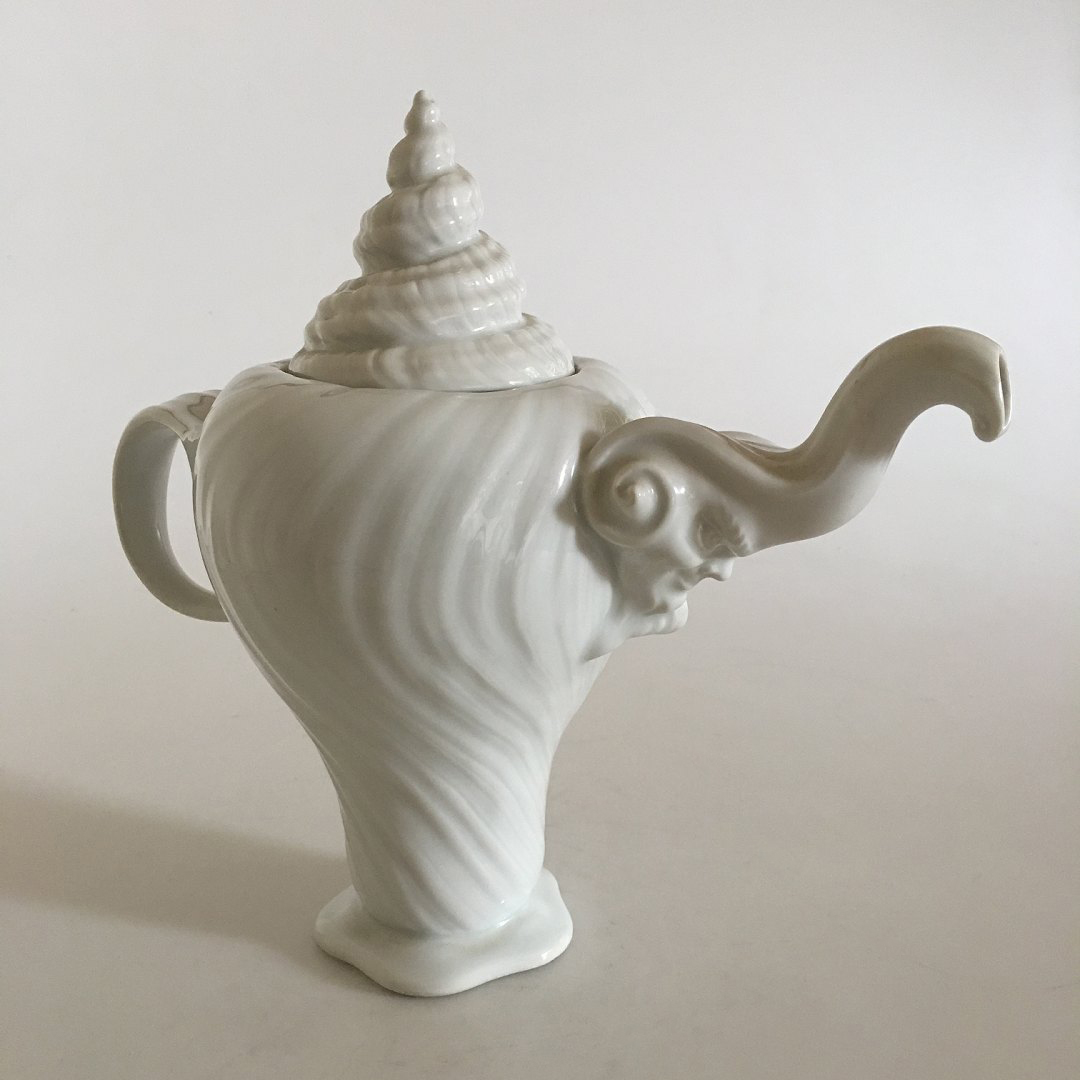
In the 60s, Art Nouveau experienced a brief but passionate resurgence among the flower children: a well-defined, relatively small group of people who were usually not among the best cut. As a result, this rekindled love has left far fewer and less durable traces. The few buildings created by the flower children were often built hidden away in ’alternative neighbourhoods” such as Christiania here in Copenhagen. Instead, most of the ”Jugendstil version 0.2” love was expressed in less durable media: on T-shirts, record covers and posters, which is why today only the most dedicated collectors own a flower-power-art-nouveau item. There are exceptions to this rule, however, including Danish-Israeli artist Arje Griegst, who created Lalique-inspired jewellery with faces cut out of precious gemstones, set in gold and embellished with diamonds, and impractical but stunningly beautiful tableware. A retrospective exhibition of his jewellery almost three decades ago made me fall in love with this particular medium of Art Nouveau-inspired designs and thus laid the inspirational foundation for my later jewellery career.
Contemporary Art Nouveau jewellery from Castens
Strolling through my jewellery garden today, you'll definitely notice the distinct Art Nouveau vibe, although of course in a modern interpretation: the famous/infamous whiplash lines appear again and again along with more figurative elements like leaves, dragons and flowers. However, you rarely find actual Art Nouveau ”showpieces” in my workshop, because for many it feels like a bit ”too much” to wear such large and expressive jewellery. Instead, I aim to create everyday jewellery with a solid nod to the organic softness of Art Nouveau, which therefore doesn't conflict with practicality or seem overly eccentric.
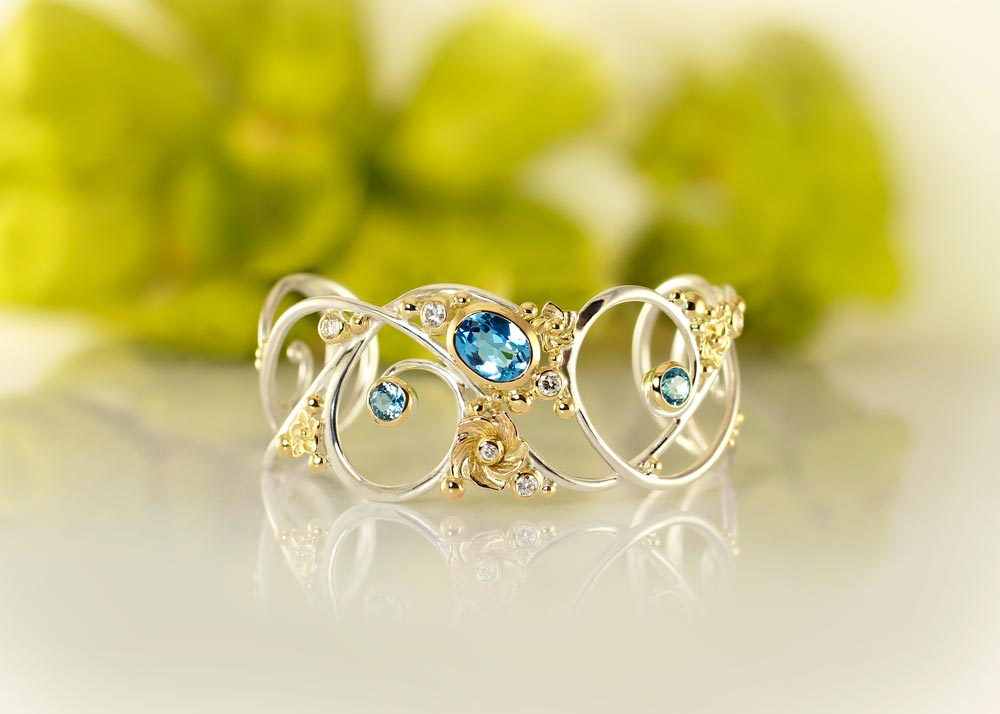
But to be honest, “eccentric” is a badge of honour in my book. I have always admired and respected those who boldly and with great conviction dare to leave the beaten path. So for all you eccentrics out there, here is a grandiose Art Nouveau-inspired bangle made up of whiplash lines and swirls of silver, gold flowers and bubbles plus blue topaz and diamonds. There's nothing subtle about this piece of jewellery and I love it! It was made to order for a customer, but before I jumped into sprinkling myself with all the embellishments, I took a mould of the bangle. This means you can have your very own version created - ”naked” or with your personalised choice of decoration.
As I said, my everyday jewellery isn't huge, has no sharp prongs and has a low profile. Therefore, they don't get stuck in tight pockets, ruin tights or scratch baby cheeks. For me, “modern Art Nouveau everyday jewellery” is practical, comfortable to wear and exudes the special, playful vibe of the style. All the following jewellery can be created in silver, gold or white gold with your choice of finishes, details and gemstones: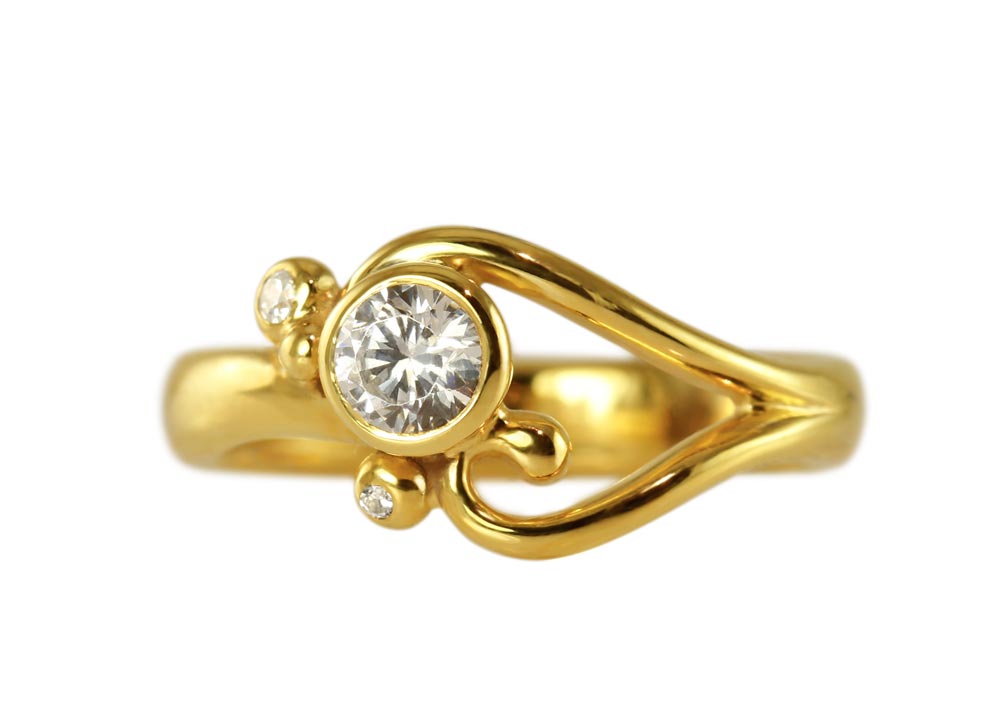
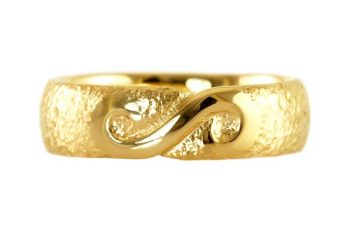
Nanaya - hides a heart and has the option of adding a narrow companion ring to create a ”bridal set”: engagement ring and wedding ring in one.
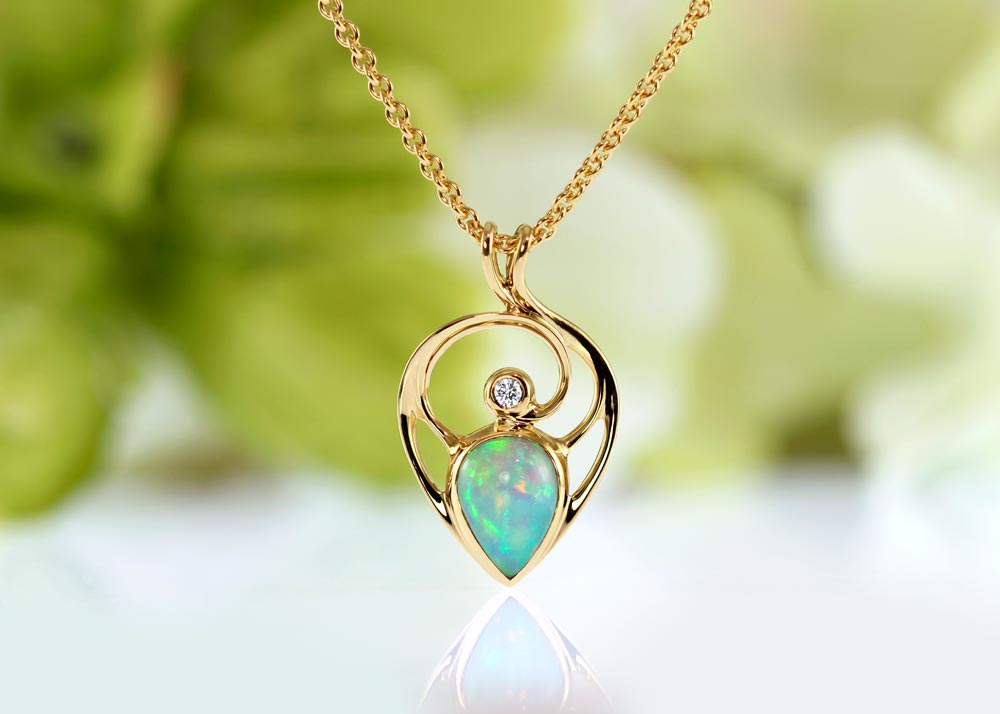
Ilyana - Pendant with an inverted cabochon cut stone - in this case an opal
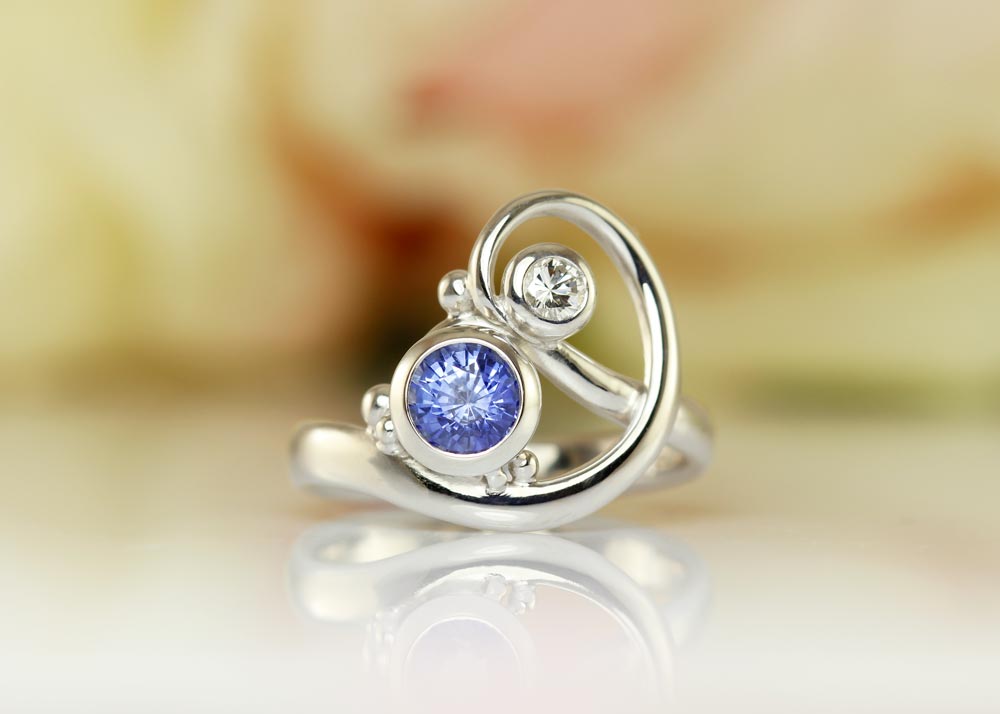
Avarelle - Distinctly asymmetrical and with a powerful curve
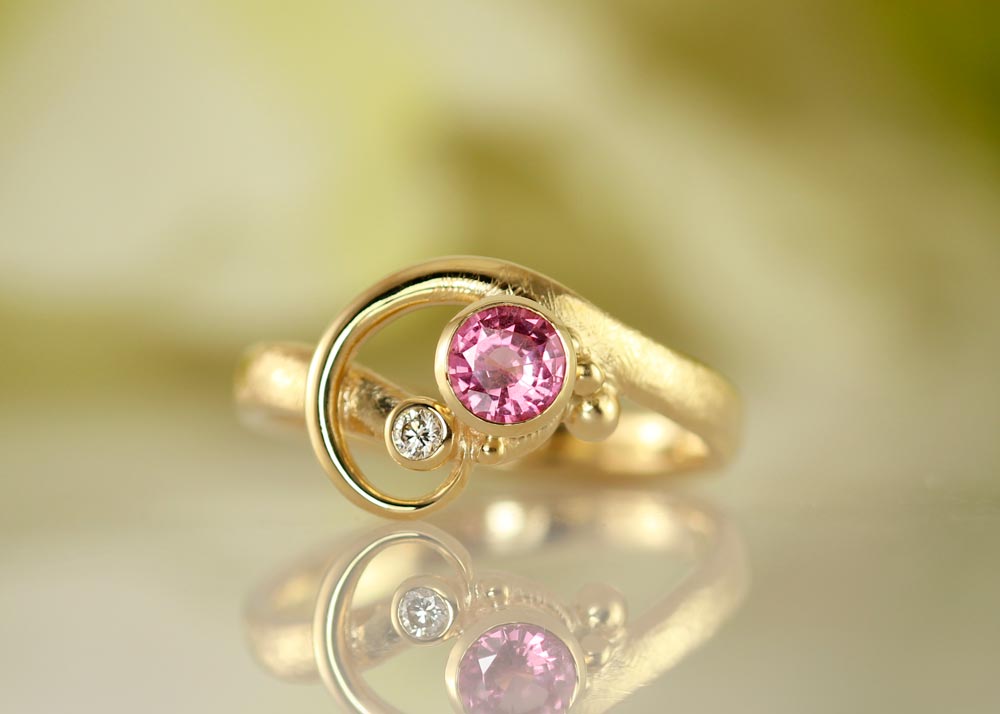
Alva - The little sister of Avarelle - for those who love the look, if only it was a bit more toned down
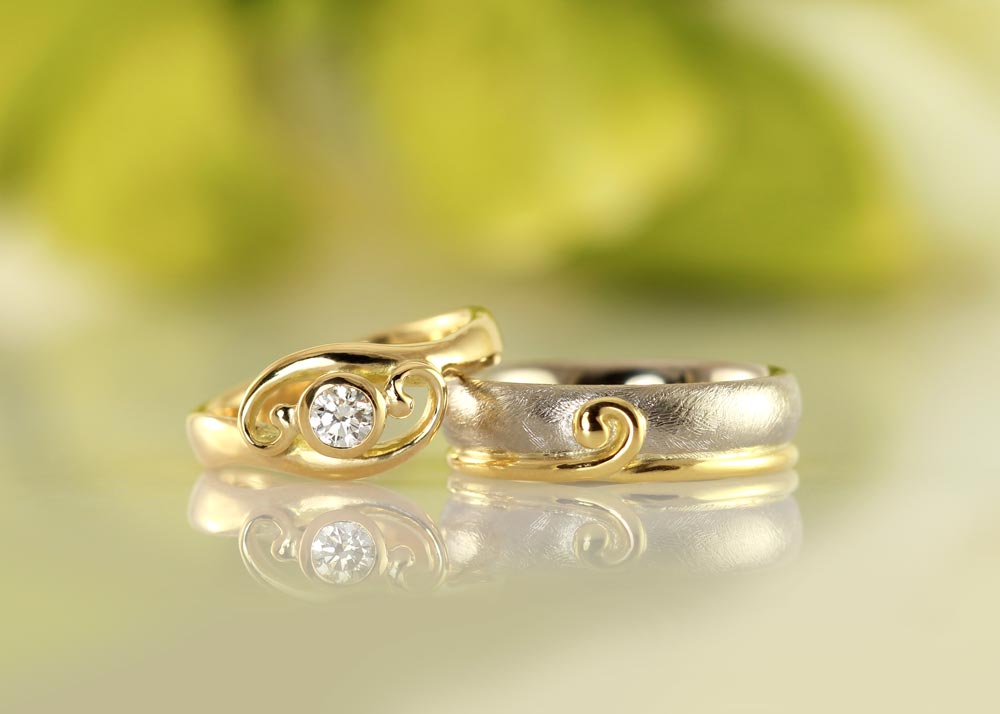
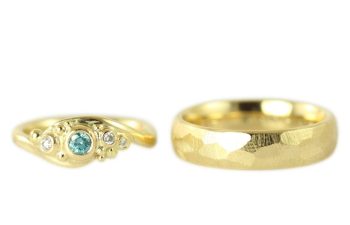
Curly Embrace wedding rings - One of the many versions of the Embrace design that lets the two ends of the ring rail meet and wrap around a stone in the centre.
His ring is quite bravely equipped with a curl too!
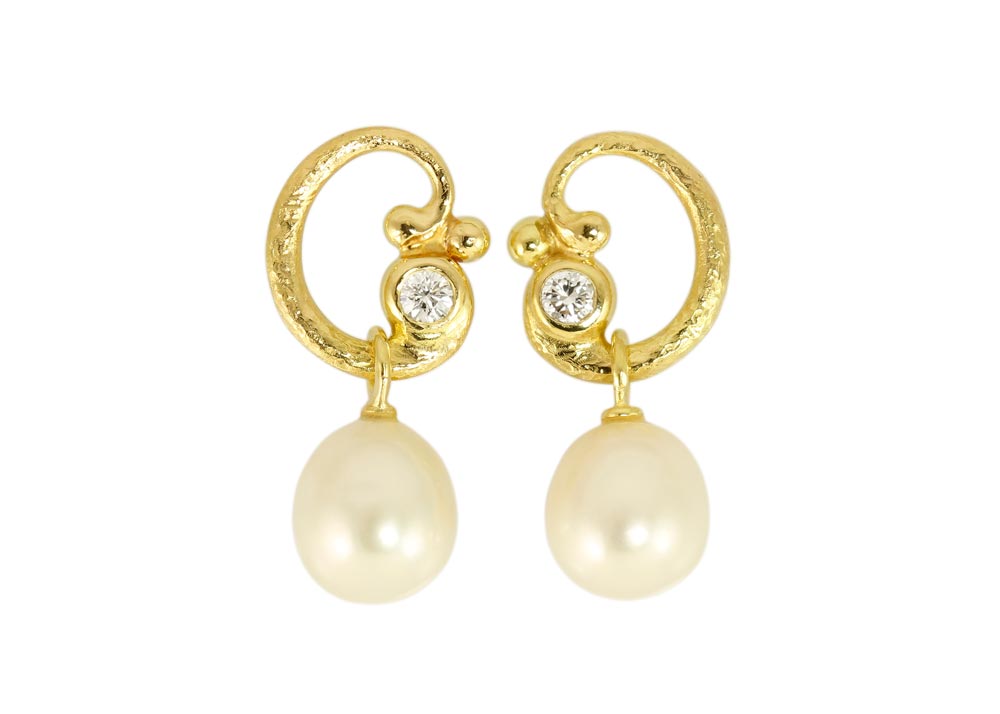
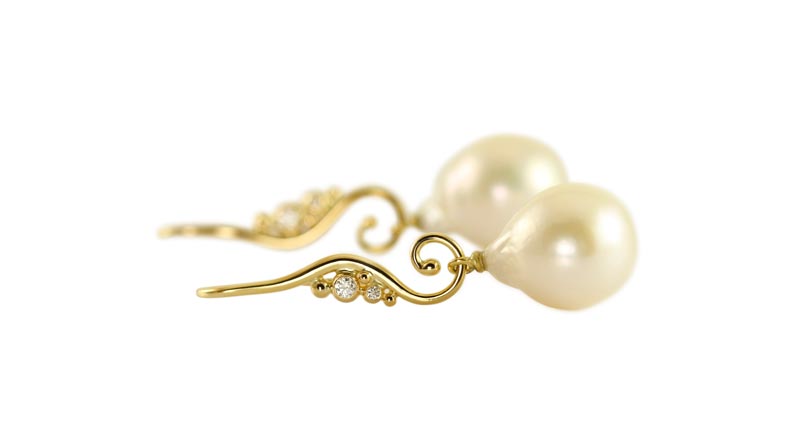
Rocaille - Earrings inspired by both Art Nouveau as well as Rococco period
A couple of my designs are a bit more cheeky and deviate from my otherwise rather harsh principle of practicality: When a curl is not attached at both ends, it tends to catch on things. You can still wear the jewellery with these more extroverted curls everyday, just be mindful when putting on a knitted sweater, for example. Here are some of the charming and very popular examples (despite their cheeky tendencies):
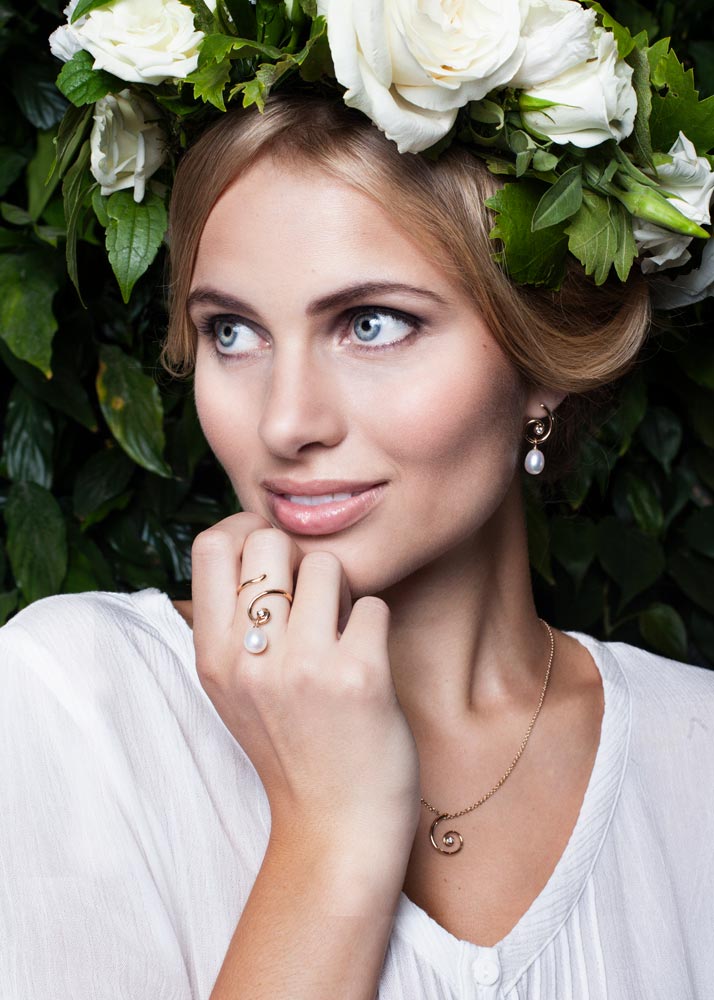
Faun - Earrings, pendant and ring with diamonds - all with the option to add a pendant of your choice
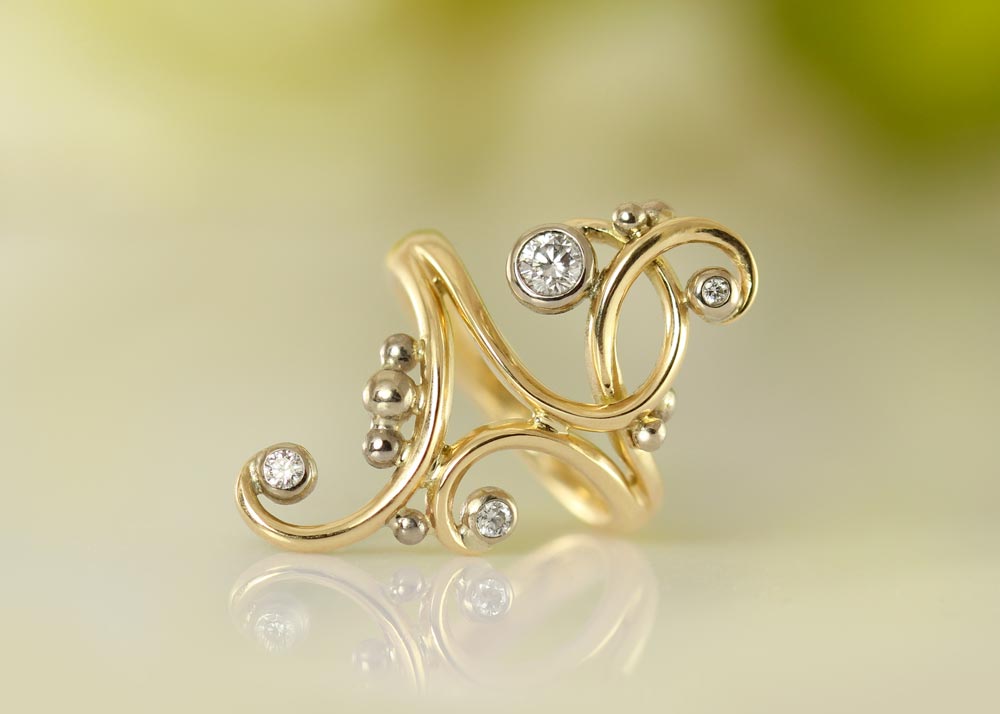
Lady of the Lake ring - here a version in 18k yellow gold and 14k white gold with diamonds
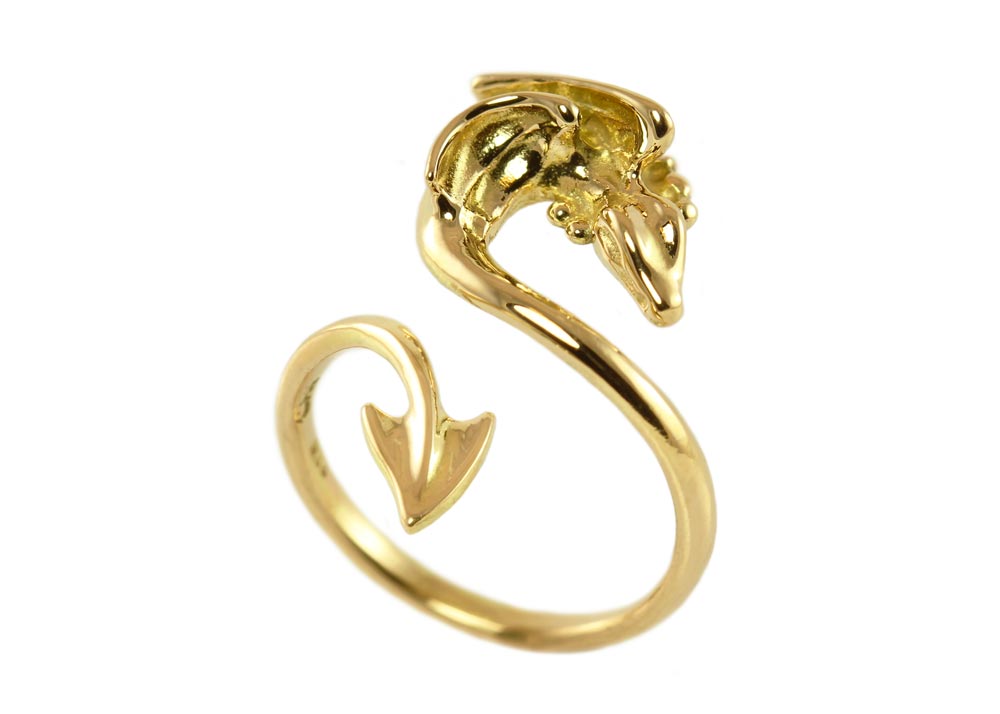
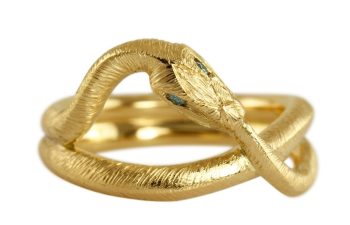
Dragonling ring - When shaped into a ring, my little signature dragon will wrap its tail around your finger.
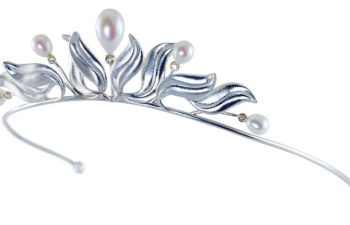
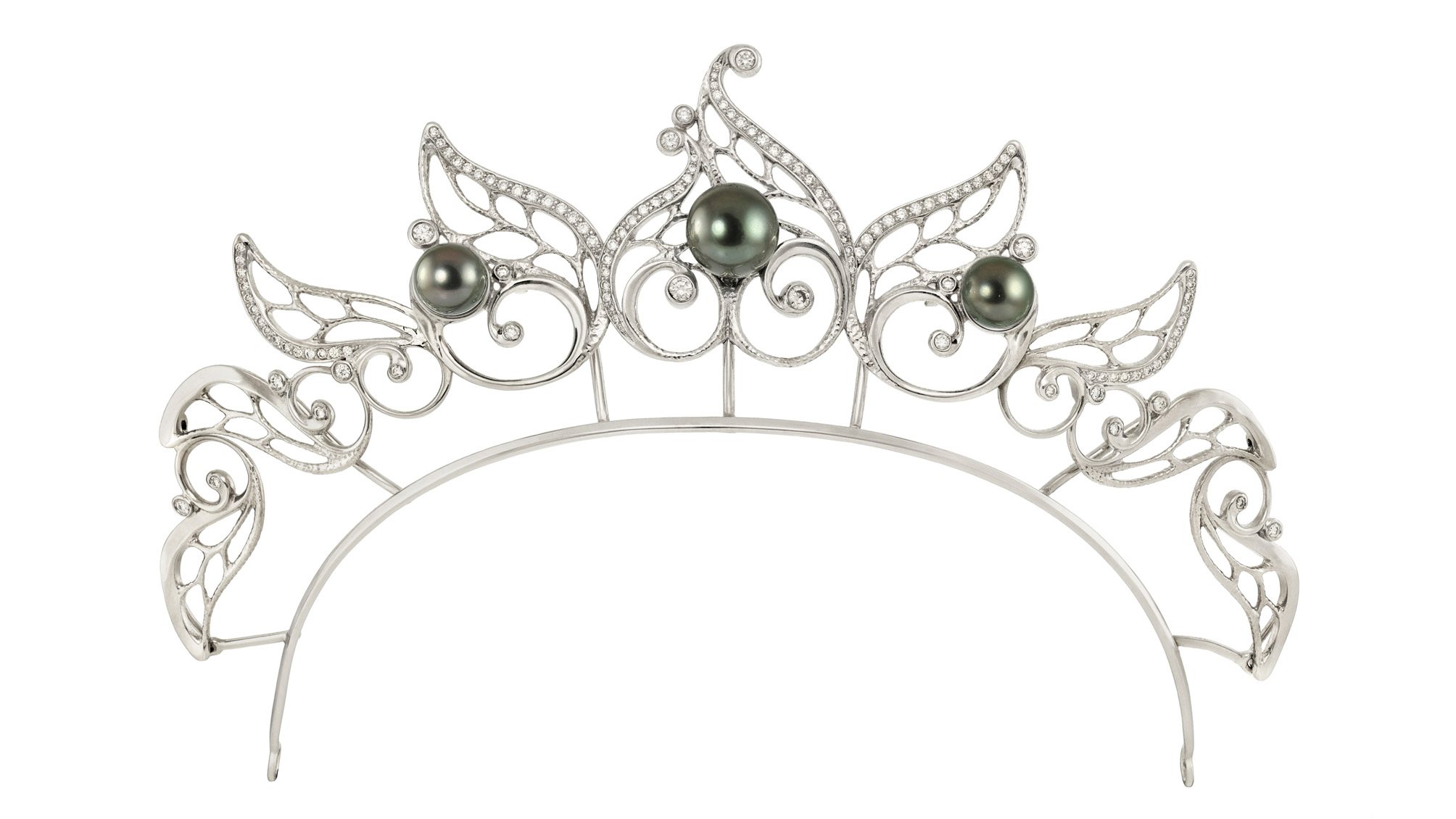
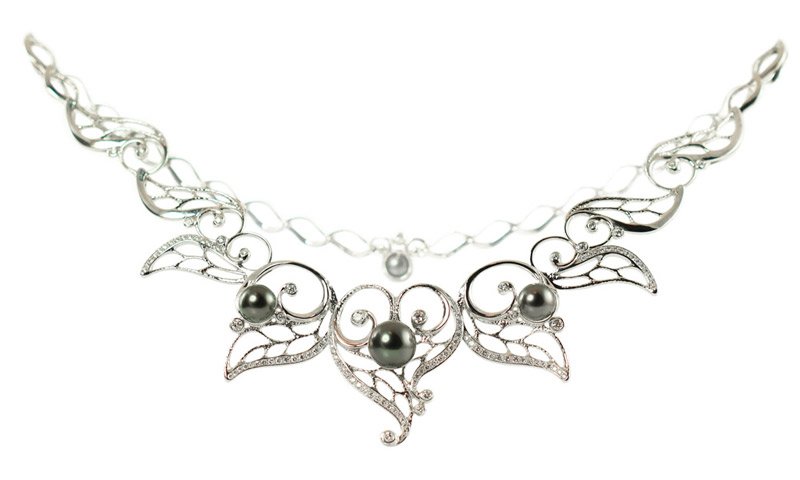
While the SNIRL is an iconic Art Nouveau shape, other elements from nature such as leaves and flowers are also common in Art Nouveau. Adorabella-The collection combining the scroll with the leaf motif is a good example of this, crowned (pun intended) by one of my few showpieces: the convertible (it can be made into a necklace) tiara created from 14k white gold, Tahitian pearls and diamonds:
Less grandiose, but still with the leaf as a motif, is the collection Lovely Leaves:
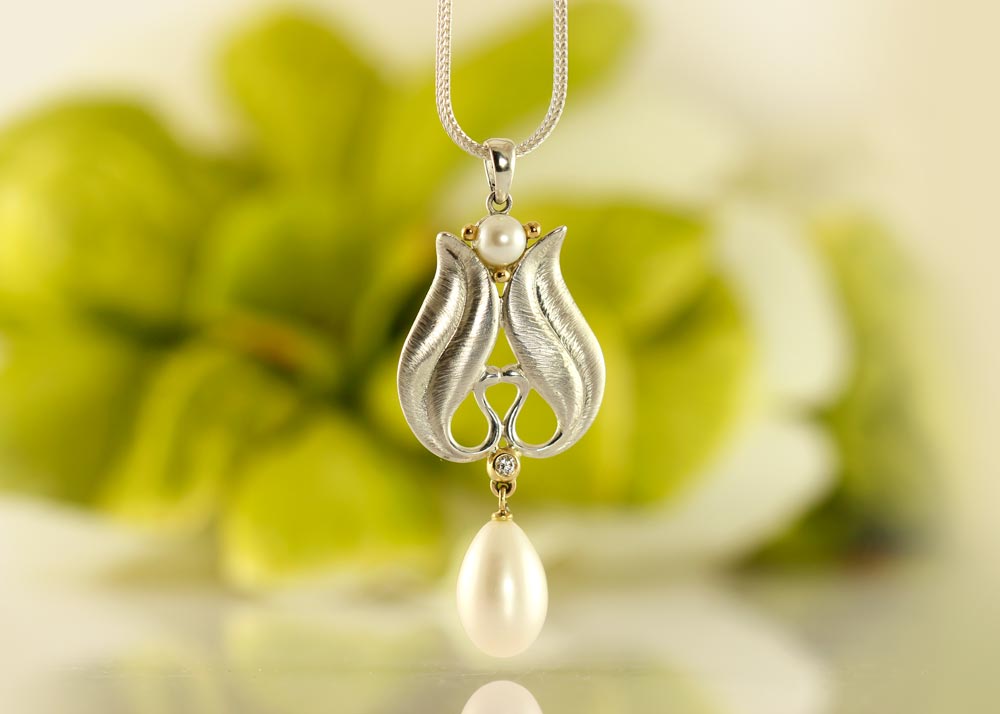
Lovely Leaves unique pendant in silver with 18k gold, freshwater pearls and diamonds.
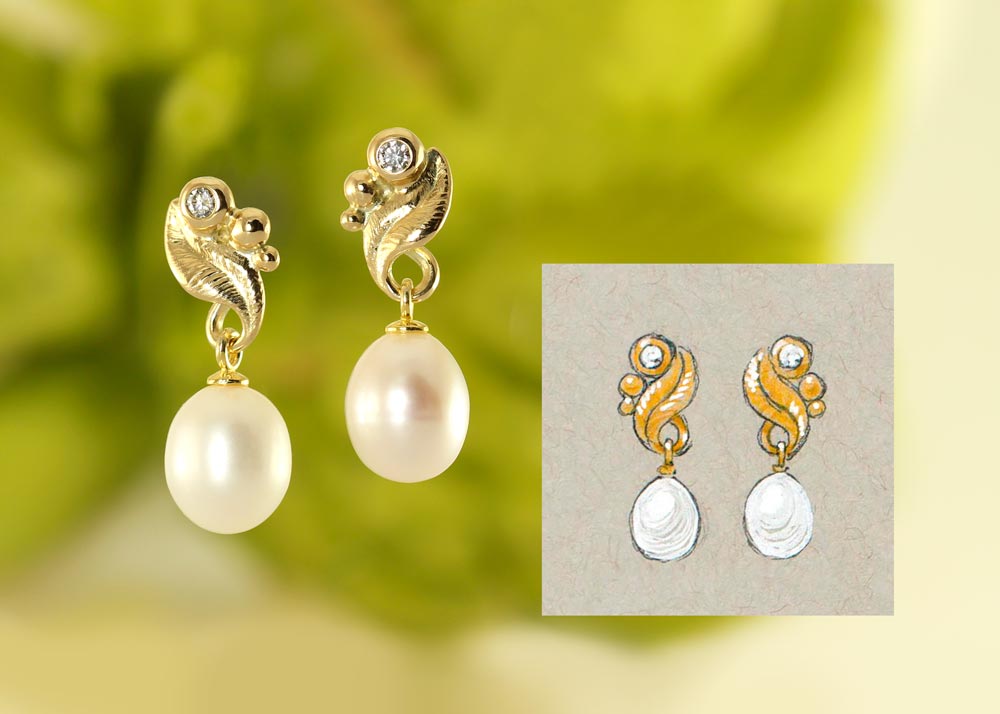
Lovely Leaves Convertible earrings. Can be worn as ear studs or adorned with interchangeable drops of your choice.
The academic jeweller on a mission
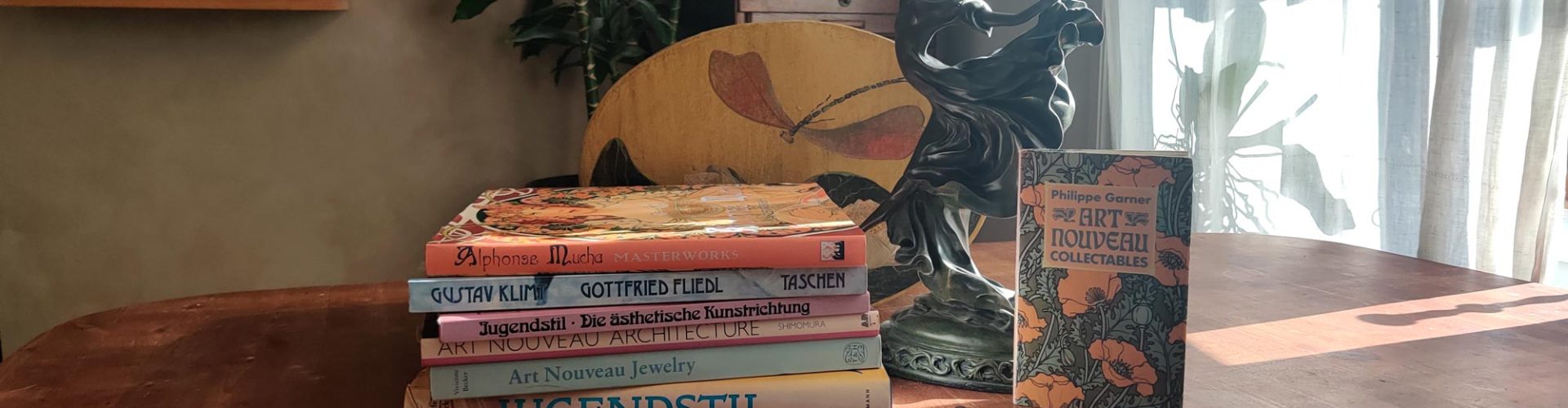
“Where does your fascination with Art Nouveau come from?” you might ask when you read the above and see the picture with all the Art Nouveau books at the top that I recently took in my living room. Well, I've been drawing since I was able to hold a pencil, and I tended towards the soft Art Nouveau forms early on, probably inspired by my father's love of the period. My childhood home contained numerous Art Nouveau artefacts and books, and we have seen quite a few Art Nouveau exhibitions together over the years.
Later, I studied art history at university and wrote a thesis on the British Pre-Raphaelites and how they influenced the colour palette of the Arts & Crafts movement, which subsequently slipped into Art Nouveau. As you can guess if you've read this far, my academic knowledge and interest in Art Nouveau is therefore... not small. Fortunately, I've been able to combine my fascination with this style period with my ”raison d'être”: to create wearable, small adventures in the form of jewellery. If I can be allowed to place a little bit of what others might consider “unnecessary and frivolous” fairy dust-strewn beauty on people wandering this earth, my life has not been in vain.
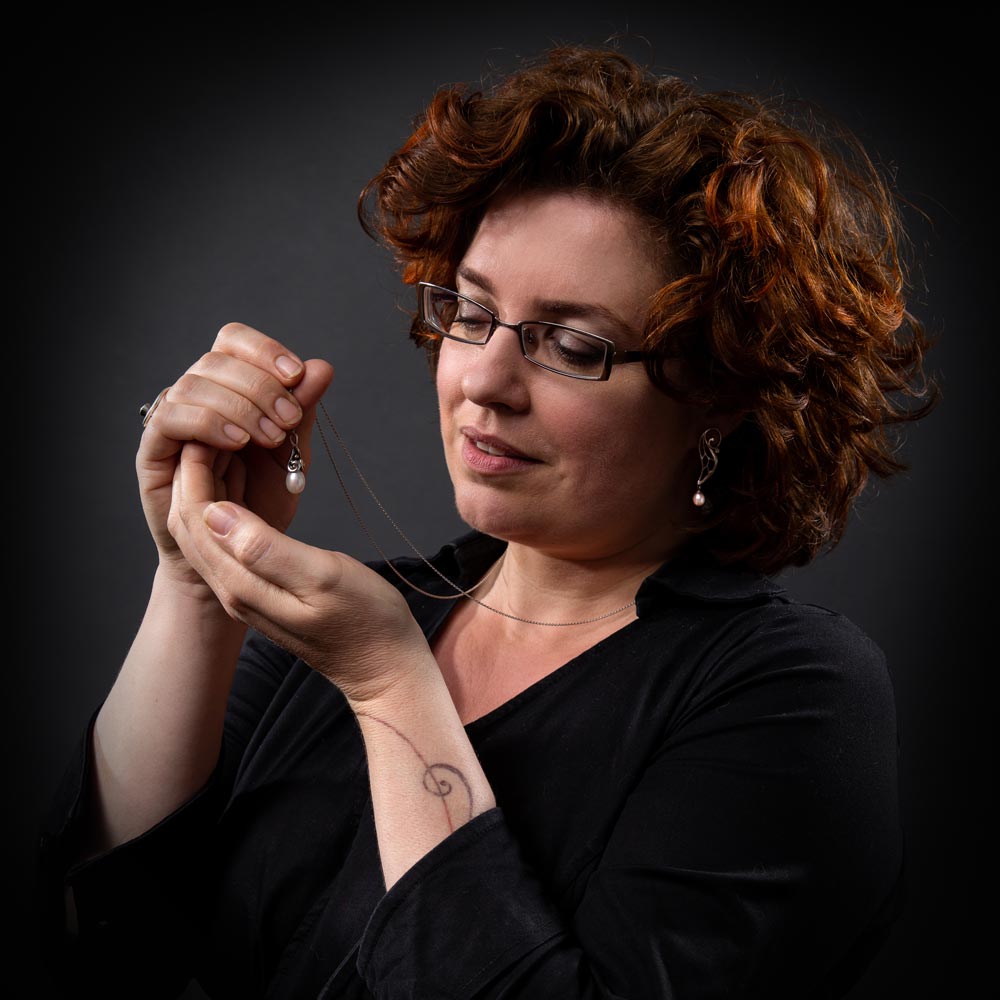
Fortunately, I'm not alone in my love of Art Nouveau: Today we celebrate World Art Nouveau Day - Because despite not being the most popular style of the past century, it still has many fans and regularly resurfaces in new incarnations. I hope that we will grow in number, cementing the love for the soft, organic, and childlike playfulness of “come il faut” instead of “it's just a phase”.
Feeling inspired to create your very own custom-made modern Art Nouveau jewellery? Then get in touch with us!
Blog categories