


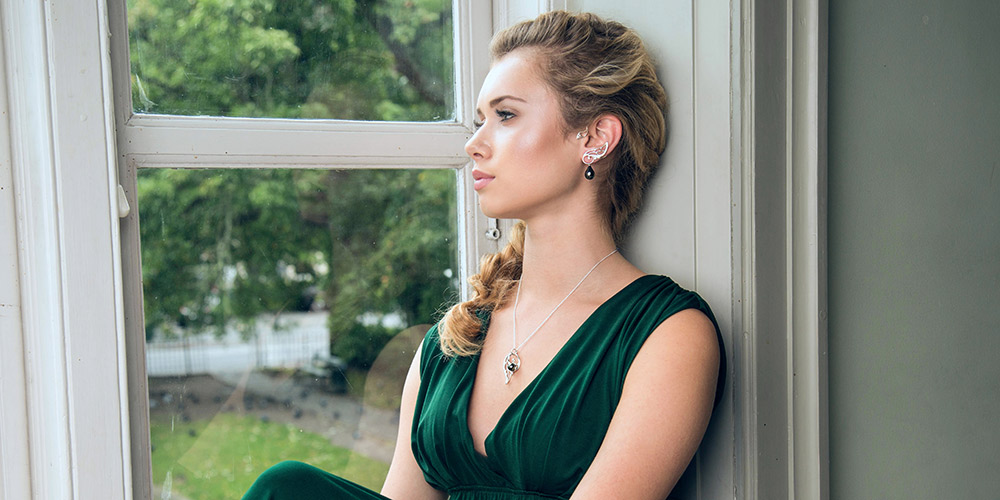
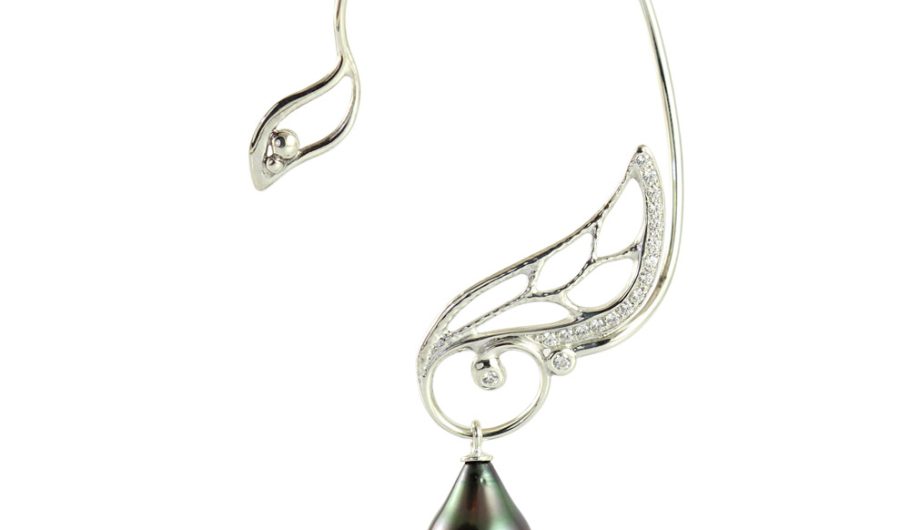
The inspiration also came from one of the great luxury jewellery houses from Switzerland: Piaget. Here I was fascinated by how the delicate membranes held together the outer paved lines of the leaf. My leaf, of course, looked radically different from the original inspiration, and the collection soon developed in its own Art Nouveau-inspired direction.
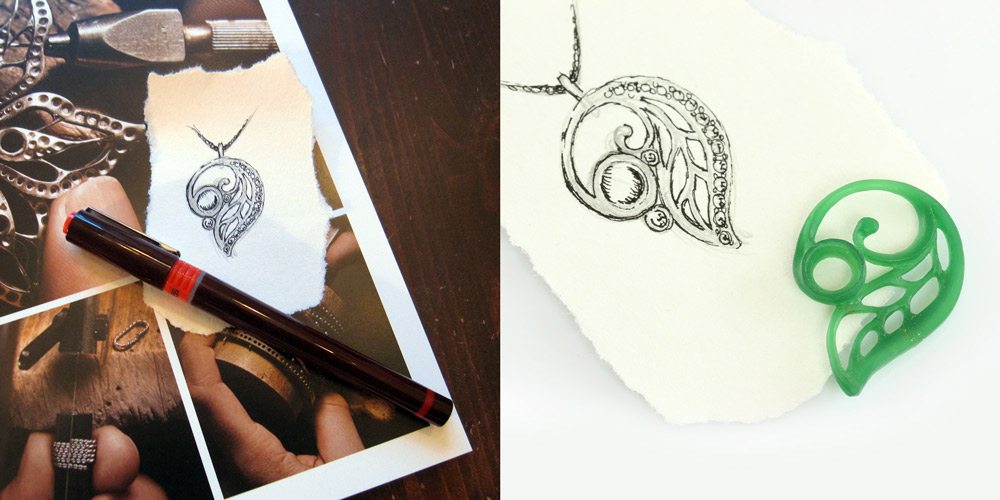
The very first sketch and its physical manifestation were so inspiring that I decided to build an entire collection – AND I would build a real diadem as the crowning glory. Not that I had an order for a luxury diadem at the time, but because I could. There are certain advantages to being a goldsmith! So, back to the drawing board, where I combined the two elements I had currently created and began to design a third: The large central focal point that would bring it all together into one unit.
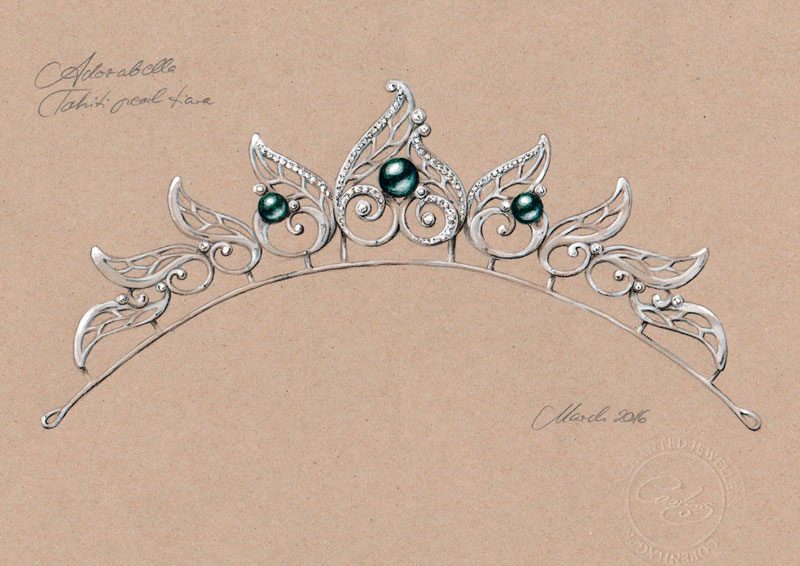
To carve this asymmetrical yet balanced element in wax was a true “labour of love”. There is something incredibly satisfying in seeing the form in your mind's eye (after many sketches, of course) and then, slowly and carefully, coaxing it out of the large, heavy block of wax. This central element in particular could also look beautiful as a brooch – perhaps turned the other way up with a pendant below it, worn centrally like HRH Crown Princess Mary sometimes wears her brooches.
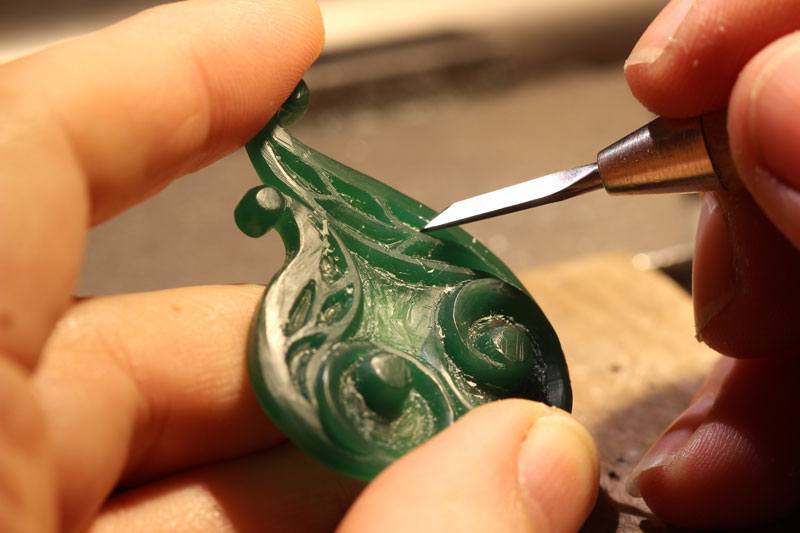
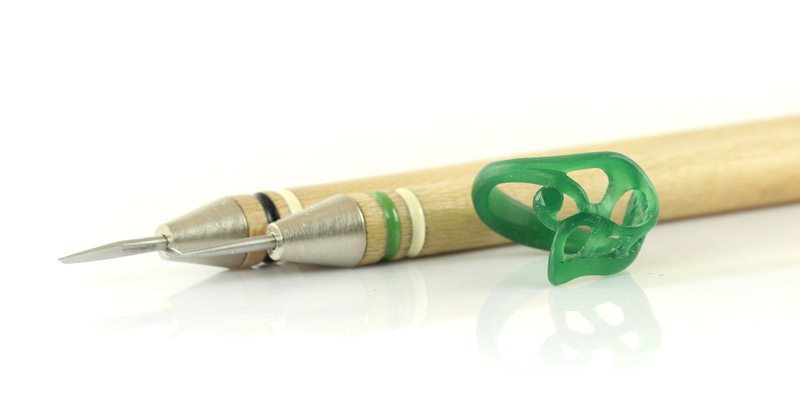
Each individual element in the collection was thus carved from wax and sent to the founder, after which the mould was refined further. This was necessary because it is not possible to carve the wax as thinly and airily as this design requires without it breaking. Therefore, subsequently, I also spent at least as long as the initial carving process took removing up to 1/3 of the silver before I was satisfied with the final element's lines and lightness. Here the process is exemplified by the creation of the pearl ring:
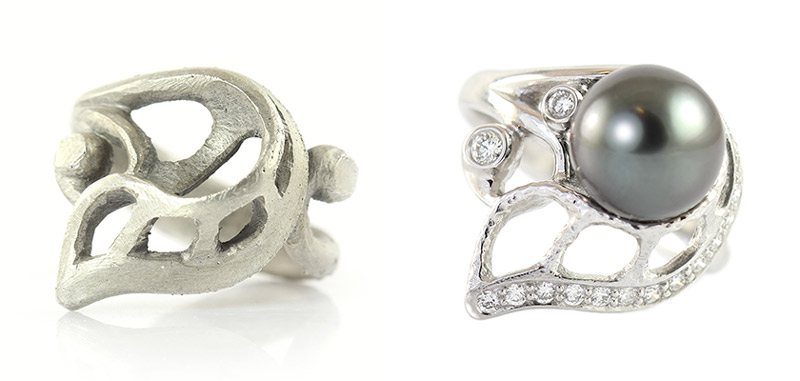
With all the elements ready, I ended up going over the diadem's construction one more time, swapping the different elements around until I was satisfied.
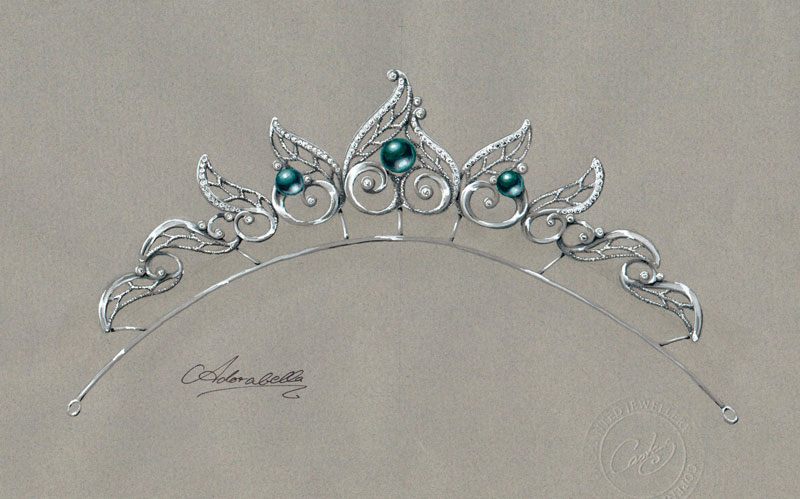
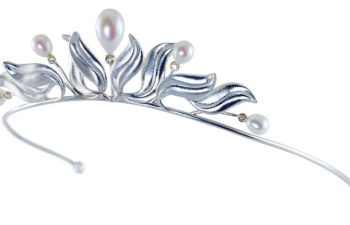
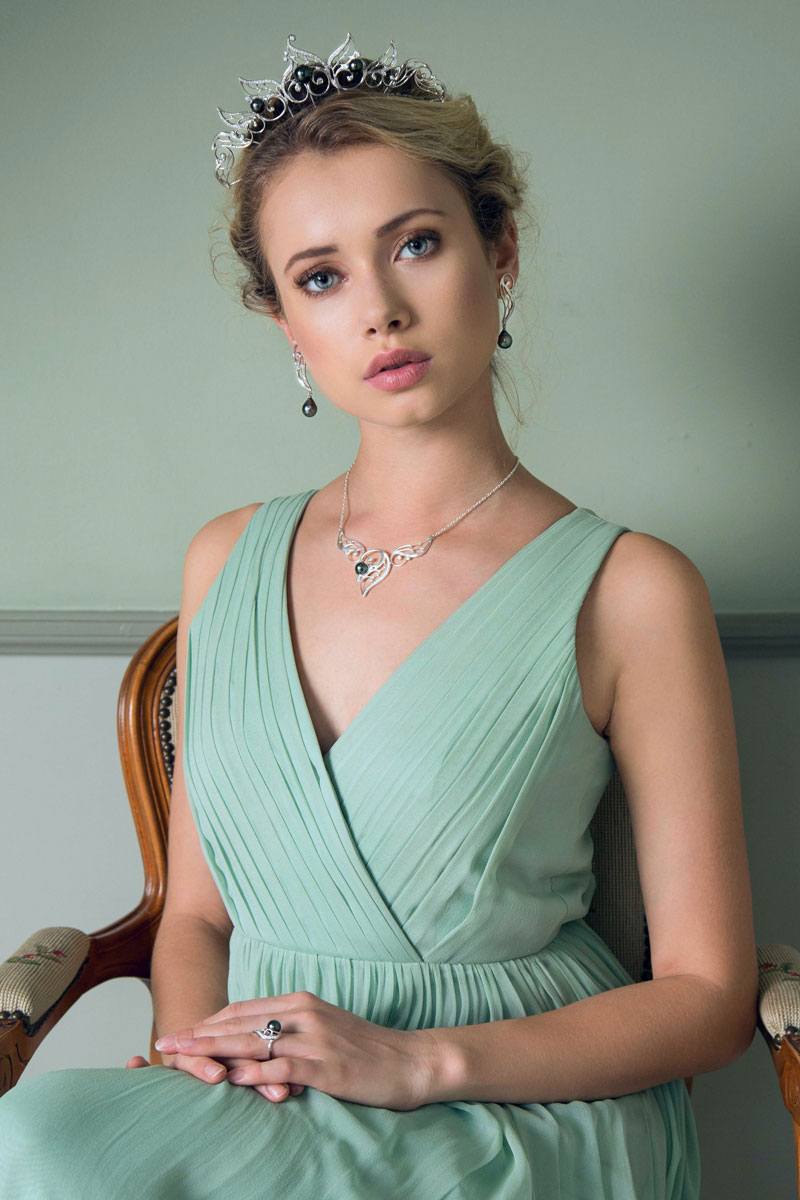
The great technical challenge was that I wanted the diadem to be versatile. When you pay a sum equivalent to a sensible car, it certainly makes sense that you can wear the jewellery on occasions other than royal banquets and your own wedding. Therefore, I decided to create the diadem so that it could be unbuttoned from its stand, put on a chain and used as a necklace.
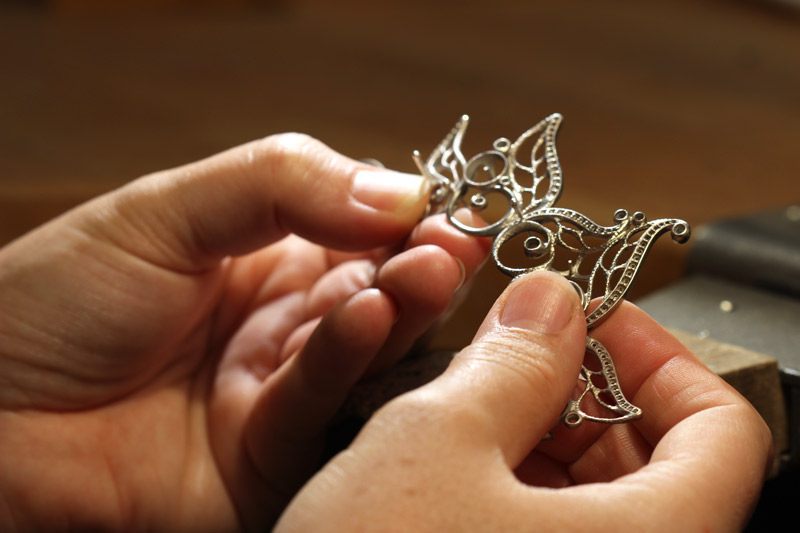
This naturally placed significantly more demands on the diadem, as the individual elements needed to be able to move independently of each other to create flexibility. I had tried simply linking them together with visible links, but from the outset I had wanted a design where they overlapped each other like feathers or scales. This design choice therefore enabled me to create entirely discreet links that were hidden on the reverse of the individual leaves.
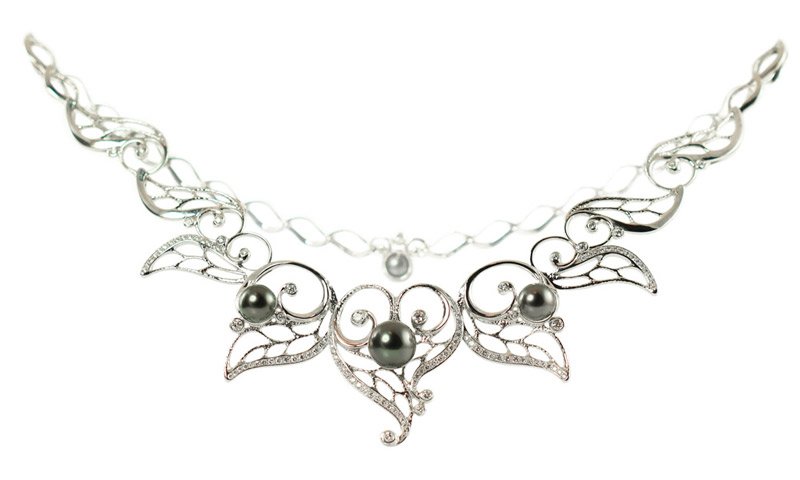
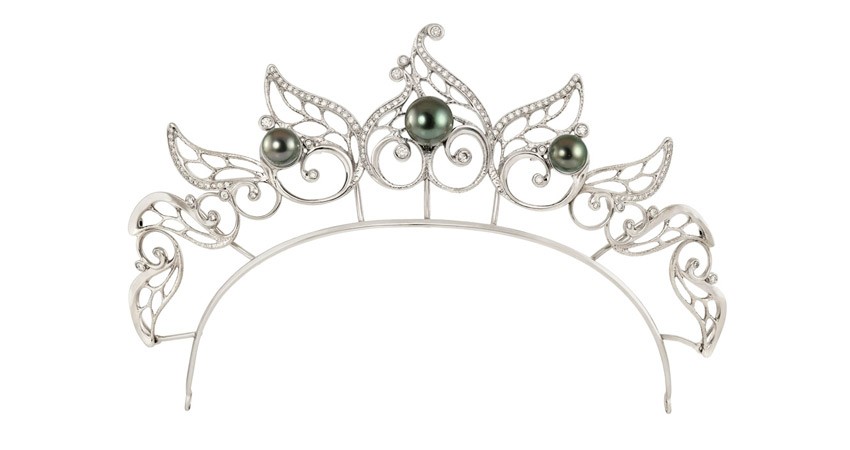
The final result was truly spectacular and absolutely befitting a royal head. The collection enables less royal and wealthy people to wear the glories in a variety of other ways. There are more or less opulent pendants for delicate chains, a slightly larger necklace, two different rings, and three different pairs of earrings. Maybe it will grow with the aforementioned brooch or a bracelet created from the same elements as the small ear studs. And perhaps I will experiment with using yellow gold and/or coloured gemstones. For now, there is a single variation in the form of the delicate earrings, which are available with white pearls – which are so beautiful for a bride who doesn't want to go for dark Tahitian pearls!
Blog categories