



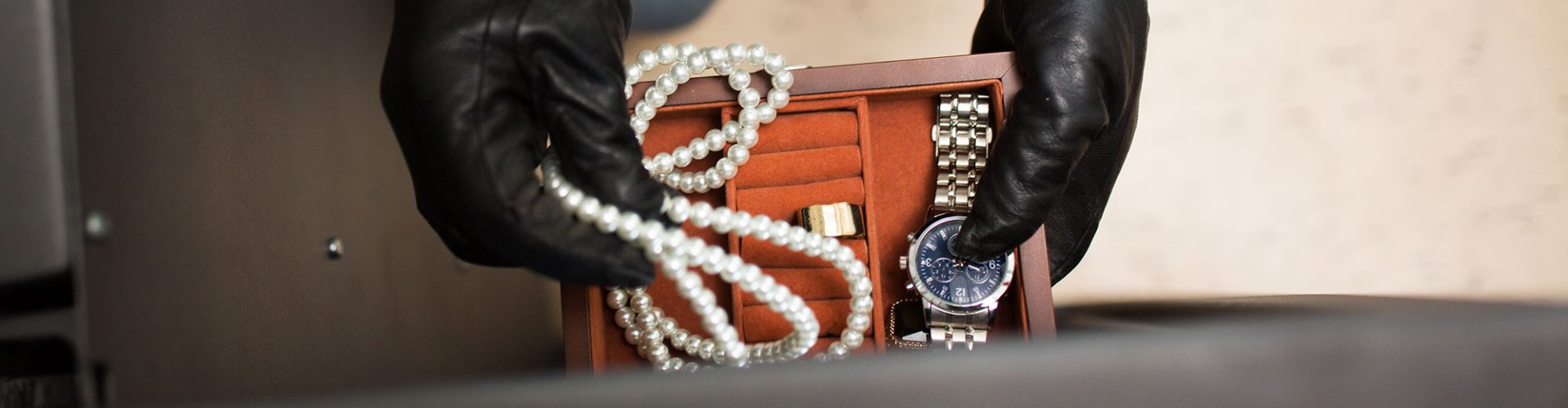

Whether you are going on holiday or simply away from home, you have to expect a certain risk of burglary and theft. Unfortunately, burglars make a living by breaking into other people's homes to steal things of value – including your jewellery. Fortunately, burglary statistics show a (sort of) steadily declining trend here in Denmark:

Source: Statistics Denmark
Having your jewellery stolen, along with all its inherent symbolic value, can be heart-breaking. The reason it feels so traumatic is that, for many of us, jewellery is connected to emotions and memories. Such as your mother's wedding ring, the bracelet you inherited from your favourite grandmother, who received it when SHE gave birth to your father, or perhaps a special necklace your husband gave you on your first anniversary.
The battle with the insurance company
Stolen jewellery is sometimes found and returned to its rightful owner, but for the most part you unfortunately have to face the fact that it is gone for good and must therefore contact your insurance company to be paid compensation. Here, it is important that you are aware of a number of factors so that you do not end up being paid far less by your insurance company than you should have received:
You can insure Jewellery for a maximum of 100,000 kr!
It is a slight exaggeration, but most insurance companies have an upper limit in this ballpark for how much they insure jewellery for under a standard home insurance policy. If you have jewellery worth more than your standard policy covers, you therefore need to ensure you get separate insurance for your jewellery. Be aware that such separate insurance may mean the insurance company requires you to install an alarm and/or a concealed safe in your home. If this is too much hassle, you could consider keeping jewellery that you only wear on very special occasions in a bank safety deposit box.
The most important thing is that you HAVE data in place about your jewellery in advance – because otherwise how is its value to be determined? It can quickly turn into a guessing game because very few of us have receipts for all our jewellery, and that means there is a risk that you set the price too low or the insurance company won't believe the amount you state. Therefore, it is a good investment to do some groundwork before the theft (which hopefully never) happens:
replacement cost
Make sure you know the correct (replacement) value of your piece of jewellery. If you can find a similar piece at a jeweller’s – perhaps online – and take a photo of it (along with its price) to keep alongside a photo of your own piece, you’ll be well on your way. If you can’t find anything similar – perhaps because the piece is antique or a bespoke design – you’ll need to ask a jeweller (specialising in craftsmanship) how much it would cost to recreate the piece. Make sure you get this in writing and keep it with your other documentation.
If you own jewellery that you think could be of high value, but cannot immediately find anything comparable, you can also consider having it appraised by a professional valuer. You can search online for ”jewellery appraisal” and find your local valuer to have him/her assess your jewellery, so that in this way you can obtain proof of the jewellery's value.
The all-important images
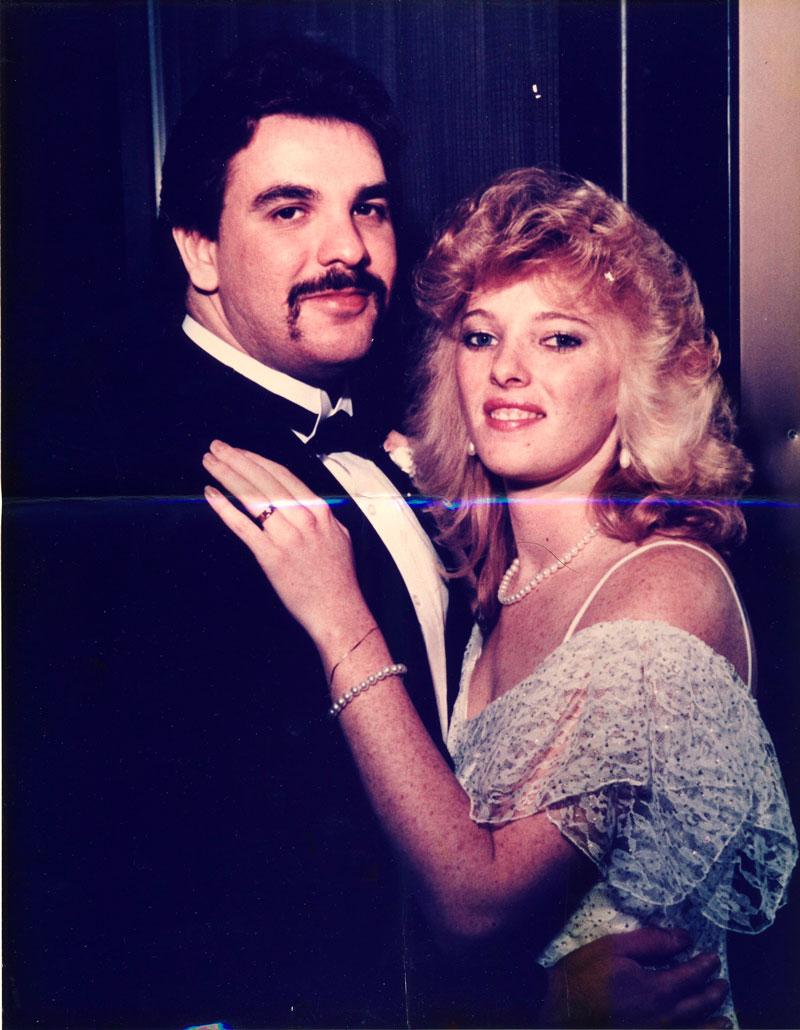
Your insurance company will ask for pictures of your jewellery – BOTH a close-up of the jewellery itself AND a picture of yourself wearing it. Often, people only have the latter, perhaps a 20-year-old picture of yourself where the jewellery is barely discernible. However, it is so small, blurry and hidden by hair that it is impossible to see what it is made of, how big it is or the quality of the gemstones set in it. That is ALSO an important picture, because it proves that the jewellery was genuinely yours, but it is not enough to assess its value. It is therefore a good idea to dig the jewellery box out of hiding, set up an improvised photo studio and start taking pictures. Fortunately, most of us have a good camera in our smartphones, so taking the pictures is usually not difficult.
Here is a step-by-step guide to getting the best possible photos:
-
Photograph in daylight (close to a window) but not in direct sunlight. This provides the best light and clearest colours on the gemstones.
-
Use a piece of white paper as a background.
-
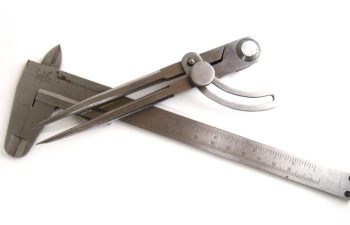
Measure each piece of jewellery and any gemstones it may contain – feel free to count them if, for example, there are lots of small diamonds that might be difficult to count from a photograph.
-
Write everything from item 3 + what the piece of jewellery is made of (look for the hallmark on the inside/back of the jewellery), on the paper you will use as a background. If you know the price, please write this down too!
-
Lay the piece of jewellery flat on the white paper. If it is a ring, you can use a clip to make it stand up.
-
Place a ruler next to the piece of jewellery so that the dimensions are easy to read.
-
Find the best distance between the piece of jewellery and the camera. You need to get as close as possible without losing the information written on the paper or the images becoming blurred. All cameras have a ”sweet spot”, just before it becomes blurry because you are too close. Find it and use this distance. If you have a tripod, it is a great help; if not, you can use a stack of books to steady yourself.
-
Do this for EVERY SINGLE piece of jewellery! Tip: You can reuse the backing card, just move to an unused spot and write the new details here.

Storing the images
When all the pictures have been taken, you should consider how you want to store them. It is best to make a duplicate and store them both digitally and as printouts. iCloud or Dropbox are two good candidates for digital storage. Make sure to create a separate folder for these pictures here – in this folder, you can also optionally put pictures of other valuables, such as expensive designer furniture, silverware, etc.
Print copies of the pictures. Black and white is better than nothing, but colour prints make it easier to assess the quality of coloured gemstones.
How much will your insurance company pay out?
First and foremost, it is important that you ensure you are not underinsured. Arrange for a valuer to visit; show them your jewellery and, ideally, any documentation you have that proves its value, so that there is no doubt whatsoever about its worth later on. Ask them to sign a document confirming that they accept the value you have stated.
Your document folder (which you should keep somewhere that is NOT close to your jewellery. After all, you don't really want to make it easy for thieves to make money off your things, do you?) should therefore preferably contain:
-
All your receipts
-
Close-up, large, high-resolution photographs of each individual piece of jewellery
-
Pictures of yourself wearing the jewellery (so you can prove that it REALLY was yours)
-
Information on what it is made of, i.e. which metal, any stones as well as its dimensions and preferably weight
-
Information about where the jewellery is from (jeweller, brand, etc.)
-
An estimate of the replacement cost (preferably confirmed by an external source, such as a website or a third-party valuation)
If you want to make sure you’ve got everything covered, set it out in a summary like this:

Make sure you don’t get ripped off!
Some insurance companies have agreements with certain jewellers whereby, if the company’s customers spend their insurance payout at that particular jeweller, they can receive a discount. This is a euphemistic way of saying that the insurance company will pay you X kroner, but if you do not take up their ”offer” of a ”discount” at a specific jeweller, you will receive 30% less. It may be a good idea to check whether your insurance company has this sort of arrangement and, whilst you’re at it, to find out how they price and handle claims for antique or bespoke jewellery, which is, of course, unlikely to be available from a standard jeweller dealing in mass-produced jewellery.
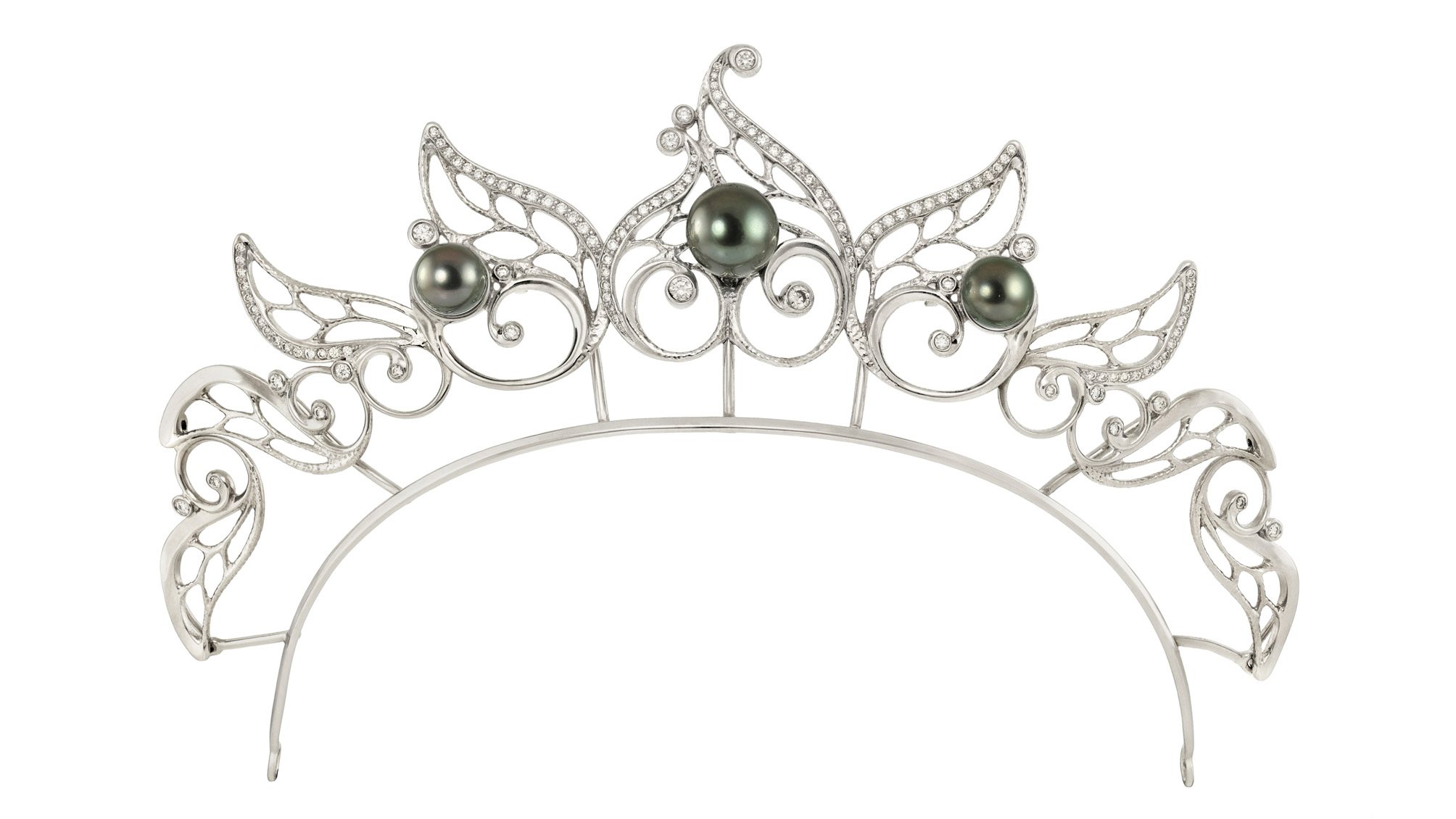
Adorabella diademet made of white gold, diamonds and Tahitian pearls, which spends its nights locked away in the jeweller’s safe
An interesting curio:
Many noble families are rather challenged when it comes to insurance, partly because it is quite costly to insure, for example, an expensive diamond tiara, but also because insurance companies typically impose stricter requirements regarding the storage and use of individual pieces of jewellery. Many demand, for instance, that the owner may only wear the tiara under special security measures and no more than a certain number of times a year. Therefore, many wonderful pieces of jewellery are hidden away in highly secure bank vaults and are never worn by anyone – what a shame!
Store your jewellery
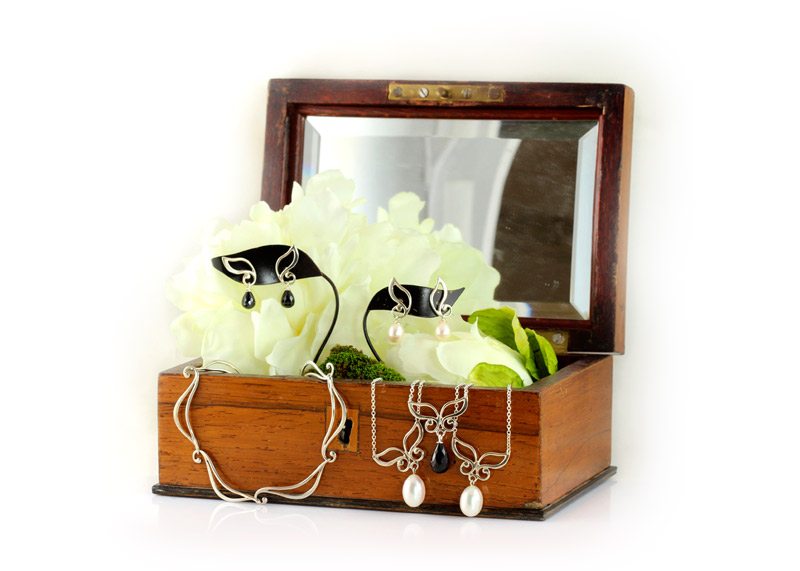
It can be impractical to store your jewellery in everyday life – we usually keep it in a jewellery box in the bedroom (don’t store your jewellery in the bathroom – silver tarnishes more quickly there), where most people can see it. But if you’re going on holiday, it might be a good idea to hide your jewellery away – preferably in a place where you wouldn’t normally expect to find jewellery. I won’t give any specific ideas here (after all, we don’t want to HELP the thieves, do we?), but be creative, and don’t copy a hiding place you’ve seen in a film – the thieves might well have seen the same film!
PLEASE NOTE: You must NOT store your jewellery in, for example, a (locked) cellar or loft in your building (if you live in a flat) or a locked shed in the garden! Although these might seem like good places to hide your jewellery, most insurance companies will not pay out if your jewellery is stolen from these areas, as they are considered too insecure.

Find the information about your piece of jewellery online
At Castens we have done our utmost to help you as a customer, should the worst happen and you need to find out the value of a piece of jewellery created by us. This is because we supply all jewellery of a certain value with a certificate containing information about the materials the piece is made from. Furthermore, the certificate also features a page where you can write how/why the jewellery came to be and what story it brings with it. This will give future heirs an often highly treasured insight into the history of the jewellery – what is also known as provenance. Moreover, if you order a piece of jewellery from Castens, your order is uploaded online and you can access the order through your automatic membership of Castens Clubben. This way, you can always log in and find information about materials and price, as well as a copy of the original design sketch, for your insurance company.
You’ve received compensation – what happens next?
If you have to face the fact that your beloved jewellery – along with all the memories and emotions it held – is gone forever, you need to decide what to do next. How can you (to some extent) recoup what you’ve lost? At Castens, we (unfortunately all too often) meet people who have lost their jewellery, and we do our best to ease their frustration. Of course, jewellery purchased from major, well-known brands can be bought again, but what if that is no longer possible because the pieces have been discontinued, were custom-designed, or are even antiques? This is where we can help. It is only in the very rare cases that we recreate an exact replica of the lost piece of jewellery, because it will never be quite the same anyway. Instead, many of our customers choose to have completely new pieces of jewellery created with their own new story. 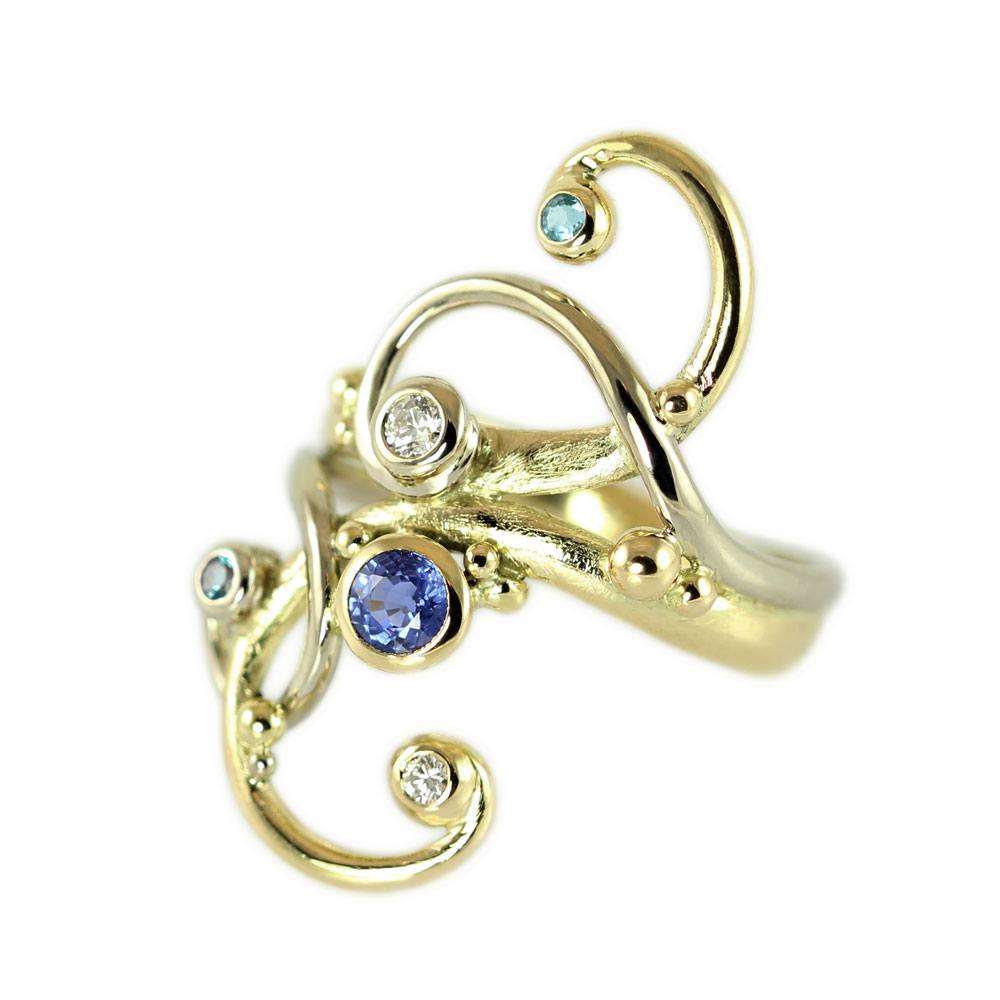
Lady of the Lake ring is a good example of such an innovation. In this case, the customer had all her jewellery stolen by a burglar – including pieces with very high sentimental value. She was devastated, but instead of going out and buying a number of smaller pieces that somewhat resembled the stolen ones, she made a virtue of necessity and had ONE large and utterly wonderful ring created. This ring was to symbolise her family, which after all had not disappeared. The ring consists of tendrils of two colours of gold winding around blue and white gemstones, each symbolising a family member. She wears it every day and in this way appreciates what is most important in life: Love.
Read more about the design process here
Blog categories