


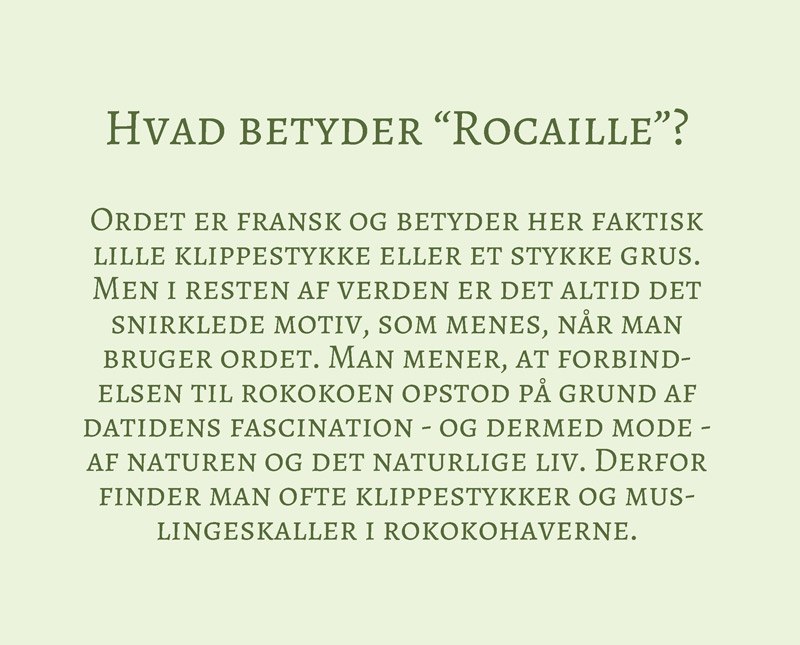
Just a little phonetic help here: ”rocaille” is pronounced [rokai’] and is a design element that is roughly shaped like a seashell. It is a curve with a wavy edge that could be found everywhere in the 18th century as the Baroque transitioned into Rococo – and yes: ROCOCO is named after the ROCAILLE. Rococo is one of my favourite periods, which I dealt with quite a bit when I was studying art history, so listen to this...
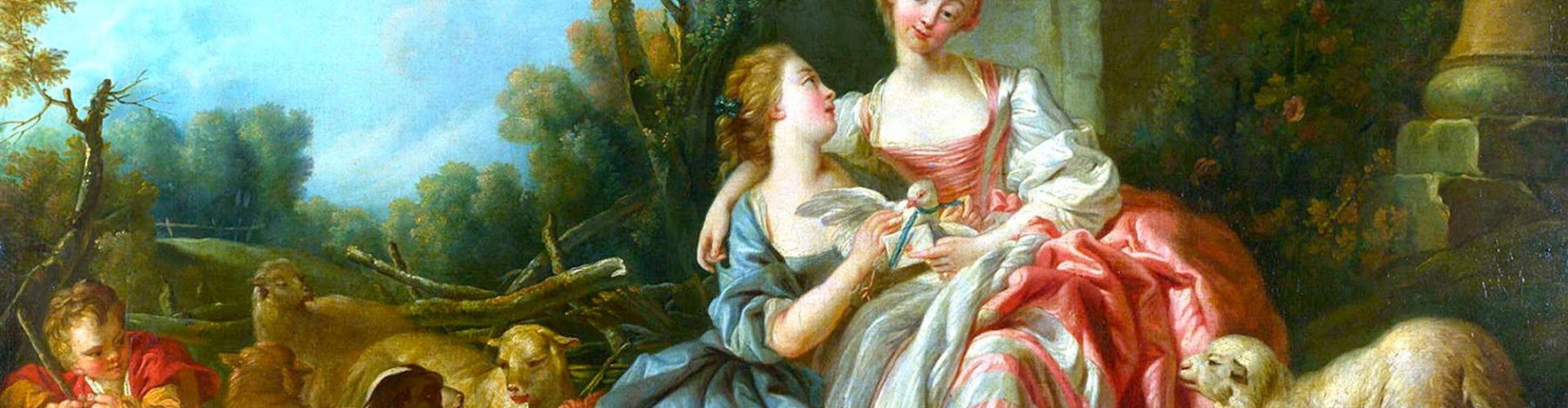
The Rococo was the period of powdered wigs, pastel (and somewhat shorter) dresses of lightweight silk, and a generally relatively frivolous approach to life. Just picture Marie Antoinette from the film of the same name in your mind's eye and you've got a pretty good grasp of what I'm talking about.
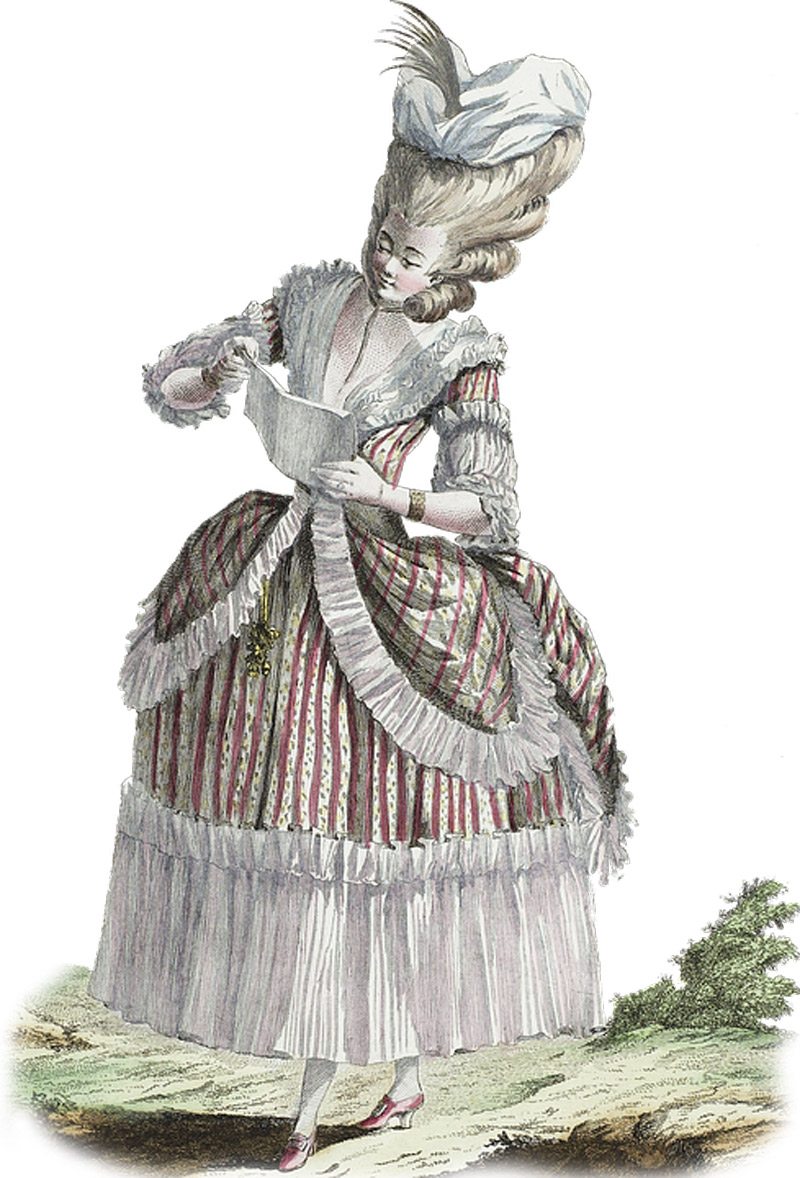
The style is extremely ornate, with many organic lines and details arranged in an elegant and airy manner. And if it was possible to gild these scrolls and embellishments, they did.
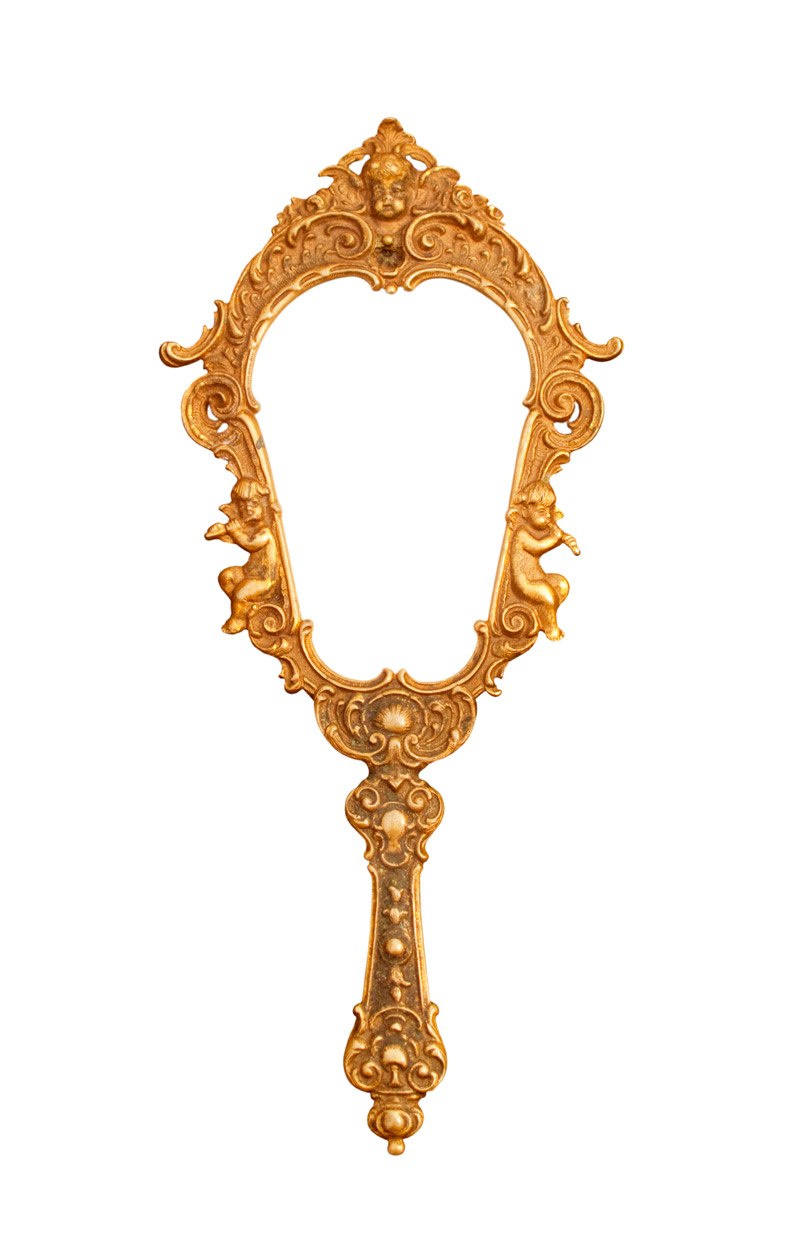
The reflection could easily be lost in this masterpiece of a hand mirror, because one can become completely distracted by looking at it from so many different angles and continuing to spot something new.
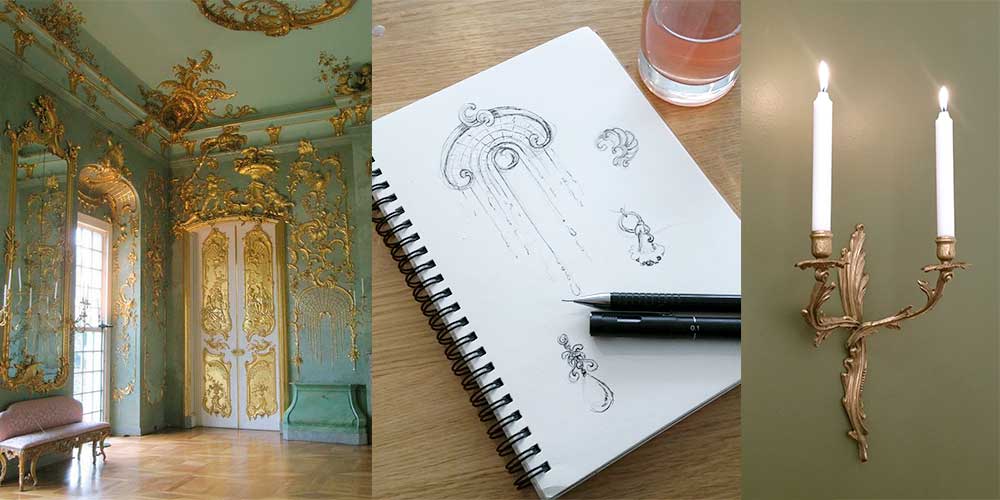
”The Golden Gallery in Charlottenburg in Berlin is a dazzling example of the style's effortless elegance. The wealth of detail is overwhelming, but because of the high ceilings and the ornaments being so slender and delicate, the result remains dainty. The colours are fine pastels with the delicate greenish-turquoise as the dominant base, forming a backdrop for blushing pink and all the gilded splendour. Gigantic mirrors between the tall glass doors and windows reflect the gold, but also all the candles that once flickered from equally ornate wall sconces. The effect on an evening when the room was filled with people dressed for a party and with the air thick with laughter, music and perfume must have been truly enchanting. You can spend a LONG time in here and become very inspired. I returned home from Berlin with many sketches and my own Rococo candleholders, which adorn my green walls in the shop. Not quite the same, mind you, but still...
The very extensive ornamentation may seem a bit too extravagant in our modern times, but one must view it in context. Distinct design periods almost always arise as a reaction to the one that came before, in this case the Baroque. At first glance, they actually look very much alike and there is indeed a certain fluid transition – the overall style of the clothing is the same and many decorative elements also recur. But in comparison with the Rococo, the Baroque was pompous and heavy. The colours were darker, the fabrics heavier (as much velvet as possible, provided one could afford it) and then there was the major difference between the two: everything was strictly symmetrical in the Baroque. The Rococo is also – fundamentally – symmetrical, but then a point has been made of breaking the symmetry with the ornamentation – playing with the strict lines and defying them.
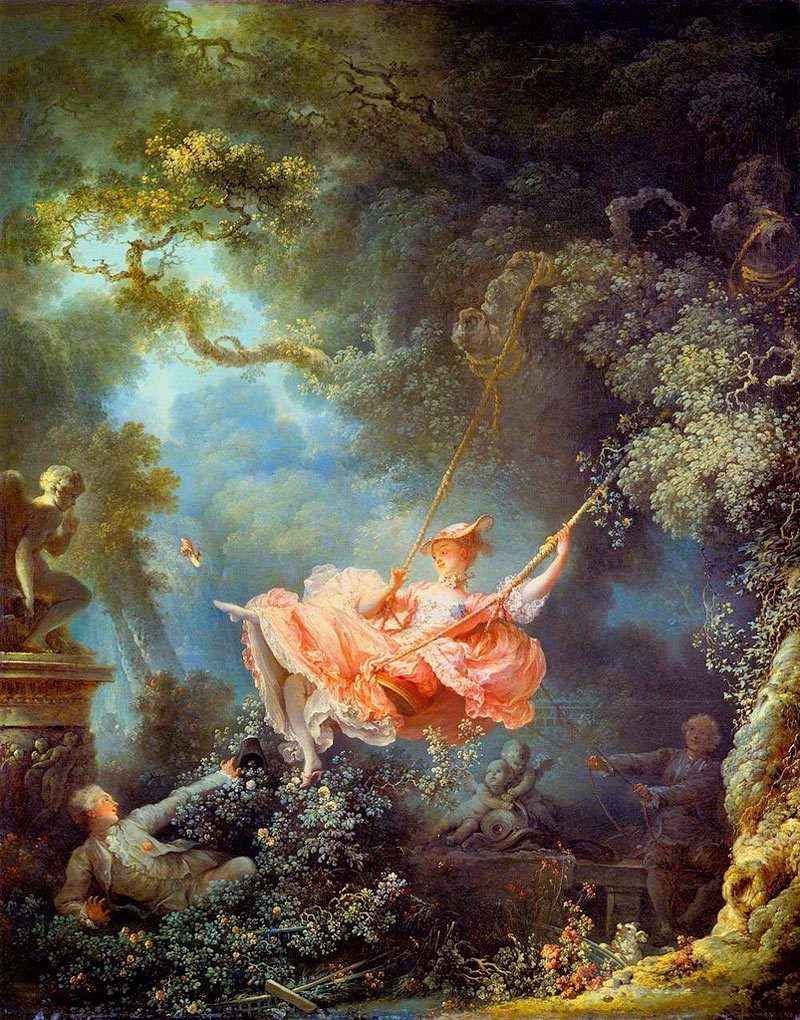
Much had changed since the Baroque period – The Enlightenment made its entrance and for a time science and logic were de rigigueur: Many new discoveries were made which challenged prevailing beliefs and dogmas. Rococo reflected this change as it cast off the restrictive bonds of the Baroque and illustrated the new currents. One of our best domestic examples of such an enlightened man is Struensee, who, as is well known, came to a rather sticky end when the old rulers finally had him toppled from his perch – and put on another, as it were.

After an astonishingly short period, the taste of the times changed again. Rococo turned into neoclassicism, which was a far more austere style: the symmetry of the baroque made a strong comeback – naturally, since rococo had been all about asymmetry. But this time, everything had to be simple and more square, and heavily inspired by antiquity, more precisely classical Greek lines. This was naturally due to the fact that many of the great ruins in Greece and the Middle East had just been (re-)discovered, which would set the fashion from then on.
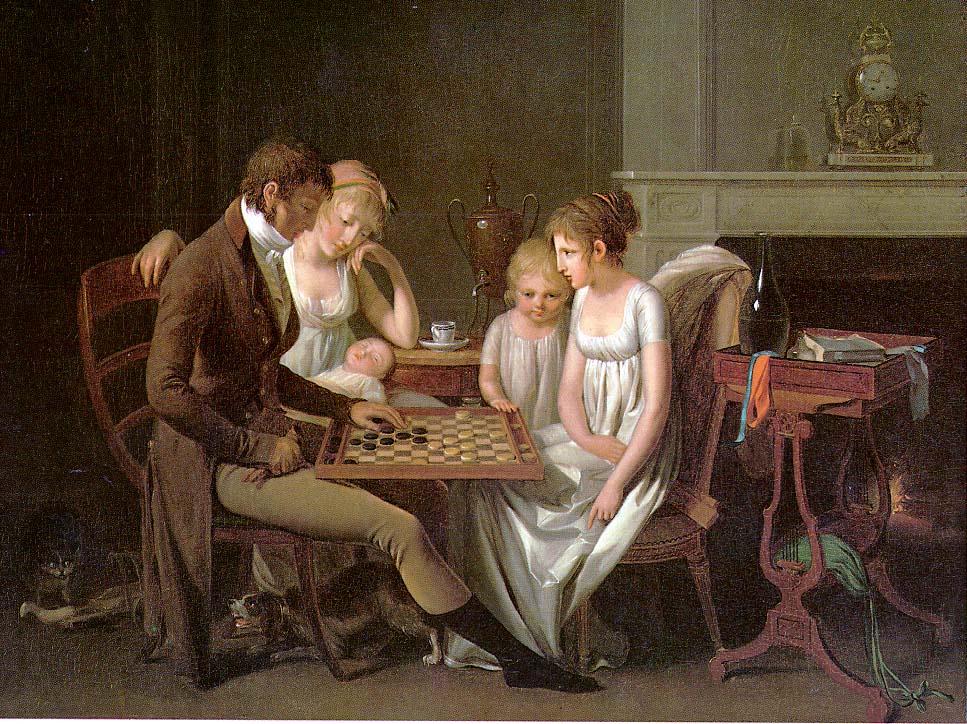
The French Revolution, which simultaneously arose as a protest against the reckless handling of money and responsibility that had characterised the country's royal regime, also contributed to the far less decadent forms of neoclassicism now being celebrated. But that is an entirely different story
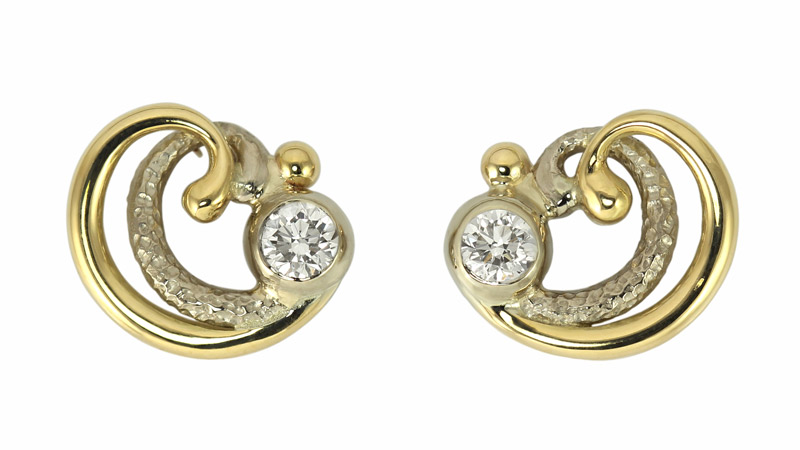
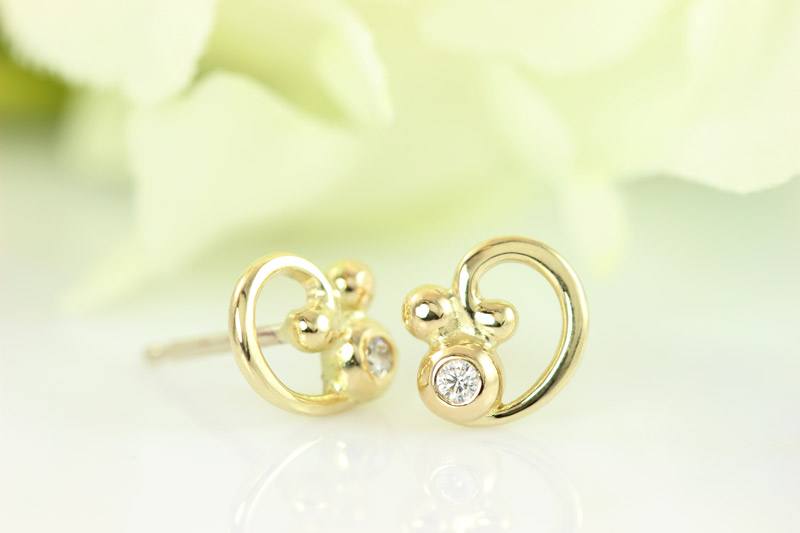
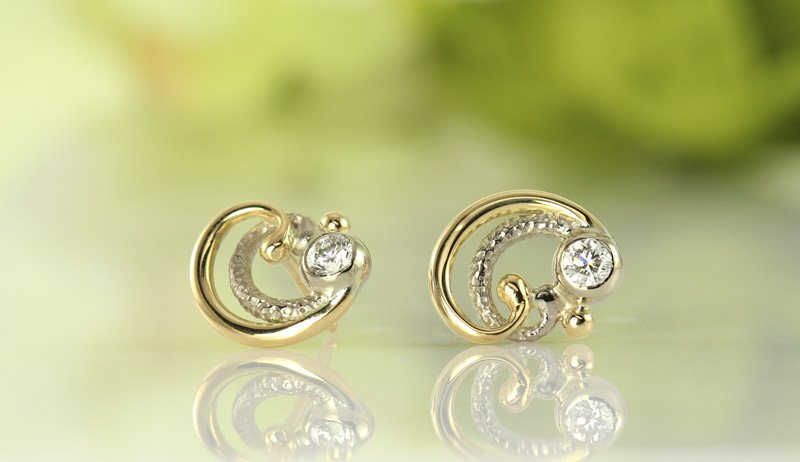
Right – back to the present and my earrings: Now that you've seen the seashell-like curve that is so typical of the Rococo, you will definitely see how these two are connected, even though my version of the rocaille is naturally my own. I have created quite a few earrings based on this motif in various precious metals. Here are some of my very first ones:
The design got a bit more character when a customer asked me to give them a more raw finish – the same one I had used on Adorabella jewellery, which actually makes the shape resemble the original rocaille even more with its undulating edge, doesn't it?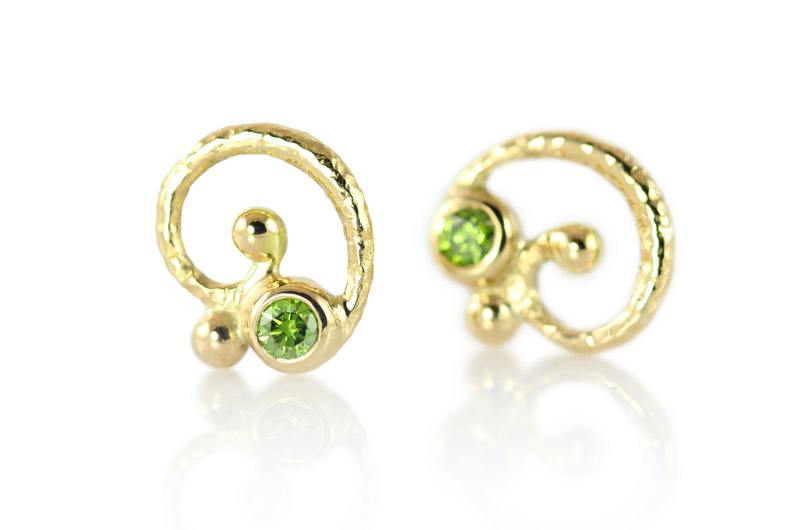
And THESE earrings then inspired another customer to have some large and more detailed earrings created, where the two versions were combined into a double earring with a large diamond. Here, as many as two tendrils sprout – which are quite different, however (one in white gold and one in yellow gold) – from a medium-sized diamond. The difference in the colour of the gold naturally already provides a certain amount of contrast, even though the white gold is unrhodium-plated and therefore somewhat softer in colour. But it is the difference in the surface, with the completely raw against the polished, that truly gives these earrings character.
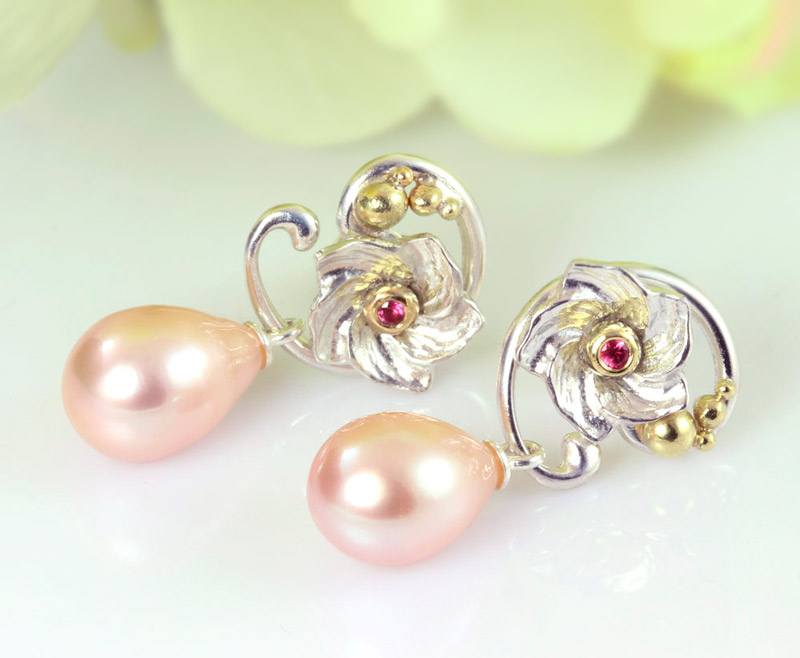
But one could also play with the design and develop it further: What about, for example, putting beads and a flower into the mould and hanging a pearl from it?
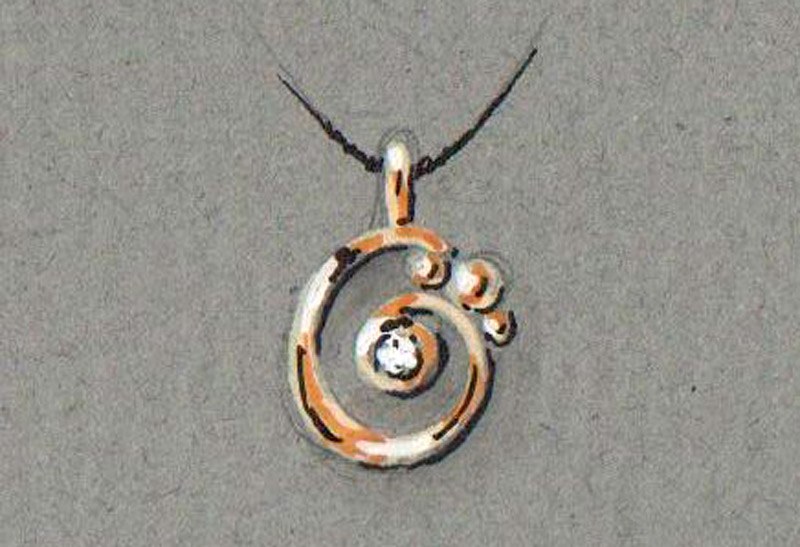
The very basic design would also look lovely used in other ways – for example as a pretty little pendant
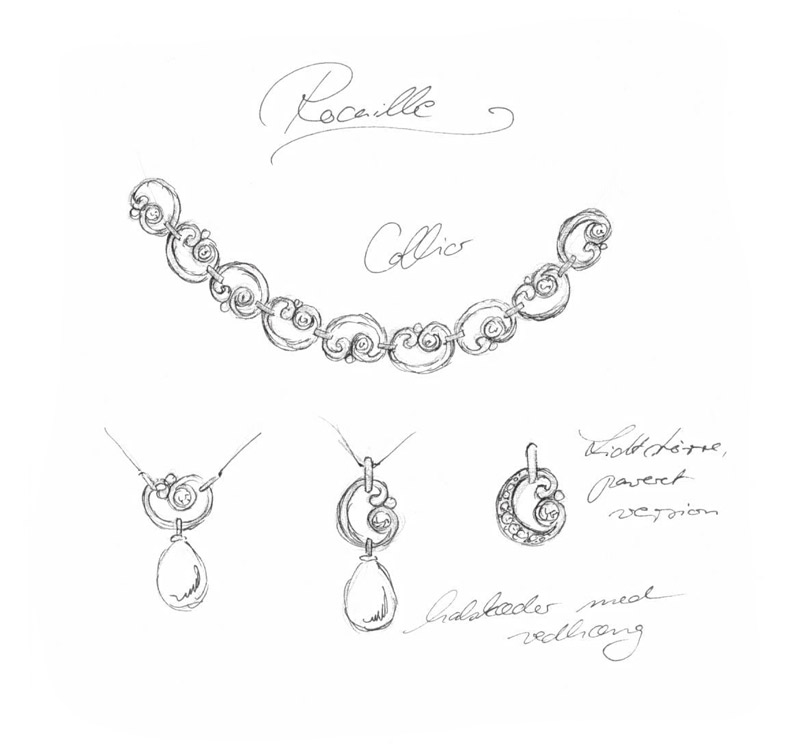
Or maybe as a full necklace? So many possibilities based on a single design… I’m sure I’m not done playing with the seed bead!
Blog categories