



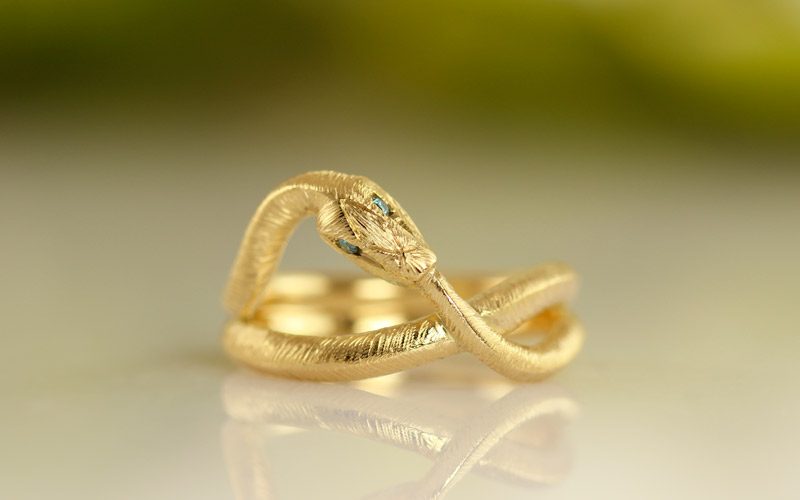
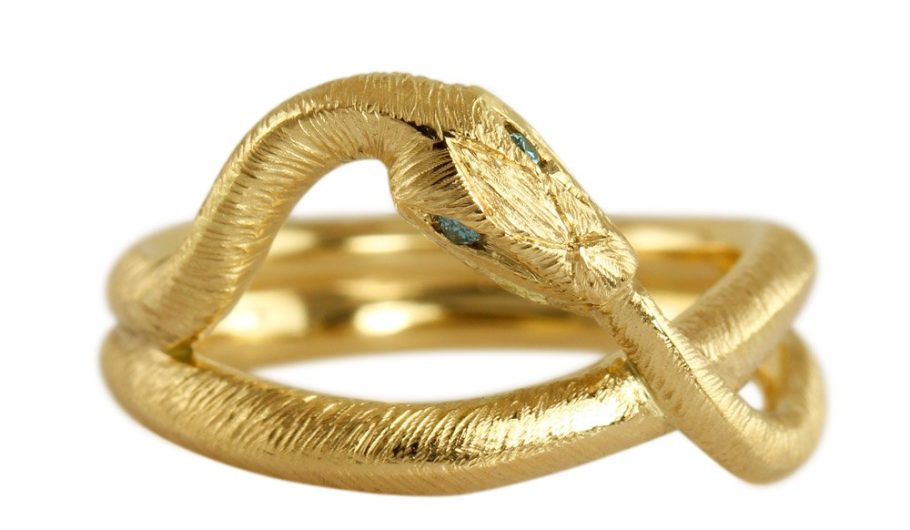
We first encounter the tail-biting snake in ancient Egypt, in the tomb of the child king Tutankhamun. Here, the deity Mehen is depicted in the form of this snake protecting the sun god Ra on his nightly journey through the underworld. In general, the snake represented the aimless suffering that ravages the orderly world, but which also helps to renew it time and time again.
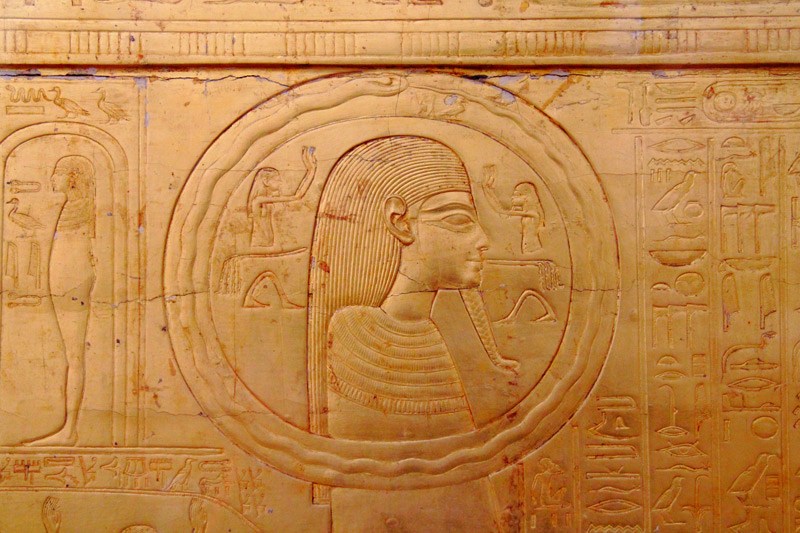
Photo: Djehouty - CC BY-SA 4.0
The tail-biting snake appears all over the world and throughout the ages: in ancient Greece it gets its name, which means “tail-eating snake”. Here in Scandinavia, we also know of this large snake in the form of the Midgard Serpent, which circles the world (and which the god of thunder Thor fights in vain in two different legends).

Photo: Uwezi
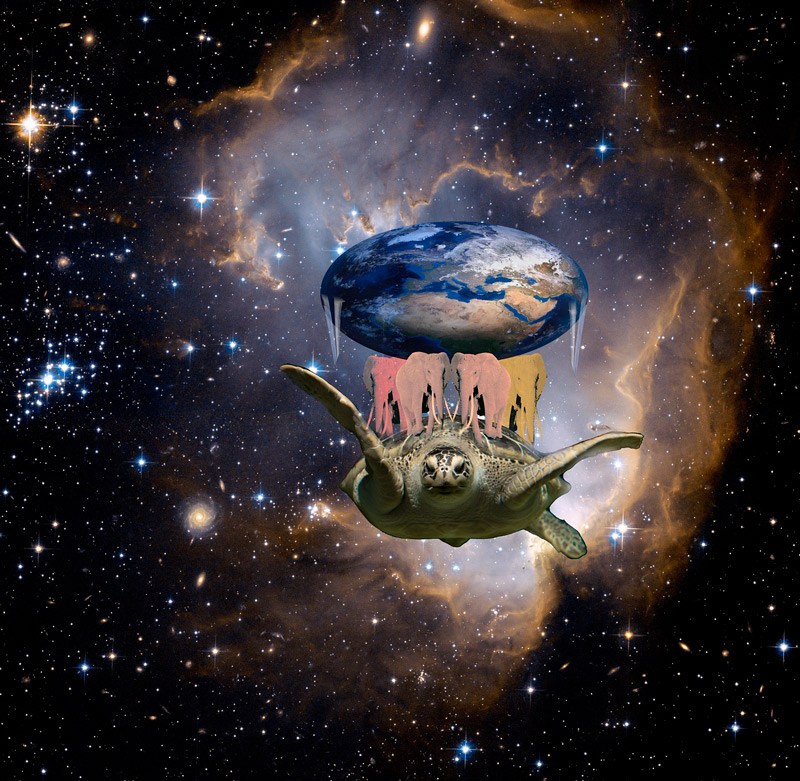
Interestingly, many South American tribes also believed that the world (which was also perceived as flat, like Middle Earth) is surrounded by the giant snake Queztacoatl, which bites its own tail. And according to Hindu belief, a dragon encircles a turtle, which carries four elephants, which in turn carry the (flat) world on their backs. (If you read fantasy literature, you might recognise this description as Terry Pratchett's Discworld - but without the snake).
Later, medieval alchemists used the Ouroboros as a symbol of mercury, which they described as “a substance that permeates all matter”, while the Gnostic semi-religious faith also used the symbol extensively with the same meaning of eternity and the cycle of life and death. This makes sense, because a snake changes colour and thus looks as if it is reborn again and again.
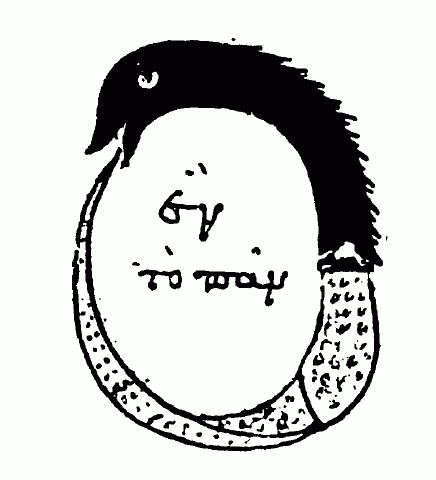
Carl Jung, a famous Swiss psychologist, describes the symbol this way: “The Ouroboros is a dramatic symbol of the integration and assimilation of the opposite, the shadow. This “feedback process” is also a symbol of immortality, as it is said of the Ouroboros that it kills itself and is revived anew - it fertilises and gives birth to itself, so to speak. The snake therefore symbolises the wholeness that occurs when opposites collide.”.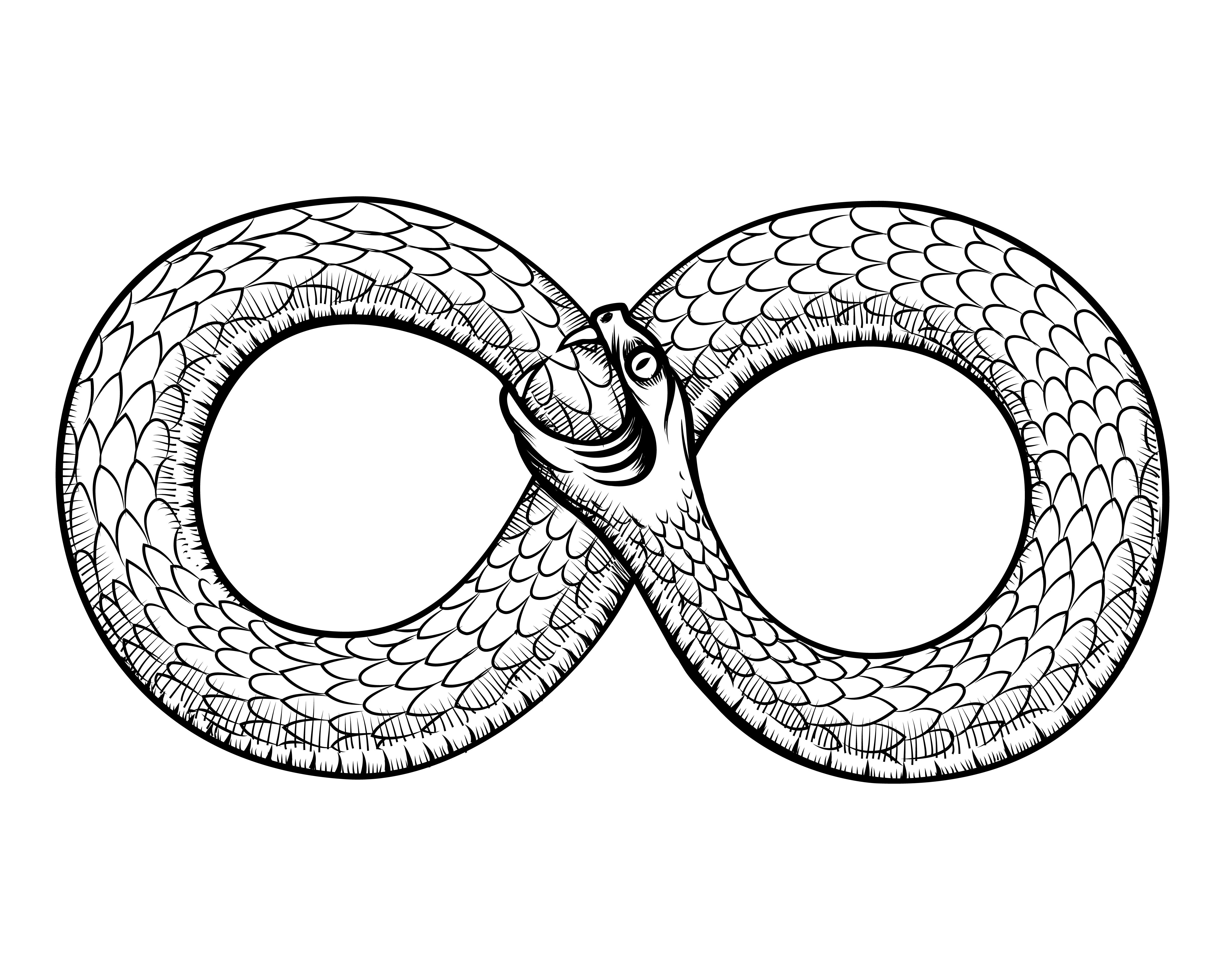
Sometimes the Ouroboros snake forms not only a circle but an 8, thus becoming an infinity sign (the horizontal 8), which is considered by many to be a simpler and modern version of the Ouroboros.
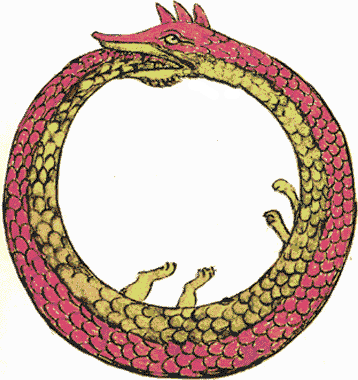
Snake, worm or dragon - which is the right one? In fact, when it comes to Ouroboros, all of these terms can be used interchangeably. As long as it's a reptile, it's all good. Most Ouroboros do not have legs or wings, although there are some exceptions:
Ouroboros in fantastic stories
Such a powerful symbol is bound to appear, especially in fantasy literature, and indeed it does!
For example, we find the symbol Auryn (two snakes - one white and one black - biting each other's tails) in The Neverending Story by Michael Ende. The two snakes symbolise the dual nature of two worlds: one being Phantasia and the other the reality we know. AURYN also stands for the duality of snakes, where they alternately create and destroy: If one of the two worlds becomes too powerful, it will destroy the other, as happens with Phantasia, which is consumed by ”Nothing” because no humans believe in this world anymore. In the story, the amulet has magical powers - read it if you're curious which ones!
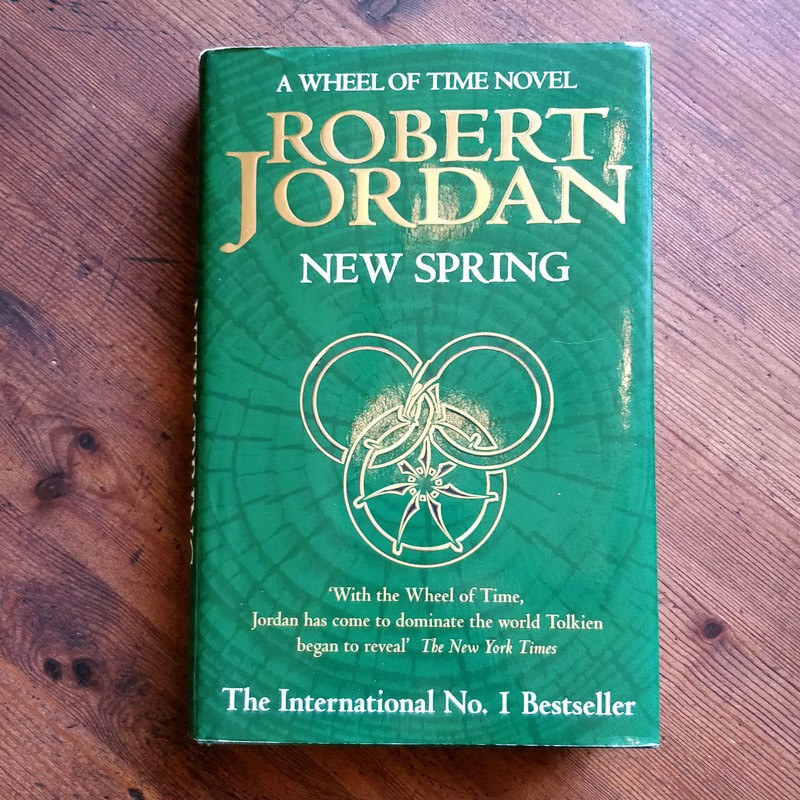
However, it was another story that prompted my client to ask me to create her very own Ouroboros ring: the Wheel of Time series by Robert Jordan, where the mysterious order of female magicians Aes Sedai gives a double-stranded snake ring to the Tower's novices when they are elevated to “Accepted”. This series of 14 books is currently being adapted into a TV series (good news for all of us anxiously awaiting the upcoming and final season of Game of Thrones). Want to know more about this world that the serpent ring comes from? Here's a description:
My customer, who with her husband has become a mother of two children in recent years, wanted an eternity ring to symbolise their unbreakable union. She asked me to design her personalised Aes Sedai ring so that it wraps sensually around her finger and looks at the world with blue, sparkling diamond eyes - one for each of her daughters.
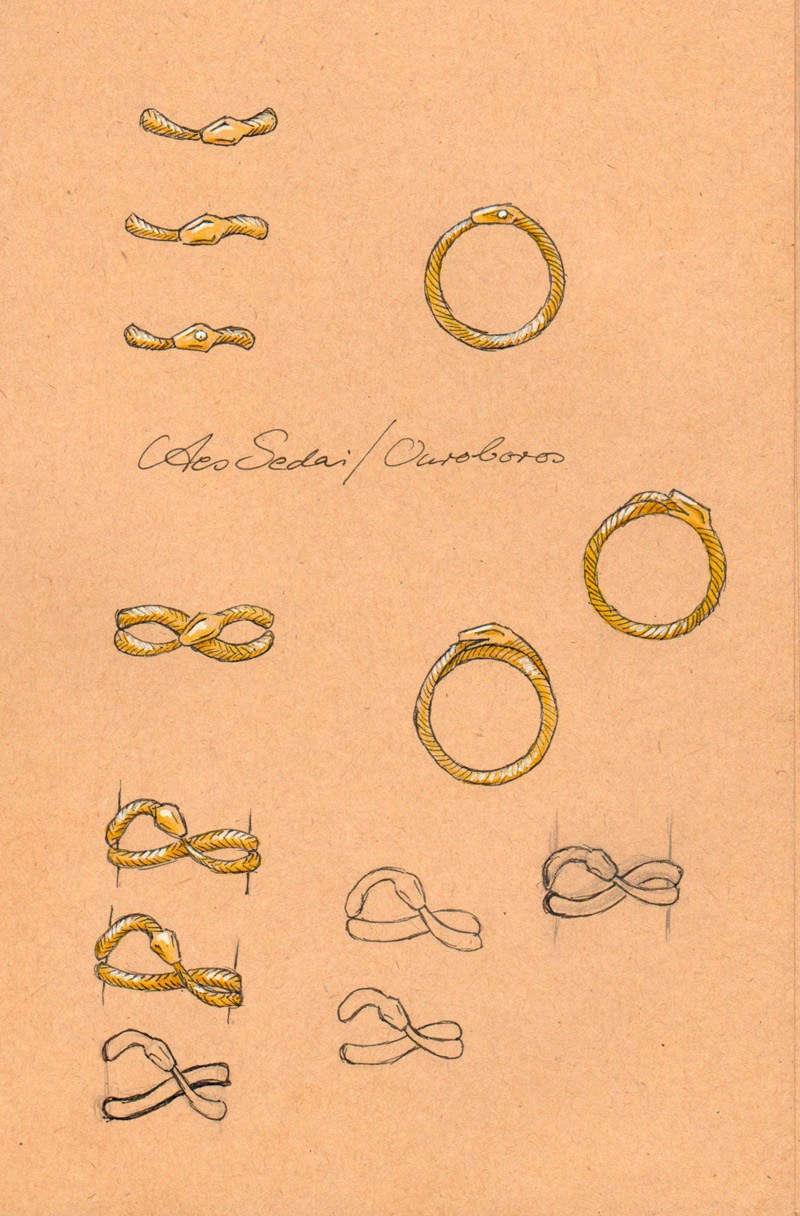
It took quite a few drawings before she was able to choose just the right way for the snake to twist, and then I got out my wax cutting tools. Working with such a three-dimensional shape is almost impossible directly in the gold, so I started cutting, filing and scraping in a lump of wax until the double-twisted snake appeared.
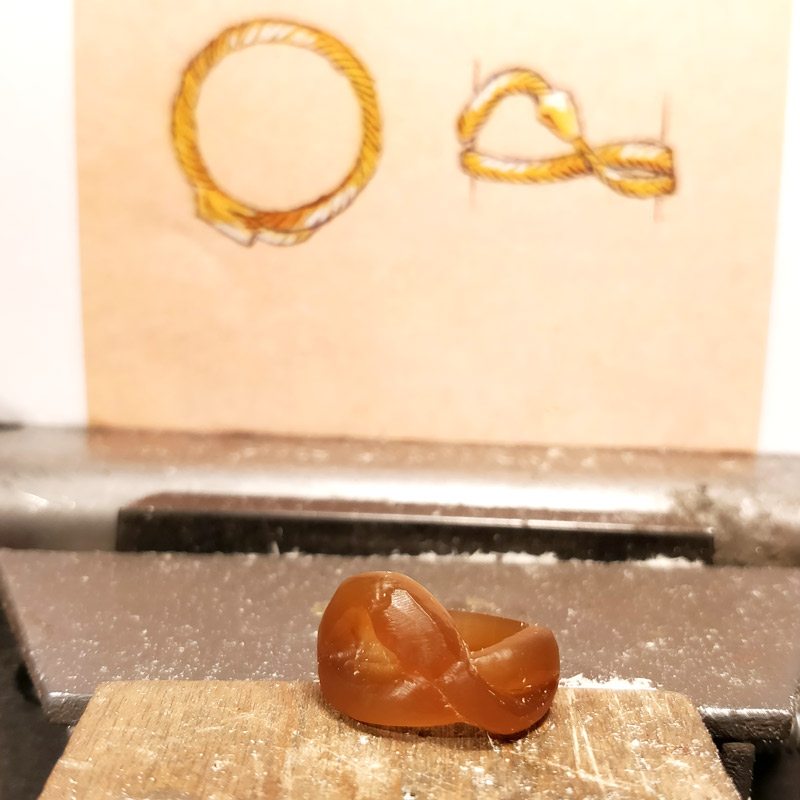
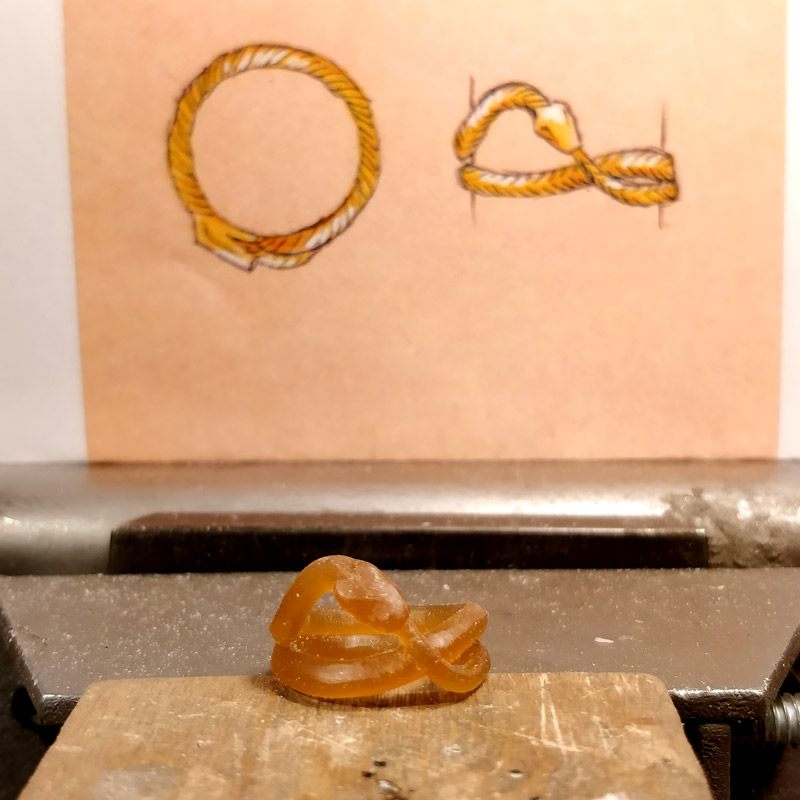
This process takes quite a long time - especially because it was important for me to get it just right! Not only the way the body wrapped around the finger, but also the slightly triangular shape of the body itself (seen in cross section) - because a snake is not just cylindrical, the line that the back describes makes the animal's movement clearer.
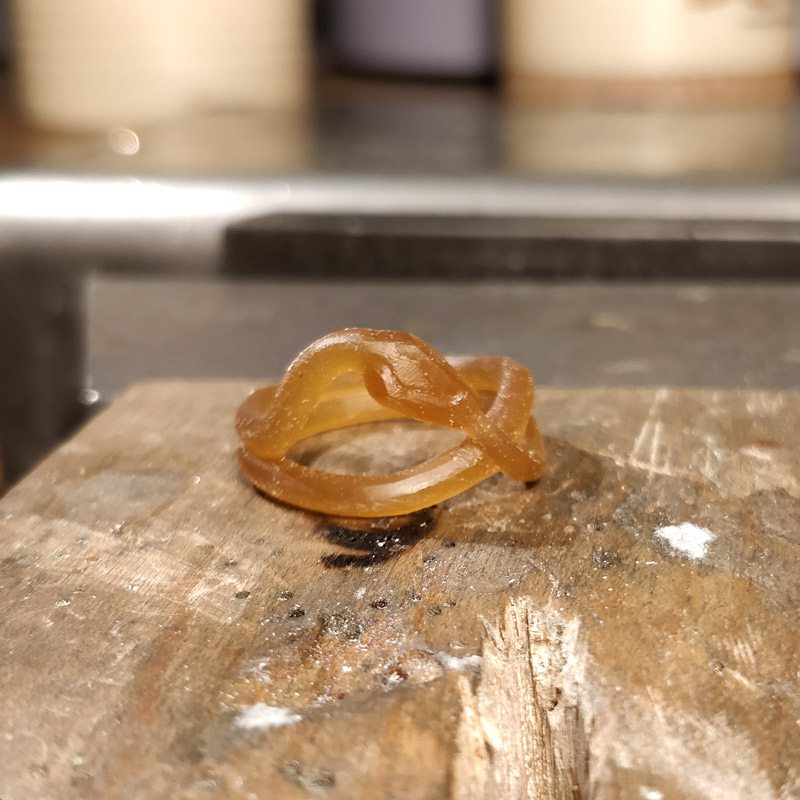
Finally, we were both satisfied and the hose was sent to the moulder, who replaced the wax with gold.
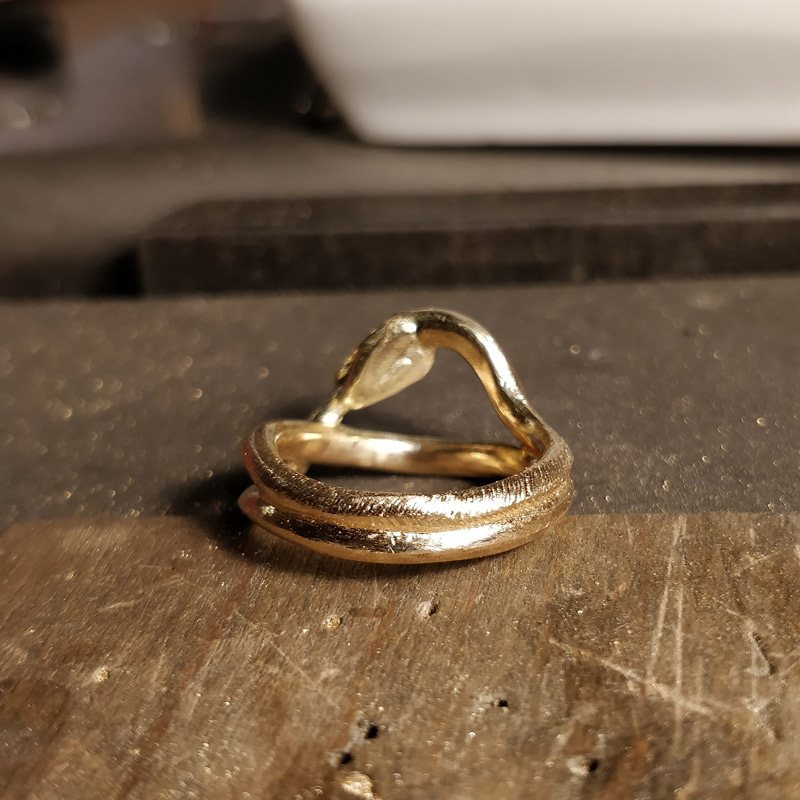
Even more hours were spent perfecting the shape before the diamond eyes were set and the snake got its beautiful textured surface (instead of the scales you might expect). The finished ring was completely different and absolutely gorgeous!
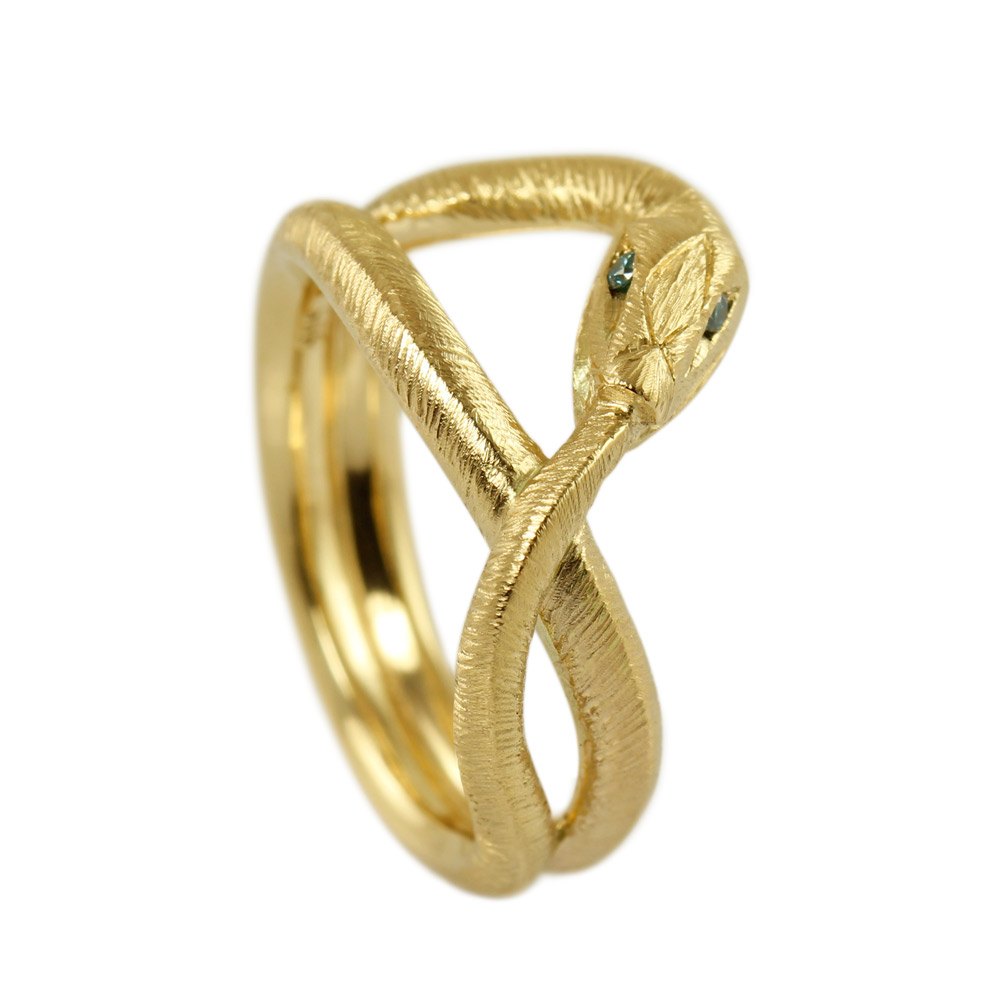
See more pictures of the finished hose ring here
Would you like to create a piece of jewellery for you and your dreams? Then don't hesitate to contact me at design@castens.com or book a design meeting here:
Blog categories